Park City lodging occupancy fell nearly 25% in March after low-snow winter

Chamber data shows April occupancy also pacing down more than 22% following early resort closures.
PARK CITY, Utah — Park City lodging occupancy fell sharply in March and April following a low-snow winter and early resort closures, but early summer bookings are showing signs of strength, according to data from the Park City Chamber & Visitors Bureau.
April occupancy was pacing down 22.5% year over year, to 14.3%, while the average daily rate was down 15.6%, to $390. Over the past six months, occupancy was down 10.6% to 44.2%, and the average daily rate was down 1.2% to $819.
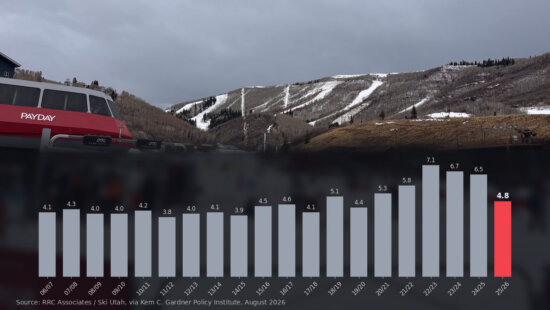
The softer numbers followed a winter of limited snow and early resort closures. Deer Valley Resort closed for the season on March 29, and Park City Mountain closed on April 5. Park City Mountain also shut its lower-elevation Mountain Village base on March 29.
But the Chamber’s forward-looking data shows a modest rebound. Occupancy for the next six months is pacing up 1.4% to 19.7%, while the average daily rate is down 1.4% to $412.
“The winter conditions that caused early resort closings give Park City an opportunity to attract spring and summer recreation earlier than we traditionally can,” Jennifer Wesselhoff, president and CEO of the Park City Chamber & Visitors Bureau, said. “The Chamber is already sending out inviting messaging about hiking, biking, fly fishing, and arts festivals. May and June occupancy numbers on the books are suggesting healthy summer visitation.”
Tax collection data provided by the Park City Chamber & Visitors Bureau showed a mixed picture for February performance. Local sales tax was up 10%, and up 5% year to date. Restaurant tax was down 6%, and down 0.7% year to date. Transient room tax was down 7%, and down 3% year to date. Recreation, arts, and parks tax collections were down 0.4%, but remained up 2% year to date.
While overnight lodging softened late in the winter season, visitor and local spending did not decline evenly across sectors. Sales tax collections rose even as lodging-related taxes fell, pointing to a more uneven picture than occupancy numbers alone suggest.
For local businesses, the next test will be whether stronger May and June bookings can offset a weaker end to the ski season.


4251 E Lipizzan Jump
Moab, UT 84532