Heber City osprey pair returns, lays three eggs as new nest camera goes live

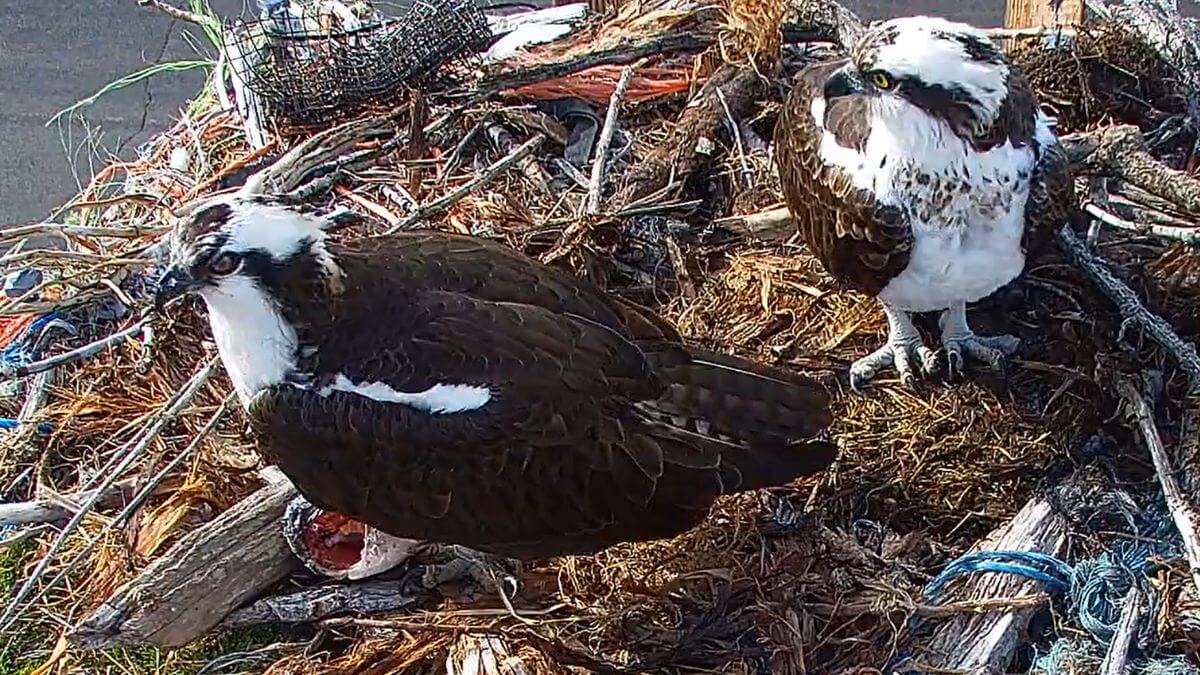
HEBER CITY, Utah — Two osprey nesting in Heber City are living life in the spotlight, thanks to a newly installed wildlife camera that offers a close-up view into their seasonal home.
The birds have returned to a nest site in Heber City each year for more than a decade, according to Wasatch County Parks and Recreation, which has monitored and supported the platform. While officials believe it may be the same pair may be returning year after year, they can’t confirm it for certain.
The nesting platform itself was originally built by Wasatch County Parks and Recreation and has remained in use ever since, with the birds returning each spring to repair and rebuild it.
“They just kind of add to it and fluff it back up for springtime as they return,” said Jennifer Bowman, marketing coordinator for Wasatch County Parks and Recreation. “They built it a long time ago, and they maintain it, so their rent is paid for.”
The pair worked on the nest for about a month this spring, putting grasses and softer things in the middle to build the bedding of the nest and getting it ready to go.
Now, wildlife officials say the nest currently contains three eggs. Incubation typically lasts about 45 days, followed by a rapid growth period before fledging in late summer or early fall.
There is growing excitement around the next generation of birds. A public naming poll is underway on the department’s Facebook page for the nesting pair, and officials expect additional engagement once the chicks hatch.
Beyond the excitement of watching the birds, Bowman said the project has an important educational purpose for the community.
“The fact that we’re able to kind of educate the public on these birds and how important they are to the ecosystem is really important to us,” she said. “Parks and Recreation is pro open space and nature and outdoor living, so we just thought this was a great way to showcase to our community that we love these natural habitats we’re able to create and facilitate.”
Public response has been strong since the camera went live, with residents and even researchers reaching out to observe the nest.
“We’ve had a couple of people reach out to us after we launched it saying, ‘Hey, we love that you do this. We study these birds. Just want to let you know we’re watching them,’” Bowman said. “So there’s definitely some interest, and hopefully it’s helpful to protect them and create more spaces for them.”
For Bowman, the hope is that the nest cam does more than entertain — it helps deepen awareness of local wildlife.
“I think just the knowledge that we’re looking out for our wildlife and informing the public on how they possibly can too is very important,” she said.
More about osprey
Ospreys are long-distance migratory raptors that winter in Central and South America before returning north each spring. Their journeys span thousands of miles each year, yet their timing remains remarkably consistent.
“They’re very, very predictable birds, and the amount of distance they travel is really remarkable,” Bowman said. “They winter in Central to South America, so quite the flight, both there and back. Every year they make the trip, and they’re generally right on time.”
The birds are also notable for their size and appearance. Females are larger than males, with wingspans reaching up to six feet and weights of around four pounds. Males are typically five to ten percent smaller than their female counterparts.
While coloring can vary slightly between sexes, ospreys are generally dark brown and white, with distinctive markings that make them recognizable in flight.
“They from a distance can kind of look like an eagle,” Bowman said. “They have that very intimidating look. Their eyes kind of burn a hole through you. But they are a touch smaller than a bald eagle, and their neck ring is pretty distinctive.”


4251 E Lipizzan Jump
Moab, UT 84532