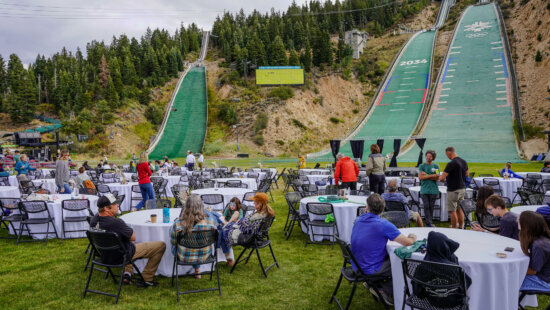
Summit County weighs Utah Olympic Park agreement changes amid neighborhood concerns

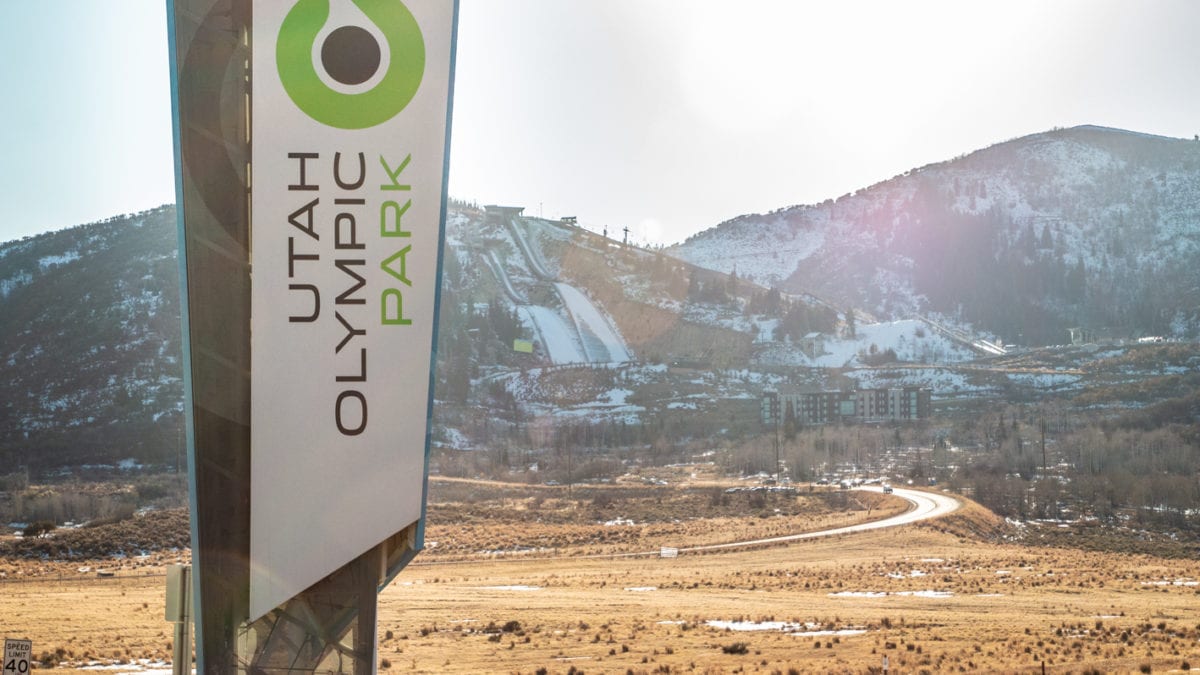
SUMMIT COUNTY, Utah — Summit County council members on Wednesday pressed Utah Olympic Park officials on traffic, housing, public process, and long-term financing as they weighed a proposed fourth amendment to the park’s development agreement. The Snyderville Basin Planning Commission previously forwarded the proposal to the council, and the item returned after a Jan. 28 public hearing and a delay for additional review.
County attorney Dave Thomas told council members the public hearing had already been held and closed, leaving the council to deliberate, ask questions, and decide whether to approve, modify, or deny the amendment. Planning staff said the requested changes include a new master conceptual development plan, parcel reconfiguration, updates to building heights and gross buildable area, revisions to affordable housing calculations, and county support for the Utah Olympic Legacy Foundation’s consideration for “major sporting event venue” designation under state law.
Utah Olympic Legacy Foundation CEO Colin Hilton and project representatives said the amendment is meant to update a plan first adopted more than a decade ago and better align it with current housing, operational, and financial needs. Hilton said the park continues to run at an annual operating loss of about $3 million to $4 million and argued that revenue-generating uses such as a hotel, restaurant, conference space, and related development are needed to help sustain the venue through and beyond the 2034 Winter Games.
A major point of scrutiny on Wednesday was whether the economics justify the scale of the request. Councilmember Chris Robinson repeatedly questioned whether hotel development and possible tax-increment financing would generate enough long-term benefit to offset increased density and further strain the Kimball Junction corridor. That concern has been central to neighborhood opposition as well.
Sun Peak residents and HOA leaders have argued in letters shared with TownLift that the amendment is far more than a routine cleanup. In those letters, residents said the proposal would substantially expand development rights while weakening earlier community protections tied to traffic, access, open space, and future public review. They urged the council to hold off on any final decision and reopen the public hearing.
One of the neighborhood’s sharpest concerns centers on the Bear Hollow back gate. In a March 1 letter to the council, the Sun Peak HOA Board of Directors argued that original approvals treated the connection as emergency access and said the current proposal conflicts with that history. On Wednesday, UOP representatives said they do not want the back gate to become general public access and are willing to define limited uses through a back-gate policy.
Another issue was future public oversight. Planning staff told the council that one proposed change would move some uses from conditional use permit review to low-impact permit review. Staff said the practical difference is that a low-impact review does not require public notice or a public hearing unless planners determine additional public input is needed. Sun Peak residents have argued that the shift could strip away guaranteed public oversight for future hotel and ski-run development.
Residents also questioned whether the amendment would weaken earlier traffic safeguards tied to the Kimball Junction corridor. In materials shared with TownLift, Sun Peak representatives argued that removing the project’s phasing map could undermine an older requirement that later phases of development be tied to traffic improvements. UOP representatives responded Wednesday that an updated traffic study found no significant change from earlier projections and that the amendment does not change the status of the county road connection.
The broader debate reflects the same cumulative-growth concerns that have shaped other major land-use fights in Kimball Junction. In a January TownLift story, nearby residents said the UOP proposal raised many of the same safety, traffic, and access questions that surfaced in Dakota Pacific debates.
Prior TownLift reporting described the amended plan as including about 257,000 square feet of commercial space, much of it tied to the proposed hotel, along with nearly 97,000 square feet for affordable housing and about 75,000 square feet for attainable housing. UOP officials have argued that the amendment reduces some earlier commercial assumptions while increasing housing and clarifying long-term operational needs.
The question before the council, ultimately, was whether those updates amount to a reasonable modernization of a long-range Olympic venue plan or a broader expansion with consequences that deserve more scrutiny.


4251 E Lipizzan Jump
Moab, UT 84532