State tests show new soil piles at Treasure Mountain site contain hazardous contamination

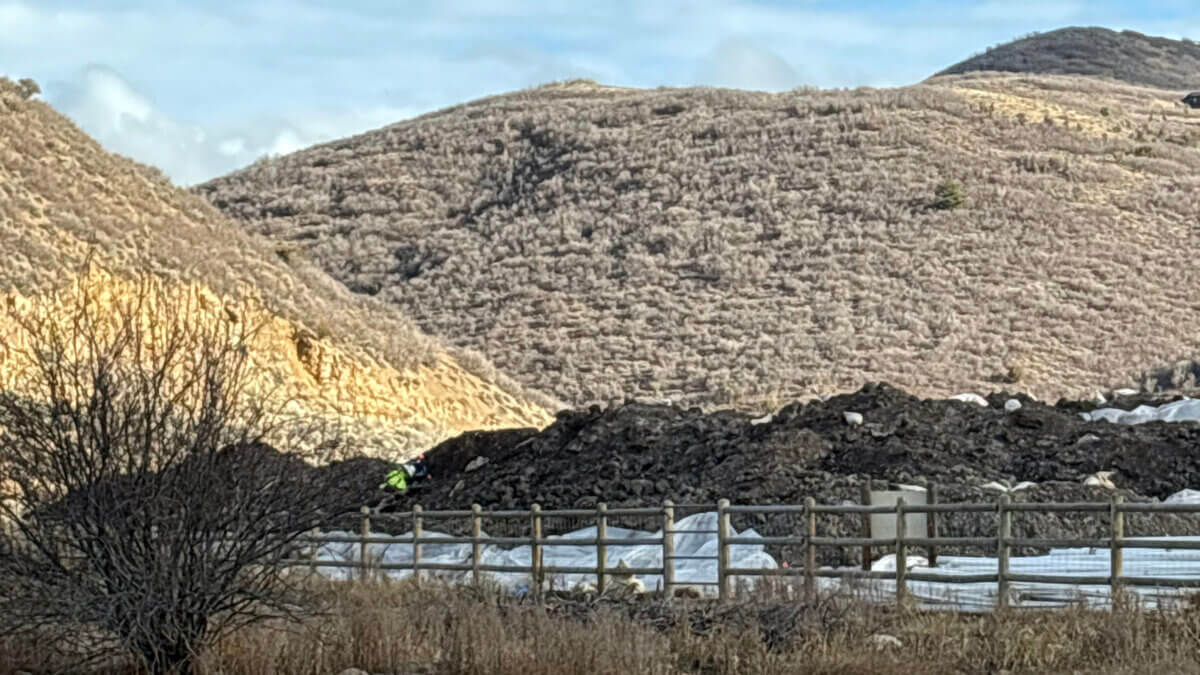
PARK CITY, Utah — The Utah Department of Environmental Quality said new soil piles at the former Treasure Mountain Junior High site contain hazardous levels of lead and arsenic.
The DEQ provided TownLift with new test data in early March. That data showed a majority of lead samples from piles on the site’s north side exceeded the U.S. Environmental Protection Agency’s “Toxicity Characteristic Leaching Procedure” threshold for hazardous waste, which is 5.0 milligrams per liter. One sample was five times the threshold, and another was nearly that high.
“The soil stockpile on the north side of the site is contaminated with lead and arsenic,” said DEQ spokesman Dave Noriega.
Noriega did not provide the precise levels of arsenic testing but said all arsenic samples exceeded the threshold for hazardous waste.
The north-side piles were created during recent excavation work tied to removal of the building’s foundation, replacing a previous stockpile removed in December 2025, Noriega said. Other piles at the site consist of clean imported fill used during construction.
The Park City School District has not issued any public statement about the hazardous piles. A district employee told TownLift PCSD has not communicated internally about the piles.
Exposure to lead and arsenic is associated with serious health risks, according to federal public health agencies. Lead is a neurotoxin with no safe level of exposure, and can cause developmental delays and other serious health effects, particularly in children and pregnant women. Arsenic is a known carcinogen linked to lung, bladder and skin cancers, as well as other long-term health impacts.
The contaminated soil falls under a 2016 environmental covenant governing the property, which was established due to widespread legacy contamination from historic mining activity and is jointly overseen by the EPA, the state and the school district.
That covenant states that soils exceeding hazardous waste thresholds “must be managed as hazardous waste and disposed of” at approved facilities. However, Noriega said regulators are allowing some contaminated soil to remain on-site under specific conditions.
“The Division of Environmental Response and Remediation advised [the contractor] that they may put contaminated soil back into excavations at the Treasure Mountain site, provided the location is within the environmental covenant boundary,” Noriega said. “This material must then be capped with a minimum of six inches of clean soil.”
That approach follows the site’s Soils Movement Plan and reflects regulatory allowances and site-specific constraints, Noriega said, and the school district and its contractor are currently handling the north piles in compliance with those requirements and no fines have been issued.
Noriega said environmental consultant RMEC is providing daily oversight, and other safety measures include dust suppression controls and eight-hour perimeter air monitoring. According to DEQ, air monitoring has consistently shown dust and lead levels well below federal workplace safety limits.
Still, DEQ acknowledged its inspections are not continuous.
“Site visits are conducted on a monthly basis,” Noriega said, adding that state regulators also rely on weekly reports from the site’s environmental consultant and daily on-site oversight by RMEC.
That form of self-monitoring was called into question last fall at the site, when a whistleblower reported PCSD contractor Hogan construction pumping contaminated water into the creek behind the site. PCSD initially denied it occurred, then corrected its public statements after state records confirmed the whistleblower’s account with photos and internal emails showing Hogan was directed before work began not to discharge water into the creek.
Since that incident, PCSD officials have repeatedly said publicly that contamination at the site is “non-hazardous.”
It is unclear when school officials learned about test results for the north piles.
Board of Education President Meredith Reed and other school officials did not respond to TownLift’s questions about the piles, including how long they will be stored at the site. And city officials said they have not had any communication with the district regarding the issue.
“For clarity, it does not fall within our purview, and the site is outside our Soils Ordinance boundary,” City Communications Manager Clayton Scrivner said.
The Treasure Mountain site has an extensive history of environmental problems, including uncovered contaminated soil piles, improper asbestos handling and the unpermitted discharge of lead and arsenic contaminated water.
DEQ said past issues prompted stricter oversight and the requirement for a detailed soil management plan.
The former junior high has long faced environmental and structural challenges. Built in 1982, it was slated for demolition in 2015 after studies found significant deficiencies, including water damage in ceiling tiles, structural concerns and failure to meet seismic standards.
“Based on the current condition of the school … it is our recommendation that the school be demolished,” the district’s 2015 master plan stated.
Noriega said school staff and any concerned residents could contact the health department with questions about safety. The Summit County Health Department can be reached at 435-333-1500.


2266 E Garfield Avenue
Salt Lake City, UT 84108