Park City native launches Homebound, a safety app built for the people who head outside


The free app lets users set a trip plan, check in with contacts and send automatic alerts if they do not return on time
PARK CITY, Utah — Hudson Schmidt built Homebound around a simple question familiar to many Park City families: What happens when someone you love is out of reach and overdue?
Born and raised in Park City, Schmidt learned to ski, backpack, and explore with the same group of friends he met at Trailside Elementary School. Now a senior at California Polytechnic State University in San Luis Obispo, he has turned that upbringing into a safety app designed for people heading into the mountains, onto trails, or into any situation where someone at home might need to know they made it back safely.
The app, called Homebound, is available for free on the iOS App Store.
“It’s just a safety net for anyone who heads outdoors,” Schmidt said.
Homebound allows users to create a trip before they leave, entering where they are going, when they expect to return, and a customizable grace period. Users can add emergency contacts to each trip. If they do not check in by the end of the trip and the grace period, the app alerts those contacts with the user’s plan and last known location.
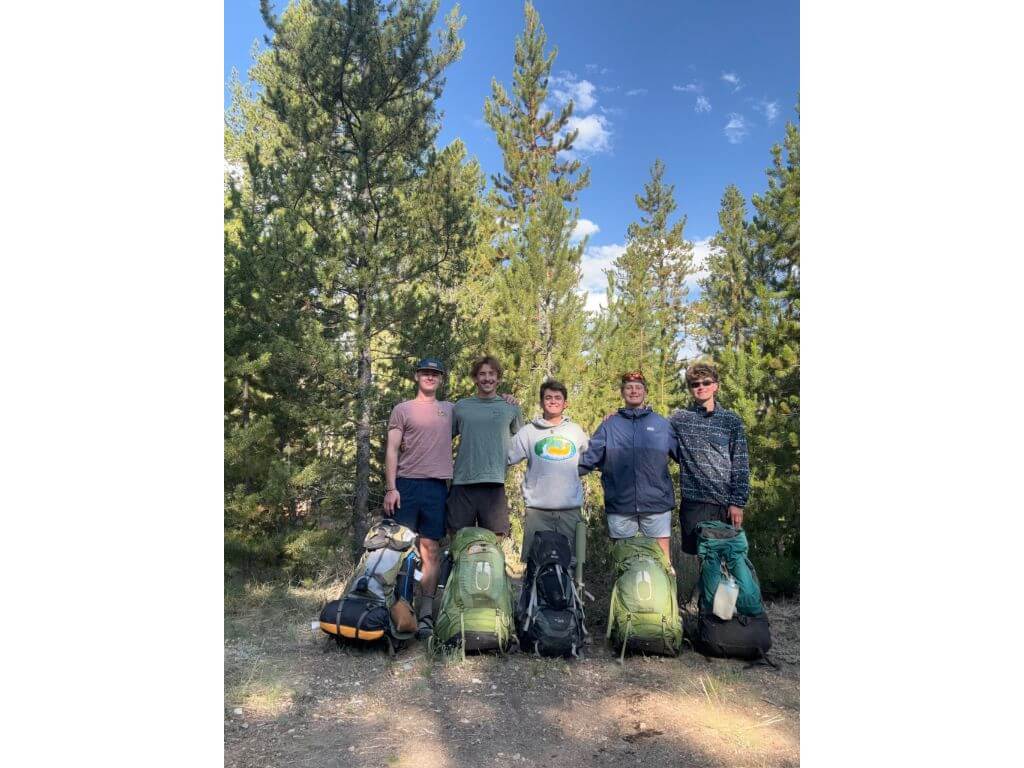
Schmidt said the idea began with his mother’s worry during a five-day backpacking trip in the Sawtooth Mountains, when he and his friends were out of cell service. During the trip, his mother received bad news about a friend in a similar outdoor situation and could not reach him.
“This app came from a desire to help put my mom’s mind at ease when I’m out doing outdoor things,” Schmidt said. “Then it’s kind of just blossomed into so much more.”
Schmidt said Homebound is not intended to replace satellite communication devices or emergency services. Instead, he sees it as another layer of protection, especially for situations where a person is late, injured, or unable to reach for their phone.
“It’s simply just meant to be an add-on, complementary thing that hopes to create this extra safety layer,” he said.

The app sends optional check-in reminders during a trip at intervals the user chooses. A user can press one button to let contacts know they are OK and share their current location. If a trip takes longer than expected, users can extend it, which sends an update to their contacts. When the user finishes, contacts receive a message that they made it home safely.
Schmidt said the grace period is meant to account for real life.
“If you’re hiking on a trail and you end up finding your best friend who’s also hiking on the same trail, and you stop to talk for 20 minutes, right, if you have a 45-minute grace period and you go 20 minutes over when you said you’d be back, no harm, no foul,” he said.
Homebound also includes an SOS button. If pressed, emergency contacts receive an immediate alert saying the user needs help, along with the user’s live location. The app then prompts the user to call 911, though Schmidt said that step remains optional.
“That’s just another thing that’s not meant to be a substitute for emergency services,” Schmidt said. “It’s meant to be a complement to it.”
Although Homebound started as an outdoor safety app, Schmidt said users have already begun applying it in other ways. His mother, a Realtor, uses it when meeting people she has only contacted by text or email and driving them to empty houses. His younger sister is preparing for college, and Schmidt said he sees the app as useful for students walking home at night. He has shared it with students at Cal Poly, including those who want roommates to know they returned safely.
He also pointed to his brother, a photographer and climber at the University of Colorado Boulder, who attends motorcycle meetups alone to take photos, and his 83-year-old grandmother, who walks her dog alone in Round Valley and has fallen before.
“It has such a wide use case that it’s really amazing to see how people are using it,” Schmidt said.
Privacy was one of Schmidt’s central concerns while building the app. A computer science major with a concentration in privacy and security, he said he wanted Homebound to avoid the data practices that made him uncomfortable with some existing tracking apps.
“A bunch of the current tracking apps, like Life360, are horrible with data, and they share and sell your data like crazy,” Schmidt said. “That just is unsettling to me.”
Schmidt said location sharing in Homebound is optional, and trip-related location data is deleted after a trip ends. The app also includes a feature called Circles, which allows users to share their location with in-app friends for a limited duration, rather than indefinitely.
“All the data you give me is completely optional, and you know exactly what you’re giving me,” Schmidt said. “Anything that I do not need is immediately deleted after your trip.”
Schmidt traces much of his path into computer science back to Park City High School, where he took every computer science class offered by teacher Kelly Henderson and served as her teaching assistant for two years. He also participated in PC CAPS, a program he said helped shape his direction.
“Without Ms. Henderson or without PC CAPS, I don’t know if I would be where I am today,” Schmidt said.
After graduation, Schmidt plans to pursue cybersecurity, with an emphasis on privacy and security. He is working toward cybersecurity certifications and applying to Cal Poly’s master’s program in cybersecurity.
For now, Homebound remains a free app built by a Park City graduate for the kind of community that raised him: people who love being outside, but also love the people waiting for them to come home.
“Growing up here, you’re focused on what you’re doing; you’re focused on enjoying the outside,” Schmidt said. “This app is really built to just be kind of the subtle, in-the-background thing that you don’t really have to focus on.”


2266 E Garfield Avenue
Salt Lake City, UT 84108