The heart of Cortina: Ski legend Kristian Ghedina on speed, spirit and the Games’ return

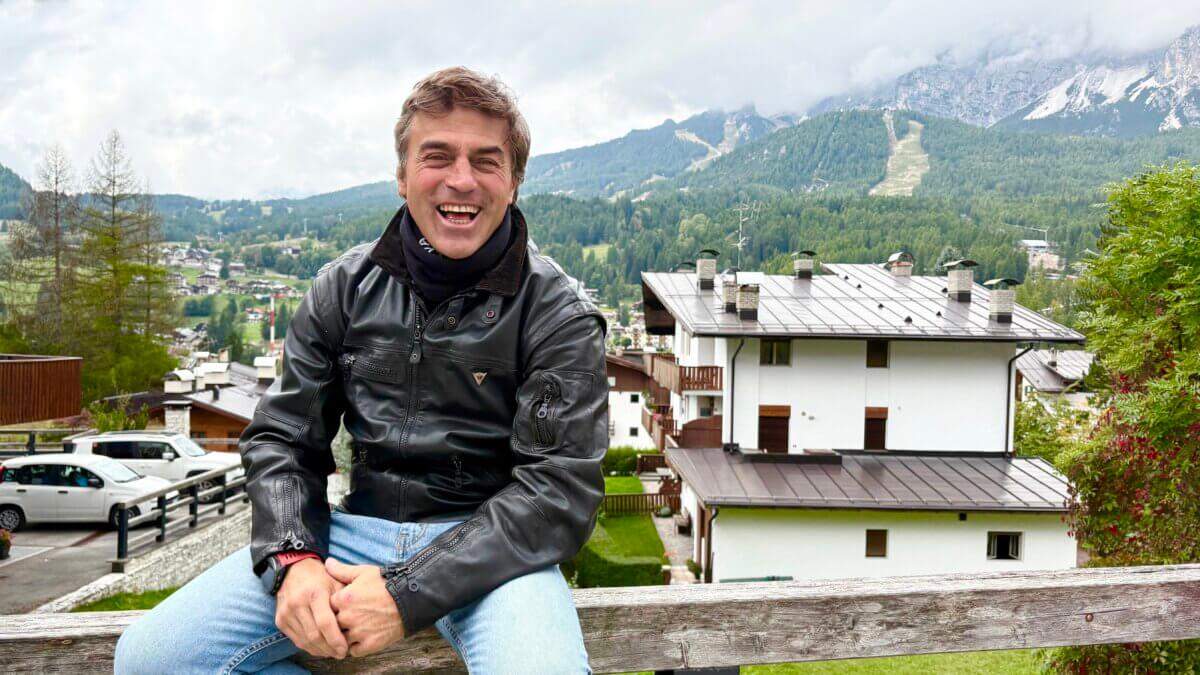
CORTINA D’AMPEZZO, Italy — Kristian Ghedina doesn’t need to announce himself in Cortina.
On a late-summer morning at the family-run Hotel Trieste, the former Italian downhill star walked through the door and was greeted less like a celebrity and more like a favorite son. When there was minor confusion about the timing of the meeting, the hotel’s owner simply picked up the phone and called him directly.
That’s how it works here.
Ghedina, 56, was born and raised in this Dolomites town that is again host to Olympic events in 2026. His childhood home — one of the houses that dot the hillside – still stands within sight of the slopes where he first learned to ski.
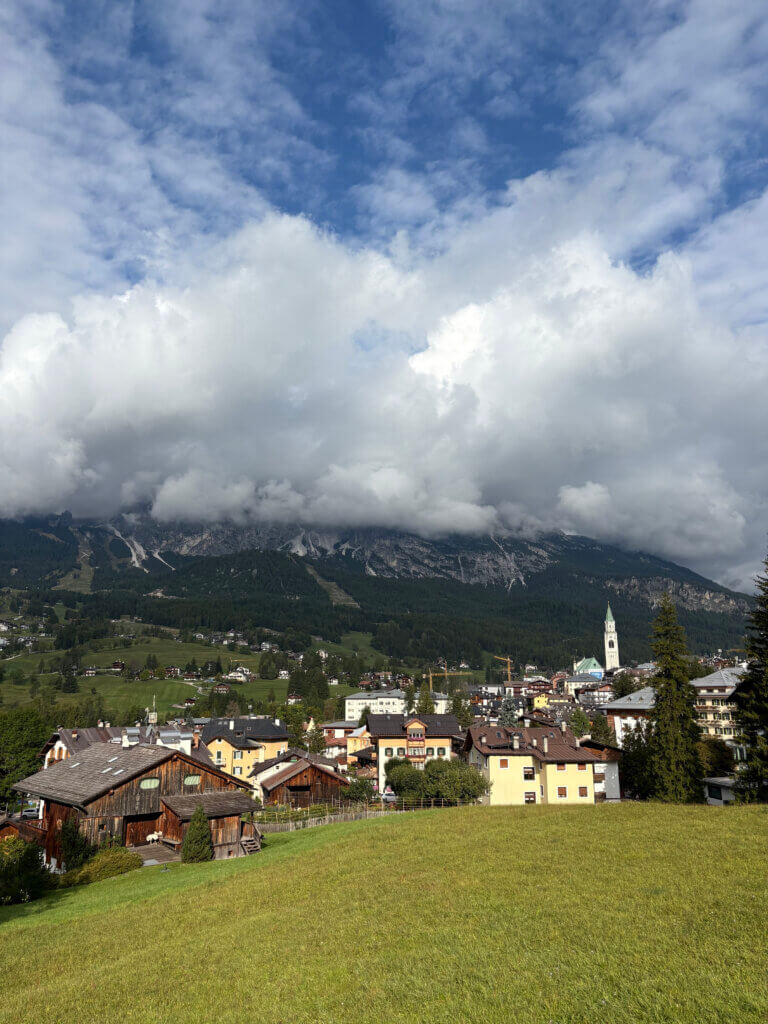
“I started at three or four years old, like all the kids here,” Ghedina said, smiling as he pointed toward the hillside. “My father was president of the hockey club. I tried hockey first. But it was harder to walk home after training than to ski.”
The daily trek back uphill through the snow as a 7-year-old ultimately nudged him toward alpine racing. Skiing meant speed, freedom and, perhaps most importantly, fewer heavy bags to carry.
“I liked the risk,” he said. “Even as a kid, I was climbing trees, jumping. My father was worried every second of the day.”
For Ghedina, risk became a theme.
As a teenager, when his strict father refused to buy him a motorcycle, Ghedina pieced one together with friends. He and future Italian national team skier Alberto Ghidoni would later ride a Vespa onto Cortina’s old bobsled track, challenging each other to see who could ride higher in its steep curves. The boys took turns watching and marking the height reached, then riding full throttle into the turns near the top of the track, away from the eyes of the polizei.
“It was completely illegal,” Ghedina said, laughing. “But we were kids.”
That appetite for speed eventually propelled him to the World Cup circuit, where he won 13 races — including five in downhill — and became one of Italy’s most recognizable ski racers of the 1990s. His breakthrough came in Cortina in 1990, when he stunned the field as an outsider to claim his first World Cup victory.
“Nobody expected it,” he said. “Maybe that’s what I hope for now — that someone new comes and surprises everyone at the Olympics.”
Though Ghedina built a résumé that included victories across Europe and North America, it was one moment — a split-second act of flair — that cemented his legend.
During the 2004 men’s downhill in Kitzbühel, Ghedina launched off the famed Hausberg jump and spread his skis in midair in a daring “spread eagle” before landing cleanly and continuing his run – he even came through the finish with the fastest time and finished sixth. The move, improvised after a playful bet with his cousin during inspection, became one of the most replayed images in alpine skiing.
“Everyone remembers me for the jump,” he said. “I tell them, I also won races.”
In Cortina, though, the jump and the victories blur together into folklore. Ghedina’s personality — animated, mischievous, unmistakably Italian — remains as much a part of his legacy as his podium finishes.
He credits that spirit to the culture around him.
“Italians enjoy life,” he said. “We smile. We have passion. Skiing is serious, but we still have fun.”
As Cortina prepared to host the Olympic spotlight again — 70 years after the 1956 Winter Games transformed the town — Ghedina saw both opportunity and tension. Construction cranes dotted the skyline, infrastructure was being upgraded and anticipation was building.
“It’s a big opportunity,” he said. “For the streets, for the town, for everything. But there are always people who don’t want change. They are more conservative. They want to keep everything the same.”
For Ghedina, who has traveled the world, change is inevitable — and necessary.
“When you see the world, you understand you must improve,” he said.
Though he no longer competes regularly — “At 50, I was still good,” he joked, acknowledging that recent years have made high-speed forerunning less appealing — he expected to be involved around the Games through sponsors and community events.
Today, Ghedina runs a ski school in Cortina and helps shape the next generation on the slopes that defined his career. In this way he follows in the footsteps of his mother – Adriana Dipol, who was a pioneering figure in Cortina as the town’s first female ski instructor. He is also a familiar television personality in Italy and the subject of a recent documentary film.
After retiring from alpine racing, Ghedina kept his need for speed alive competing in touring cars and Formula 3000. He is also a father to two sons with his partner and former Italian ski racer Patrizia Auer.
Back at the Hotel Trieste, guests continued to stop and greet him, trading stories and laughs. Ghedina obliged each one, animated and gracious, as comfortable in conversation as he once was at 130 kilometers per hour.
In a town preparing to welcome the world again, its most colorful son remains both symbol and storyteller — a reminder that in Cortina, skiing is not just sport.
It’s heritage.