Looking for the light: Shred for Red’s chronicle
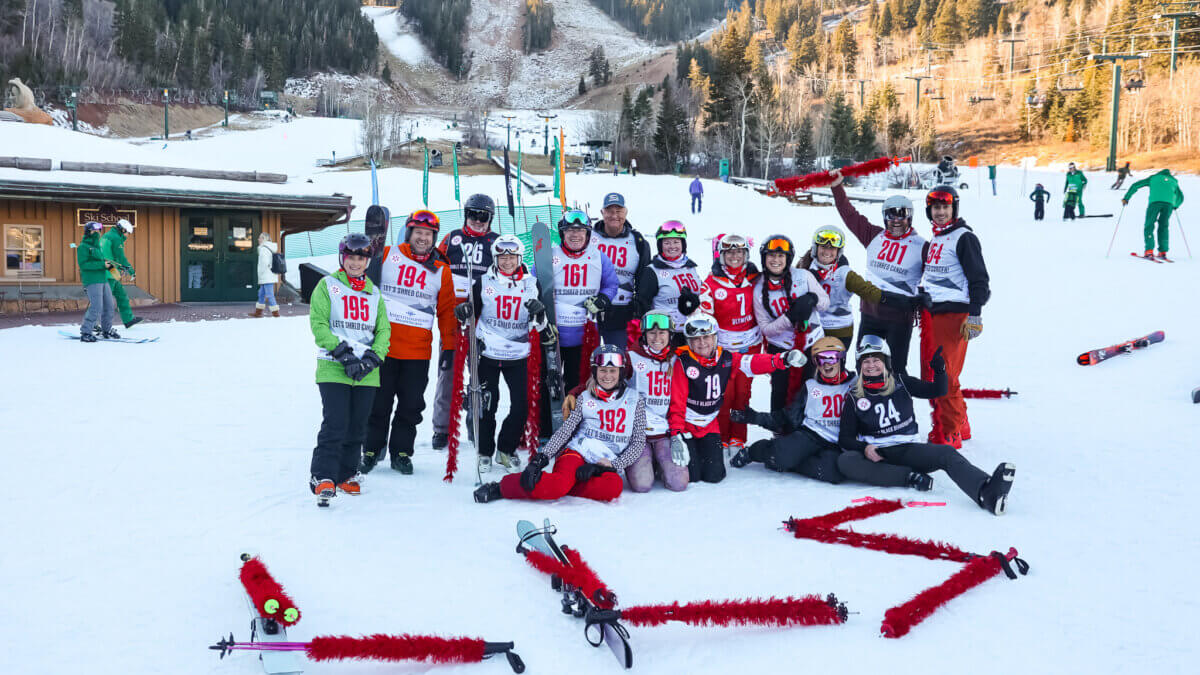
Nearly 10 years ago, three distinct voices sang the cancer rallying cry in Park City. As a result, Shred for Red was born, and it continues to bring in support from skiers nationwide. The event bolsters our community, distinctively showing how important people are, but has remained out of the limelight. This year, Blood Cancer United (BCU) and Deer Valley have moved Shred for Red down the calendar to allow more people the opportunity to participate. Countless souls benefit from the fundraiser, and not just in Park City.
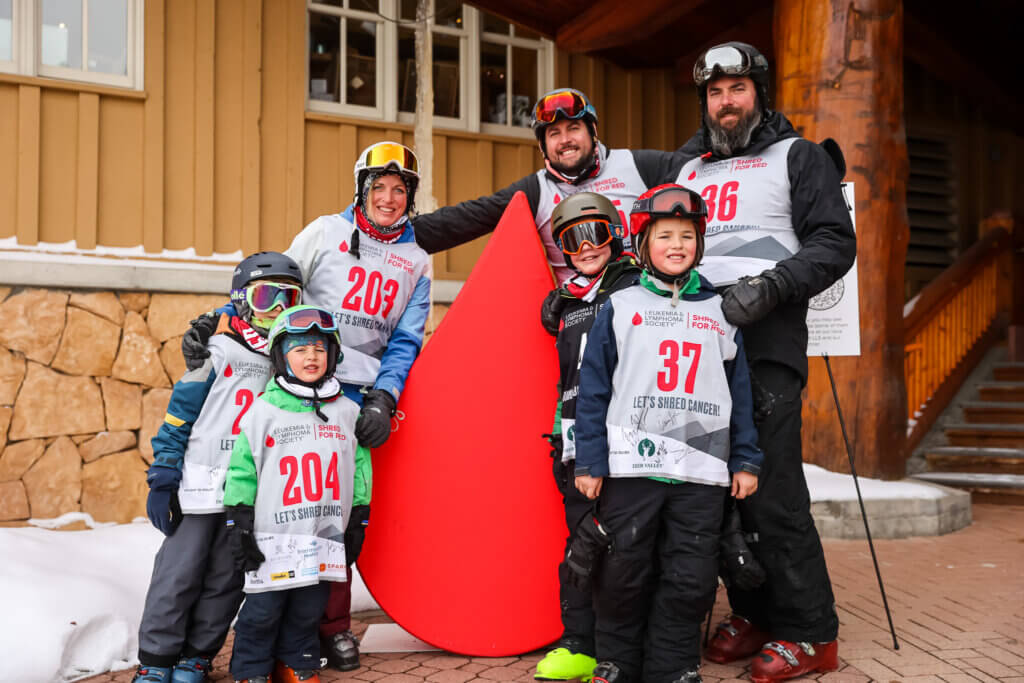
Cancer affects nearly everyone. It is a traumatic battle but full of inspiration. “When you go through this, you’re looking for the light,” says Laura Modena, who has navigated her son Owen—diagnosed at the age of five—through his bout with Stage 3 Non-Hodgkin Lymphoma B (Burkitt). Despite Owen’s chemo treatment calling forth all the hardships one might imagine, times when parents become first responders and all else falls away, the light found them; Owen fought with positivity, shining like a beacon. He and his family are grateful for the resources given to them by BCU and the community they found in Park City.
It was only three years ago that Laura, Brian, Owen, and Wilder (Owen’s younger brother) called Jackson, Wyoming, “home.” Laura landed in Jackson in 2007, and Brian had been there since 2003. When they started their family, they wanted to introduce their kiddos to the passion that fueled their lives: skiing. It was their little mountain life.
While Wilder could still fit in a backpack carrier, Laura skied with Owen at their home mountain, Snow King. Owen, with the exuberance of youth, skied the frozen landscape as any experienced 5-year-old would. Then, after three sleepless nights with Owen in unrelenting back pain, an MRI revealed “a mass on [vertebrae] T4-T7, and the doctors didn’t know what it was.” Brian had journaled on CaringBridge.org: “Hematoma? Benign tumor? Cancer? Whatever the case, we were told we needed to be life-flighted to Primary Children’s in Salt Lake later that afternoon.”
Jackson is a four-hour drive from Primary Children’s Hospital in Salt Lake City, near the University of Utah, so the Modenas knew it would be far more practical to relocate to Park City, somewhere familiar, one that felt like home. “We ended up finding a place. It was incredible,” Laura shares. “A friend that lived here set up a meal train for us.”
Emotionally, Laura recollected what it was like stepping into this “new to them” mountain town. People brought meals and support. “We left an incredible community in Jackson and came to a community we didn’t know very well. Then, all of a sudden, this world came out in droves just to help and be there for us,” says Laura. The people of Park City were shining brightly, being truly giving to the Modenas. This community characteristic has stood the test of time, and it gave the family precious hours to focus solely on Owen’s care.
During this early stage, they heard about Leukemia & Lymphoma Society, which today is BCU. Since its inception, the foundation has allocated $1 billion to cancer research and treatment accessibility. While not all patients need help paying the bills, BCU has helped countless families navigate the painful journey to proper and cutting-edge treatments. The Modenas credit BCU with helping them get the monoclonal-antibody therapy, Rituximab, into the mix for Owen. Laura explains that the treatment helped Owen bounce back from the rigors of chemotherapy sessions. To see Owen doing so well had been yet another source of light for the family.
Blood Cancer United
BCU’s mission, “to enable patients with blood cancer to gain more than one million years of life by 2040,” is the bright light in a sea of hard news, tough treatments, and even broken hearts. In 1949, Rudolph and Antoinette de Villiers originally founded the organization, which they named “Robert Roesler de Villiers Foundation.” Robert, their son, had died of blood cancer five years prior. The de Villierses sought funding to address the education and research gap so that future generations could benefit from blood cancer treatment. By 1955, the foundation had written in its annual report: “As of this date, leukemia is 100% fatal.” But the group was hopeful.
Today, BCU is a leader in cancer research and personal financial assistance. Austin Simon, campaign development director at BCU, explains that countless families are able to access cancer treatments they otherwise might not have known about. “We can help patients that need to pay for gas to get to their appointment. So, we have a travel assistance program. It could be that they must stay in a hotel, and we can step in there too,” says Austin. “There’s copay assistance, to help cover doctor visits or even a prescription. We have urgent need assistance, when a patient is struggling with paying utility bills.” Beyond BCU’s accessibility and assistance programs is research—in Utah alone, the organization has committed to more than $2 million in research funding.
How does BCU accomplish this? The answer: through grants and fundraisers, along with its track record for transparency, volunteer support, and proven assistance programs, all of which places them among the most credible of cancer institutions. And now, more than ever, with changes to federal grants affecting funding, fundraisers and non-government sponsors will need to step in.
Winnie
In 2005, Dr. Winn, or Winnie, as he is locally known, sat with his wife, Nancy, as they learned she had Acute Myeloid Leukemia (AML). Winnie has been a physician in Park City for more than 40 years; most of this time was spent serving as Deer Valley’s mountain doctor. “If there’s one leukemia you don’t want to get, it’s that,” he says. “There had been very little progress in solving AML. When I talked to the attending physician—who was someone I knew and was also a friend—I asked, ‘What are we looking at here? How bad is this?’ And he looked me in the eye and said, ‘Winnie, I am so sorry.’”
Park City rallied around them. Winnie describes himself “melting into the ground” as he explained the situation, including his fear and worry, to everyone. “Nancy is my best friend, my soulmate, the love of my life. I was devastated.”
Through a series of treatments, close calls, hard-won days, and a bone marrow transplant, Nancy arrived at the other end of it and continued her life in her mountain community—again, the town that has stood by and offered support, love, and resources to its people. Park City folks have been known to always look out for one another, whether it’s the well-being of the community doctor’s family or helping others during the Great Fire of 1898.
One late evening amid Nancy’s two-and-a-half-year battle, Winnie began writing email updates—starting with 22 people—about the situation. Sometime after the last email landed in nearly 2,500 email boxes around the world, and after Nancy finally went home, Winnie’s good friend showed up at the door with a large gift. Winnie recalls, “Inside it [were] 25 copies of all my emails bound and covered. The title on the cover was A Love Story. Polly Stern had saved all my emails.”
More than eight years later, through what could be described as destined events and special connections, Winnie added to the emails and authored an inspiring book, Night Reflections, with Timothy Pearson, whom he has remained good friends with. When Night Reflections went out into the world, the Stern family bought 14,000 copies.
This is how Winnie and the Leukemia & Lymphoma Society (LLS) met. Winnie became a volunteer ambassador; then, after scores of fundraisers and rounding up millions of dollars to support cancer research, Winnie and LLS Regional Executive Director Kristen Anderson approached Deer Valley.

For 20-plus ski seasons during each of its opening weeks, Deer Valley has hosted Celebrity Ski Fest. However, according to Emily Summers, Deer Valley’s director of communications, “That event didn’t really have local ties. When we were ready to move on from it, we wanted something that had more roots to our community, as well as a broader reach in what it benefited. We wanted to have a fundraiser. We wanted to start with something that brings people to the mountain.” Thus, 2016 was the final season for Celebrity Ski Fest.
“Winnie was the bridge in the transition eight years ago,” Emily explains, shifting Deer Valley’s philanthropic endeavors toward a new BCU fundraiser, called “Shred for Red.” Up until the 2025–2026 ski season, it remained the crowning event for the season opener. The first season, in 2017, Winnie reports that the event brought in $40,000 for LLS (BCU). During the 2024 event, participants raised $450,000. “This season’s goal is $650,000,” says Austin.
In 2025, BCU asked Deer Valley to shift the event to the spring, which happened to be a great idea, dodging the unseasonably dry official opening day. This season, Shred for Red will be held on March 28, 2026.

Shred for Red
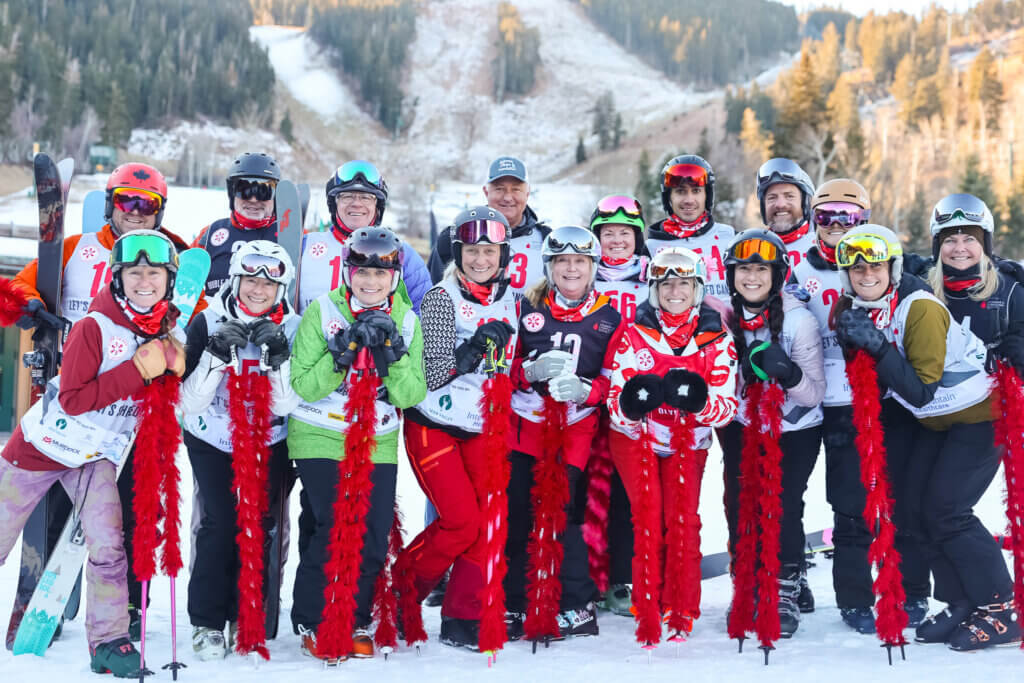
After registering to help fundraise, individuals or teams must raise a minimum amount to participate. Adults are asked to raise at least $1,000, and $300 is recommended for children under 12. The ski day is filled with events like slalom racing, various mountain challenges, and hanging out with Olympians, Paralympians, and folks from all around the country. According to Austin, about 40 percent of participants come into town for Shred for Red.
“I’m from Michigan originally,” says Emily. “I’ve had people reach out to me just blindly via my LinkedIn network: ‘I’m coming to Deer Valley because I’m going to ski for someone in Shred for Red.’ They’re actually planning their ski trip around Shred for Red.”
“This event encompasses that whole mountain lifestyle,” Emily continues, “and that community is what Deer Valley is all about. We support each other.”
Shred for Red accomplishes several goals: raising awareness for blood cancer, pooling much-needed funding for research, supporting cancer battles, sharing survivor inspiration, and rounding up the mountain community. Befitting of Deer Valley’s vision, it also happens to suit Park City well.
“We have a variety of fundraisers throughout our organization. Shred for Red falls under our adventure series, targeted towards our donors and participants that really want to be active not only in their fundraising, but in an activity that allows them to be a part of our mission,” says Austin. “There’s not really another event like it.”
The open-armed mountain community of Park City is now the Modena family’s permanent home. It’s not just because the people proved their unconditional compassion and friendship; they have supported worthy causes, both big and small, and have been recognized for what they have overcome, showing that anyone can be the light.
Last season’s Shred for Red hosted Owen as the day’s Honorary Hero. Owen had the opportunity to ski with Dave Jarrett, former Olympian and a Nordic Combined World Cup athlete. After a couple of years regaining his strength, Laura says Owen is thriving, and he is skiing harder than ever.
Owen’s message is a way of life, not so much spoken. According to Laura, as he was struggling with his own treatments, fasting for nearly entire days, he (keep in mind, he was five years old at the time) would say things like, “I want to keep fighting and kill all the cancers so nobody anywhere gets sick from cancer,” and, while postponing his own treatment so another boy could get his, he had shared, “It’s okay, Mom, I just hope that kid is okay and feels better. I can wait a couple more hours to eat.”
The battle goes on. Fighting blood cancer can end triumphantly or tragically. What brings a community like Park City together is something that kids like Owen understand, probably better than the grownups: We’re stronger when we fight for each other. For those who have signed up to raise their $1,000 or $300, do so to honor cancer battles lost and won, and for those that have yet to be fought.


2266 E Garfield Avenue
Salt Lake City, UT 84108