Utah’s wild turkeys are a Thanksgiving comeback story

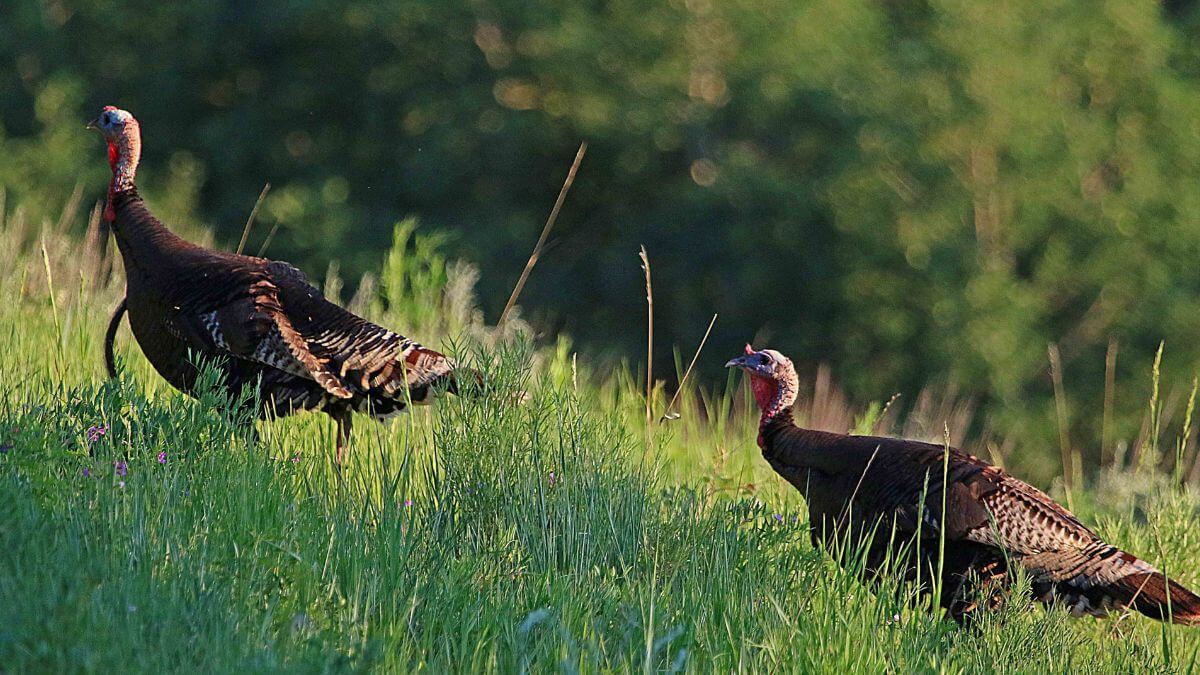
UTAH — Utah’s landscape wasn’t always stuffed with wild turkeys. After an unexplained disappearance, biologists helped reintroduce the birds that now freely roam foothills and farmlands statewide. Today, between 30,000-35,000 of these wild turkeys live throughout the state.
“Based on historical and archeological evidence, it’s clear that Native Americans and turkeys coexisted in Utah,” said Heather Talley, DWR upland game coordinator. Evidence of historic turkeys include pictographs, petroglyphs, blankets made from turkey feathers, and turkey bones that have been found at places where Native Americans lived historically.
But when Europeans and early settlers arrived in Utah, there were no wild turkeys to be found. No one is sure what caused the turkey disappearance, but it wasn’t until about 100 years later that turkeys were brought back to Utah.
After a failed reintroduction effort in the 1920s, a group of biologists with the Utah Department of Fish and Game (later the Utah Division of Wildlife Resources) successfully relocated Merriam’s wild turkeys from Colorado and Arizona to Utah in the 1950s. These transplants established populations in several southern Utah counties, and turkeys from these herds were later trapped and relocated within the state to expand their geographical range.
There are two turkey subspecies that live in Utah: Rio Grande and Merriam’s, and they hybridize in places where both subspecies exist. To distinguish them, look for Merriam’s whiter tail feather tips, or Rio Grandes’ more tan or buff edges.
“Turkey populations have fluctuated in recent years, due to drought conditions for multiple years and then the severe winter conditions in 2022-23,” Talley said. Winter and spring precipitation is essential to provide optimal brood rearing conditions for turkey herds.


2266 E Garfield Avenue
Salt Lake City, UT 84108