High-country fishing offers a cool escape as summer winds down

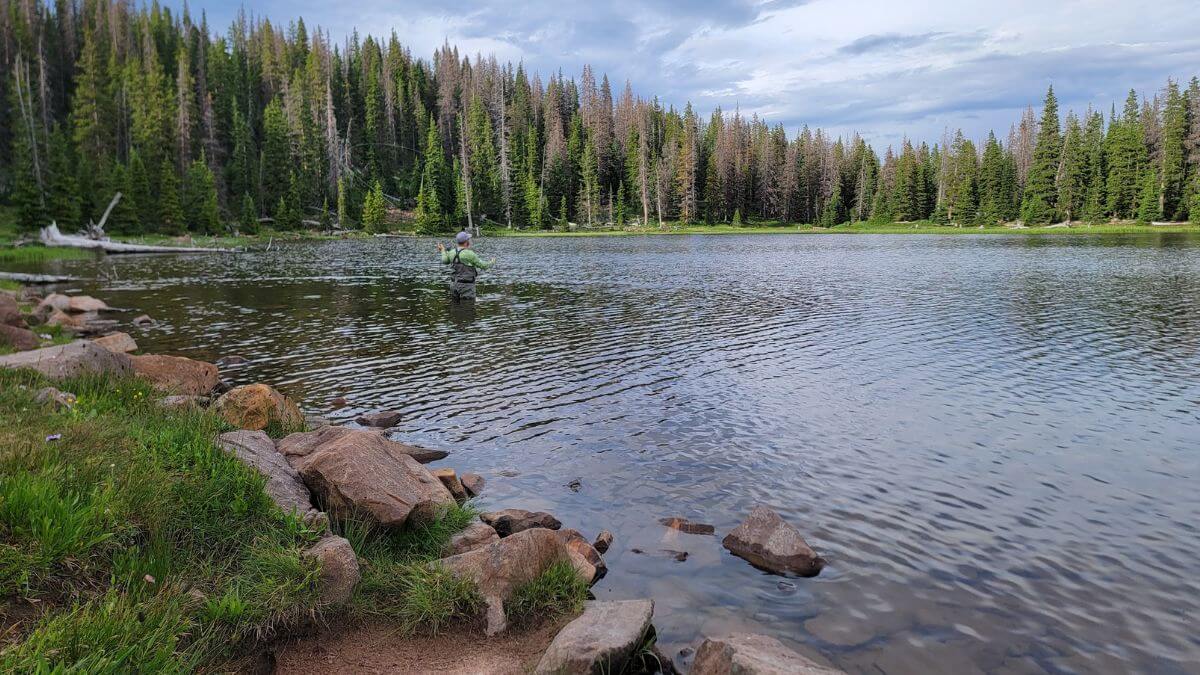
UTAH — As summer heat continues across Utah, anglers looking for cooler temperatures can head into the mountains for high-elevation fishing.
High-elevation streams and lakes typically offer good fishing from July through late September or early October, according to Utah’s Division of Wildlife Resources. The state’s mountain waters provide opportunities to catch several trout species while escaping the warmer temperatures at lower elevations.
Before heading into the mountains, DWR recommends checking the weather forecast for early snowstorms and looking for updates on any wildfires in the area.
“Even though it’s high elevation, anglers are still encouraged to fish early in the morning or in the evenings when it’s a little cooler, in order to help the fish if you are doing catch-and-release fishing,” Utah DWR Sportfish Coordinator Trina Hedrick said.
Where to go
Utah offers high-elevation fishing opportunities ranging from small mountain streams to larger rivers and lakes, many of which are within easy driving distance of Park City.
Some options recommended by DWR include:
The Uinta Mountains in northeastern Utah, which contain 14 drainage basins with numerous stream fishing opportunities
Little and Big Cottonwood canyons in Salt Lake County
American Fork Canyon in Utah County
Boulder Mountain in southern Utah
The mountains of the Manti-La Sal National Forest in southeastern Utah
Both the Uinta Mountains and Boulder Mountain are designated Blue Ribbon Fisheries, a designation for some of Utah’s highest-quality fishing waters.
What you can catch
The cold water found at high elevations provides habitat primarily for a variety of trout species, including Arctic grayling, cutthroat, brook, brown, rainbow, and tiger trout.
“There are thousands of miles and hundreds of lakes with brook and cutthroat trout in these high-elevation areas,” Hedrick said. “You can also find rainbow and brown trout in the ‘lower’ high country, due to their habitat needs. A few intrepid anglers may also run into a golden trout or two if they are motivated to get to some remote waterbodies.”
Many of the fishing opportunities in the Uintas and on Boulder Mountain are on smaller streams. Those streams can be surrounded by brush, making shorter fishing rods a good option.
“Fishing in small streams can be difficult, but anglers can be rewarded with high catch rates of fish, though they may be smaller fish in some areas, especially in the Uintas,” Hedrick said.
Stay safe in the high country
Mountain fishing can take anglers into remote areas, and DWR recommends taking precautions around streams and rivers.
“Water tends to be moving faster than it looks,” Hedrick said. “Always use caution before attempting to wade in a stream when fishing.”
Anglers should consider bringing another person when fishing or recreating near water. If fishing alone, tell someone where you are going and when you expect to return.
High-elevation water can also be extremely cold, so anglers should bring appropriate clothing and layers to stay warm. Those hiking into remote fishing areas should carry enough food and water for the trip.
DWR also recommends staying on or near established trails to avoid becoming disoriented or lost. An emergency beacon or satellite communication device can provide an additional safety measure in remote areas.
Finally, DWR encourages anglers to practice responsible recreation by packing out everything they bring into an area and leaving fishing spots clean for other anglers and visitors.


4251 E Lipizzan Jump
Moab, UT 84532