Utah increases sandhill crane hunting permits as more birds stay through winter

UINTAH BASIN — Each fall, thousands of sandhill cranes pass through Utah during their migration. But changing weather patterns could mean more of the birds are sticking around the Uintah Basin this winter, creating a shift in the ecosystem that could be good news for bird-watchers and a growing headache for local farmers.
“Changes in weather patterns may mean a significant increase in the number of birds that become permanent residents of the area, especially in the winter months,” said Tonya Kieffer-Selby, DWR’s Northeastern Region outreach manager.
For people hoping to see the large birds, that could mean more opportunities.
For farmers, however, more cranes spending the winter in the basin could mean more crop damage.
Sandhill cranes feed on plants, grains, insects, snakes, and mice. According to DWR, the birds can damage crops by digging up tubers and agricultural seeds.
That agricultural conflict is one reason DWR has been working with the U.S. Fish and Wildlife Service and the Pacific Flyway Council to offer more sandhill crane hunting permits in the area.
Utah’s 2026 sandhill crane season in the Uintah Basin is divided into three hunts, running from late September through November. The DWR’s current regulations require a permit to harvest a sandhill crane, and hunters may take one bird per permit.
The Uintah Basin has had separate early, middle, and late crane hunts for several years. In 2024, DWR issued 46 permits for the early and middle hunts and 44 for the late hunt. This year, DWR is issuing 98 permits for each hunt, totaling 294.
The management challenge is tied to a bird population that is increasingly visible across the basin.
“Sandhill cranes come to the Uintah Basin during migration and are very easy to spot in the fields here — and they have already started to arrive,” Kieffer-Selby said.
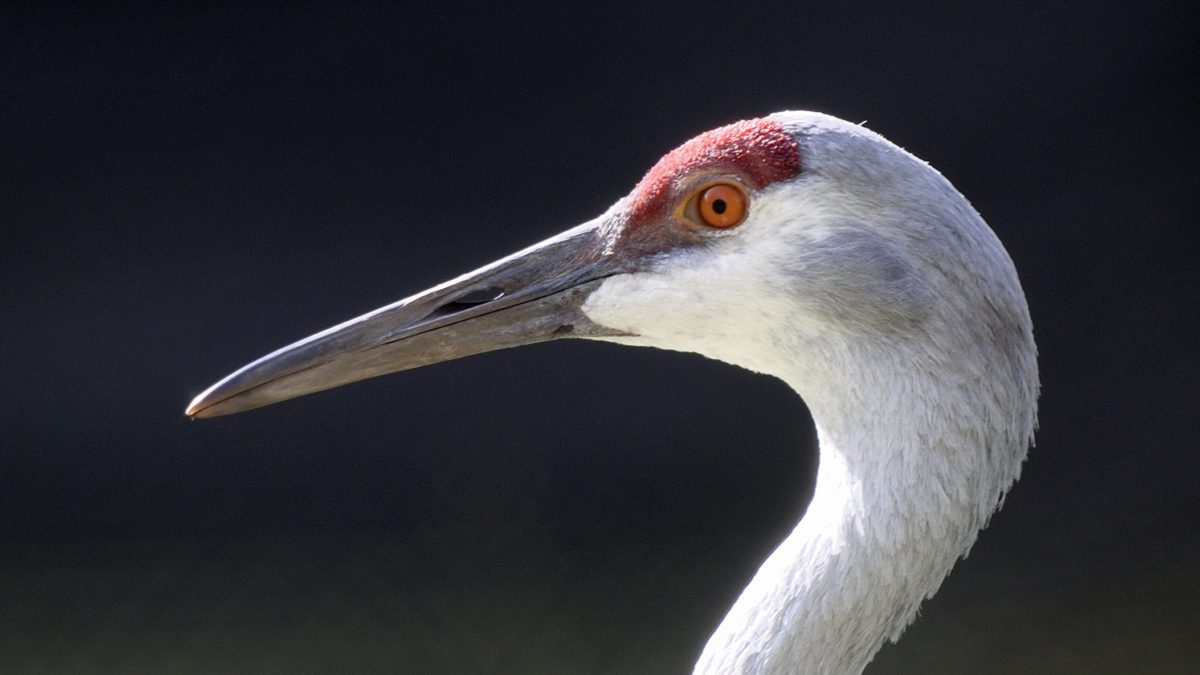
The birds stand about 4 feet tall and are recognizable by their gray bodies, long legs, and crimson crowns. Their distinctive calls can carry for miles.
The cranes typically migrate through the region in the fall, spending time in agricultural fields, pastures, grasslands, and wetlands during the day before returning to riverbanks and shallow lakes to roost at night.
But if warmer or otherwise changing weather patterns cause more cranes to remain in the basin during winter, that could alter the balance between wildlife habitat, agriculture, and hunting in the region.
A closer look at cranes
DWR is inviting the public to see the birds up close during two free auto tours in the Uintah Basin on Saturday, Oct. 10.
The morning tour will run from 7 to 9 a.m. Participants will meet at Jensen Nature Park and drive to fields near the Green River in Jensen.
The evening tour will run from 5 to 7 p.m., beginning at the commuter parking lot at the intersection of Highway 40 and state Route 88, between Vernal and Roosevelt. Participants will then travel to crane roosting grounds at Pelican Lake and the Ouray National Wildlife Refuge.
Binoculars and spotting scopes will be available, although participants are encouraged to bring their own equipment.
DWR said the events are intended not only to introduce people to the cranes but also to explain the management challenges that come with a growing number of birds spending time in the area.
“Besides viewing cranes, we hope the event will help teach the public about the importance of sandhill crane management and conservation practices,” Kieffer-Selby said.
Registration is required in advance for the free events.
If you’re looking for more local opportunities, Park City residents often report seeing sandhill cranes at the Swaner Preserve, or even wandering into town.


2266 E Garfield Avenue
Salt Lake City, UT 84108