Summit County Search and Rescue heads toward winter after one of its busiest summers

Technology is helping rescuers find people faster, but calls are increasing and medical emergencies are changing the nature of backcountry response
PARK CITY, Utah — Summit County Search and Rescue is coming off one of its busiest summers in recent years, with rising call volumes, changing technology, and more medical emergencies shaping how volunteers respond across the county’s backcountry.
The team recorded 23 calls in July and 26 in August, according to Canice Harte, director of Summit County Search and Rescue. The previous monthly high was 22 calls.
Last year, the team responded to 112 calls for service. Harte said this year is trending above that number.
“What we’ve seen is year over year, it’s creeping up just a few calls more every year, every month,” Harte said.
Summit County Search and Rescue operates under the Summit County Sheriff’s Office and is staffed primarily by trained volunteers. The county describes the team as community members who keep regular jobs and lives while training and responding as needed.
Harte said the team currently has 48 volunteers, supported by two paid Sheriff’s Office employees assigned to Search and Rescue, along with other county staff. Utah law places responsibility for managing search and rescue services with county sheriffs.
Technology changes the search
One of the biggest changes Harte has seen is that rescuers often know where someone is before they ever leave the station.
Cellphones, GPS tracking, and the ability to text 911 from remote areas can give rescuers coordinates that let teams head directly to someone in trouble.
That has reduced the amount of time volunteers spend searching, Harte said, even as the number of calls has increased.
Technology has also created a new kind of call. Family members tracking a loved one from miles away can alert dispatchers when something seems wrong.
Harte recalled a case in which a woman believed her husband, who was hunting, might be in a lake because the location marker on her phone appeared to show him in the water.
In another recent case, a woman in California contacted dispatch after her husband, who was recreating in Summit County with their adult son, managed to text her that they were in trouble. Search and Rescue responded, and the pair ultimately walked out on their own.
“We’re getting remote calls. We’re getting third parties that are now calling in,” Harte said. “For the most part now, we’re getting GPS coordinates, and so we’re going directly to the person.”
More medical rescues than lost hikers
Harte said one of the biggest misconceptions about Search and Rescue is that most calls involve finding lost hikers.
“That traditional search and rescue call might be the lost hiker, and we very rarely get that,” he said. “It’s really almost always medicals.”
Those calls can range from a sprained ankle to a heart attack.
The difference today, Harte said, is that someone injured deep in the mountains may still be able to summon help. With text-to-911 and improved cellphone coverage, an injury that someone once might have had to endure while hiking out can now trigger a rescue response.
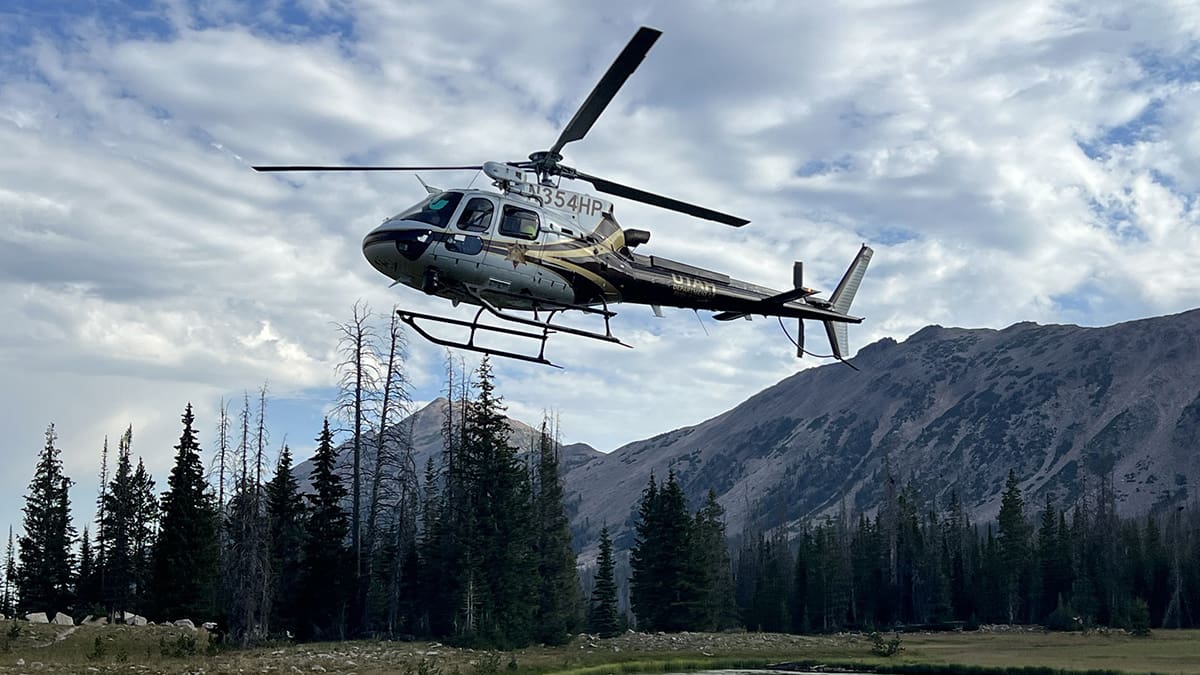
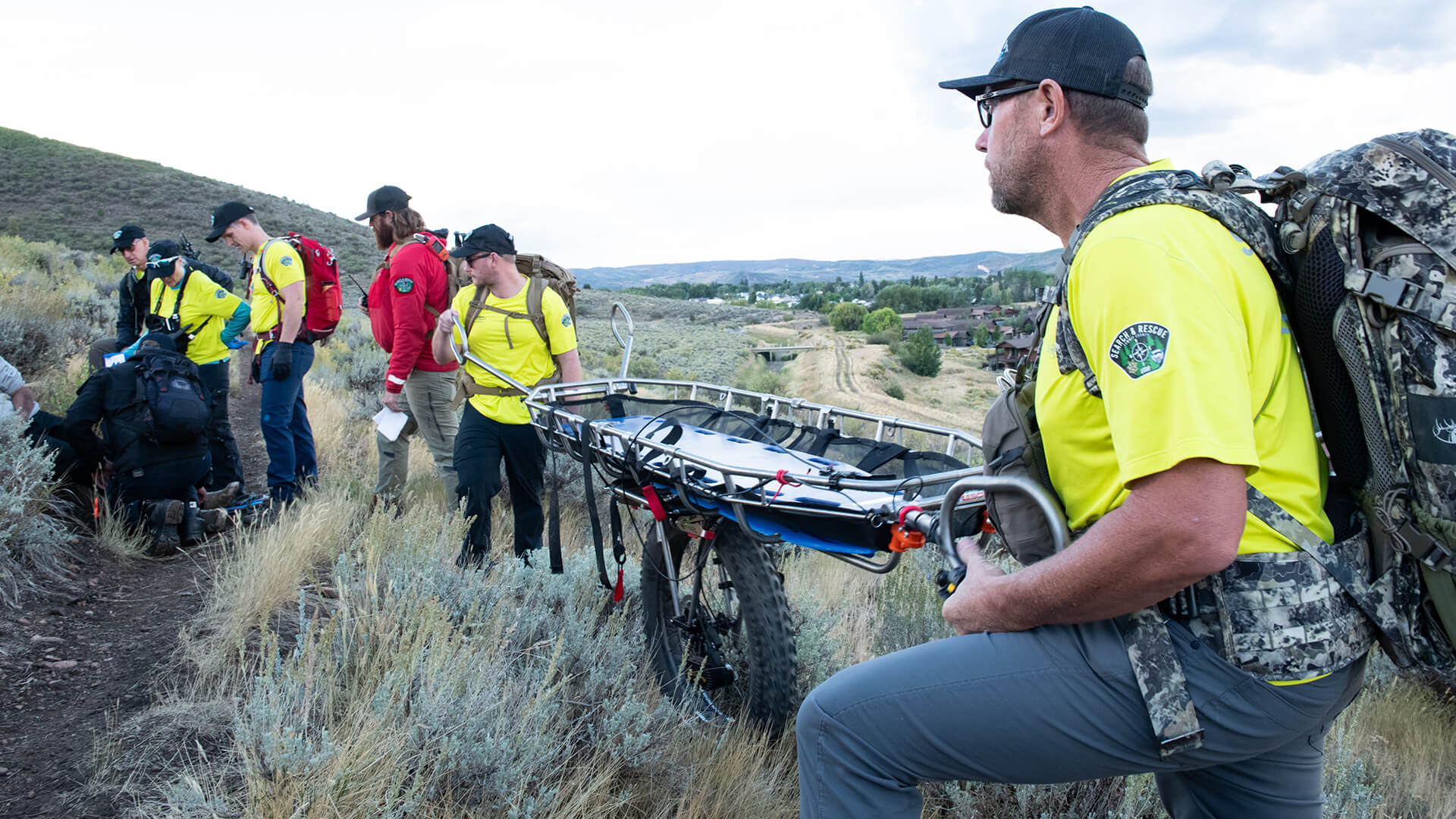
The team may use side-by-sides, horseback teams, helicopters, or specialized equipment to reach and extract a patient. One tool is a motorized litter mounted on a large fat-tire wheel that lets rescuers move injured patients over trails.
Search and Rescue often links an injured person to emergency medical crews, either bringing medical personnel into difficult terrain or transporting the patient to an ambulance or helicopter.
“We’re that conduit to getting them medical care,” Harte said. “And we do it in areas that people cannot normally get to.”
A single rescue can require a large team
Knowing a person’s location does not necessarily make a rescue simple.
Harte said a single call can require 15 to 20 volunteers, depending on the terrain and circumstances.
Teams may take different trails if a person has moved. Other volunteers may transport fuel for a helicopter, take medical crews into the backcountry on e-bikes, operate vehicles or help carry extraction equipment.
“The best way to resolve things in the mountains is you kind of pour your resources into the call until you have positive contact with the patient,” Harte said.
Once rescuers make contact and understand what is needed, they can begin releasing resources.
That increased efficiency helps explain an unusual trend: Call volume is rising, but total volunteer hours are declining.
Harte said that does not mean volunteers are contributing less time. It means teams are finding patients and resolving calls faster.
“They’re just more efficient at it,” he said.
From hunting season to snow
Search and Rescue activity tends to rise and fall with the seasons.
Summer is typically one of the busiest periods. Calls slow in the fall before increasing again during hunting season, Harte said. Another transition comes when deep snow arrives, and winter rescues begin.
Those missions can take teams much farther into the backcountry and often become more complicated.
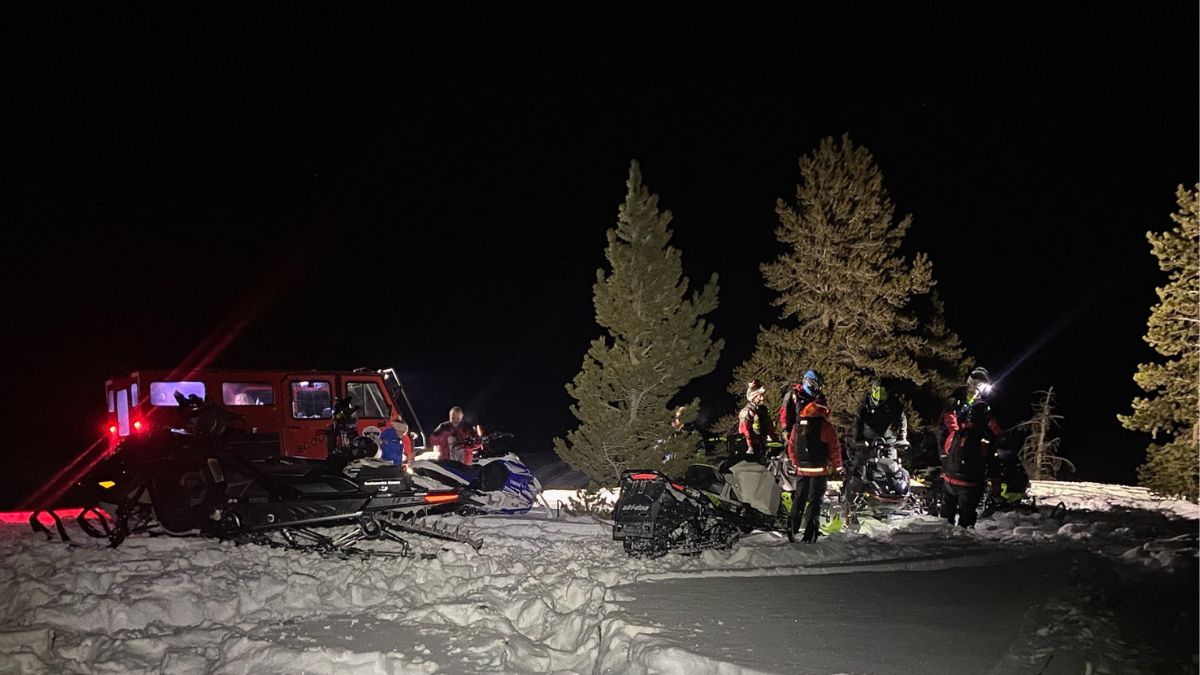
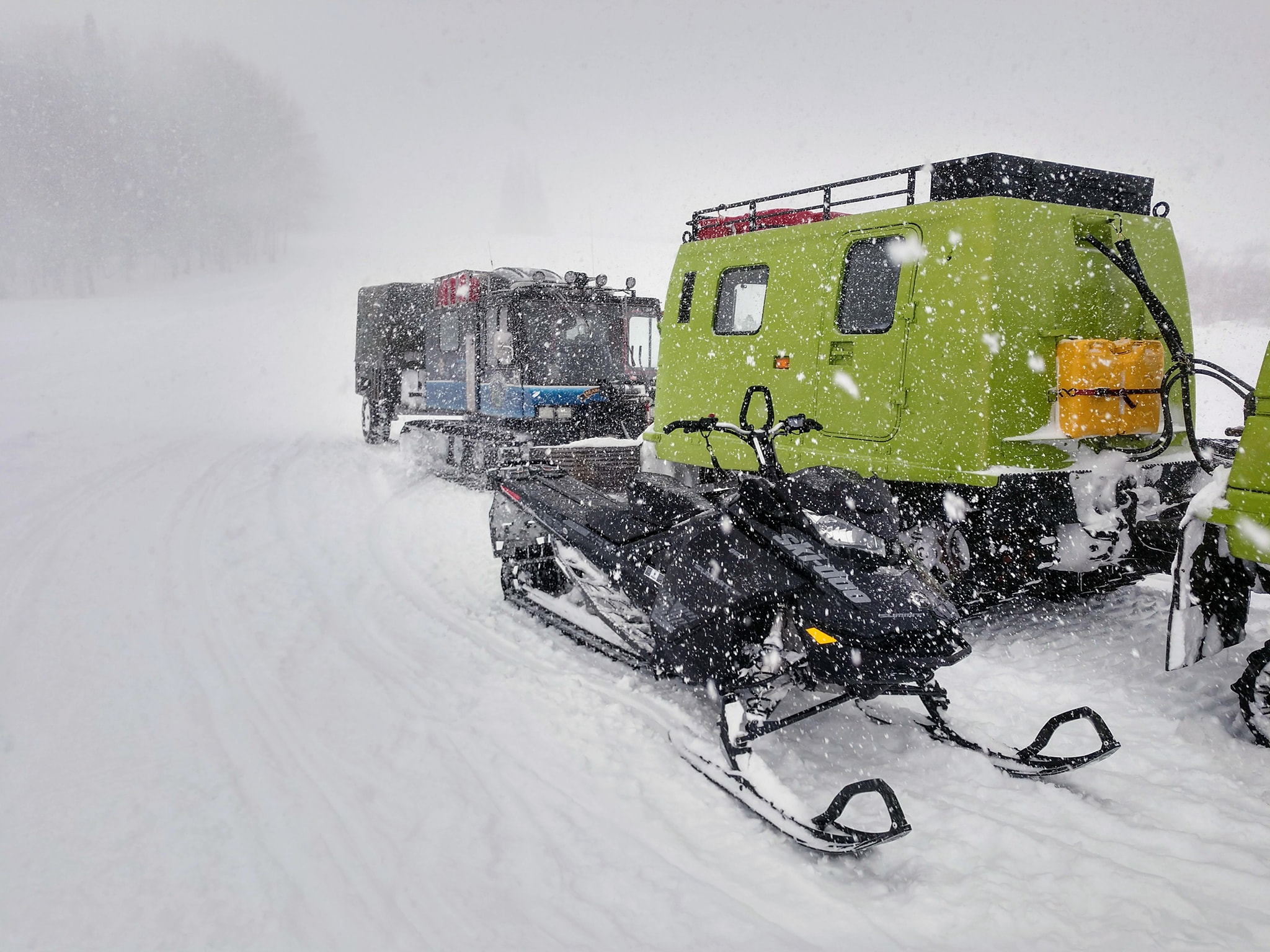
Search and Rescue uses snowmobiles and tracked vehicles to reach areas roads can’t access. The team also trains for avalanche response and occasionally assists with avalanche recoveries in the backcountry and sidecountry near Park City-area resorts.
Summit County Search and Rescue maintains specialized summer, winter, technical and underwater recovery capabilities, according to the county.
As winter approaches, Harte said one concern is that modern equipment can give people access to terrain beyond their experience level.
High-performance snowmobiles and other backcountry equipment are widely available to rent, but the rider’s skill level may not always match the machine.
“They just need to really be careful when they venture into the backcountry to make sure they can self-rescue and to take care of themselves,” Harte said.
That becomes especially important once a medical emergency happens miles from a road.
“Those rescues are usually far more complicated because now they’re deeper in the backcountry with deep snow,” Harte said. “When they have a medical emergency, you just can’t drive to them to get them out.”


4251 E Lipizzan Jump
Moab, UT 84532