A busy wildlife crossing is hiding beneath US-40 near Strawberry Reservoir

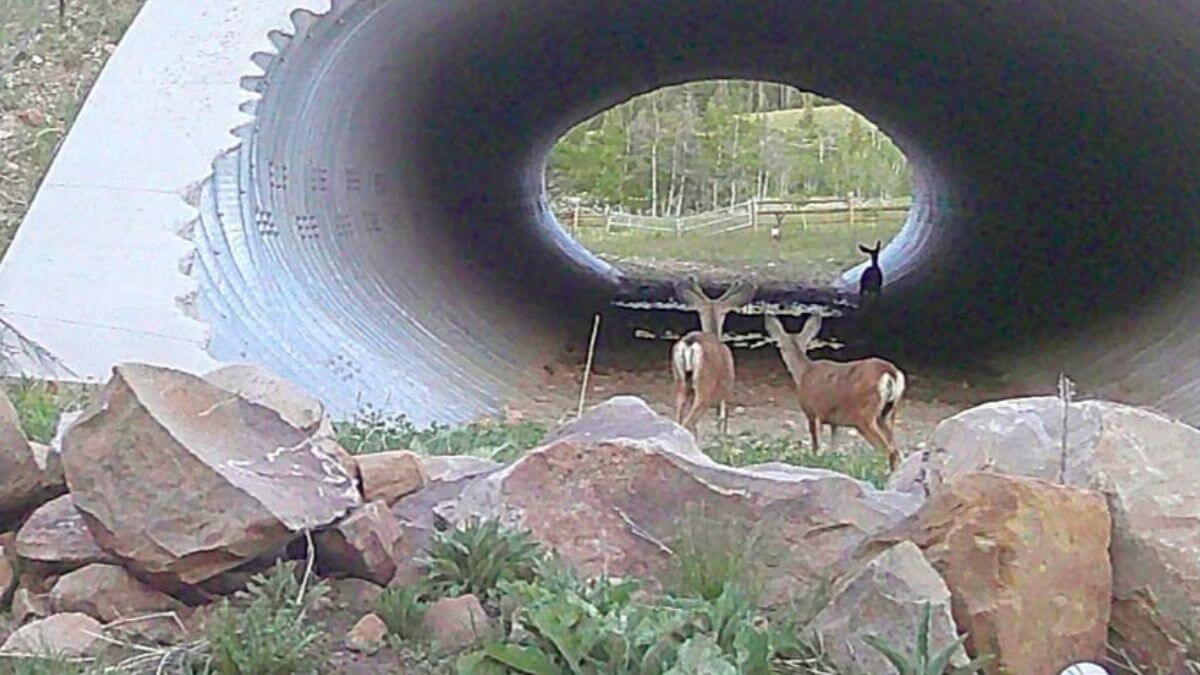
WASATCH COUNTY, Utah — Parleys Canyon’s massive wildlife overpass has become one of Utah’s best-known example of infrastructure designed for animals. But farther east, a much less conspicuous underpass near Strawberry Reservoir is quietly doing the same job, and the Utah Division of Wildlife Resources says it’s one of the busiest in the state.
DWR recently highlighted the crossing near Strawberry Reservoir, sharing trail-camera images of wildlife using an underpass beneath U.S. 40.
The underpass doesn’t have the dramatic profile of the overpass one in Parleys Canyon; in fact, drivers traveling US-40 may not even realize they’re passing over it. But the crossing is part of a much larger effort to prevent wildlife and vehicle collisions along US-40.
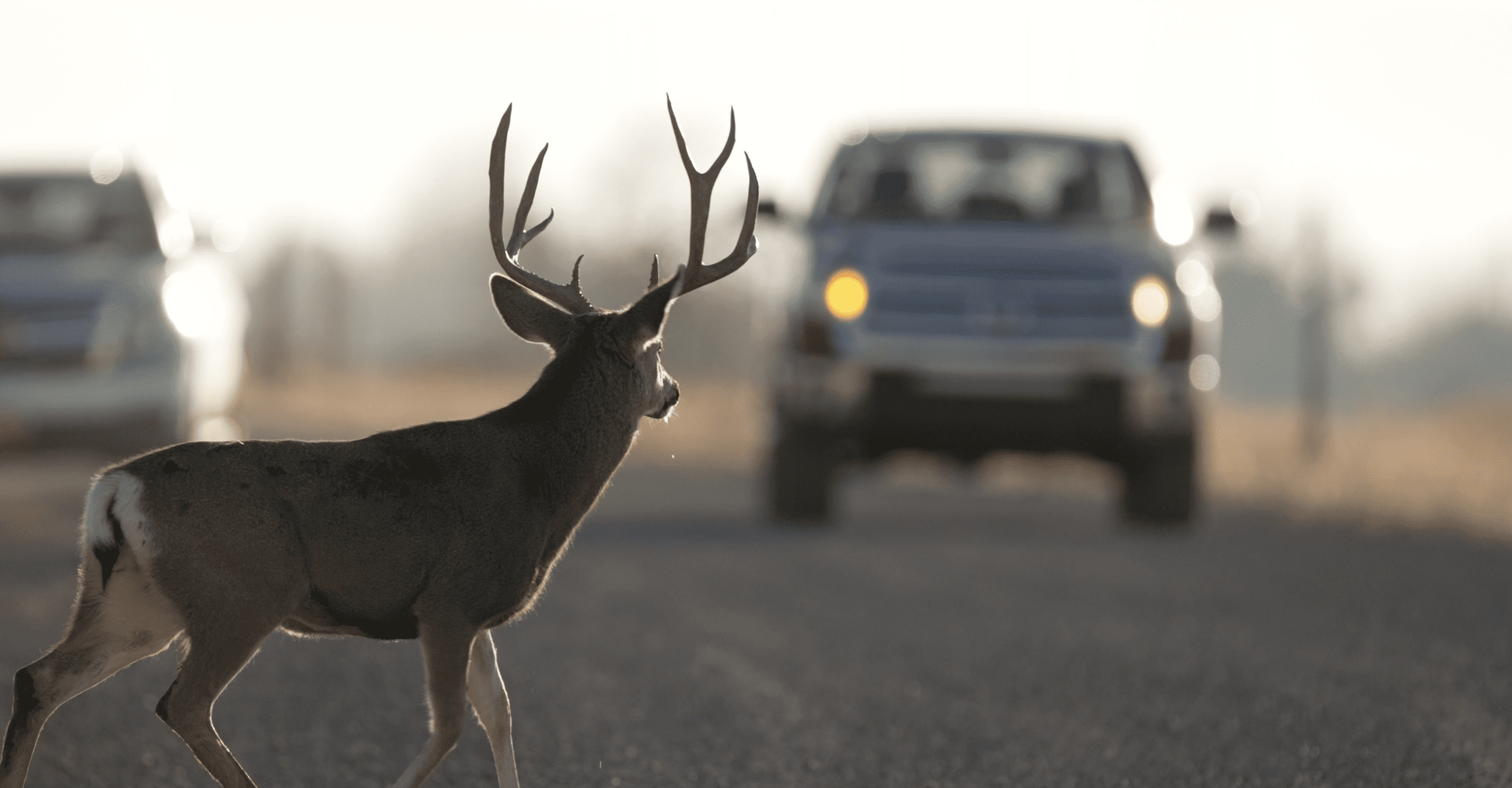
A 2024 Utah wildlife migration plan identified US-40 as an important barrier for wildlife moving through the Wasatch Mountains. The corridor includes summer, transitional, and winter habitat for elk, moose, and mule deer, and other wildlife, meaning that animals are frequently on the move.
The state’s migration plan reported that an estimated 467 ungulates had been picked up along the highway between Heber and Duchesne over a two-year period, with many collision locations occurring around Strawberry Reservoir.
USGS research on the Wasatch East mule deer herd shows just how closely wildlife movement and US-40 intersect.
The herd migrates an average of about 23 miles between summer ranges along Duchesne Ridge, north of Strawberry Valley, and winter ranges west of Duchesne. Researchers identified highway mortality as a significant concern because the deer must cross US-40 and U.S. 191 during their movements.
The Strawberry-area underpass and deer fencing along the highway was constructed as part of a UDOT project that began in 2019. The project also expanded passing lanes and resurfaced a roughly 17-mile section of US-40 between Daniels Summit and Soldier Creek.
With thousands of vehicles traveling US-40 each day, the underpass gives animals a way to pass the traffic safely rather than navigate a highway.
Fencing is an important part of that equation, too. Wildlife crossings work best when fencing helps keep animals off the road and guides them toward designated crossing points.
More crossings are coming
The Strawberry underpass is part of a growing effort to improve wildlife safety along US-40.
In January 2025, UDOT announced a $9.6 million federal grant for wildlife-safety improvements along US-40 in Wasatch and Duchesne counties. The project calls for 23 miles of wildlife fencing, retrofitting three existing wildlife underpasses, and constructing one new underpass between Fruitland and Starvation Reservoir.
The project reflects a shift from treating wildlife crossings as isolated structures to thinking about them as part of a larger migration network.
DWR and UDOT have now constructed more than 60 wildlife crossings across Utah, according to UDOT.
The crossings can look very different. Some are large overpasses that recreate habitat above a highway. Others are smaller underpasses or modified structures that might be almost invisible to passing motorists.
But the goal is always to give wildlife a way to move through the landscape while reducing the chance of a collision with a vehicle.


4251 E Lipizzan Jump
Moab, UT 84532