Town & County
Summit County approves housing plan as council wrestles with growth behind 1,500-unit goal

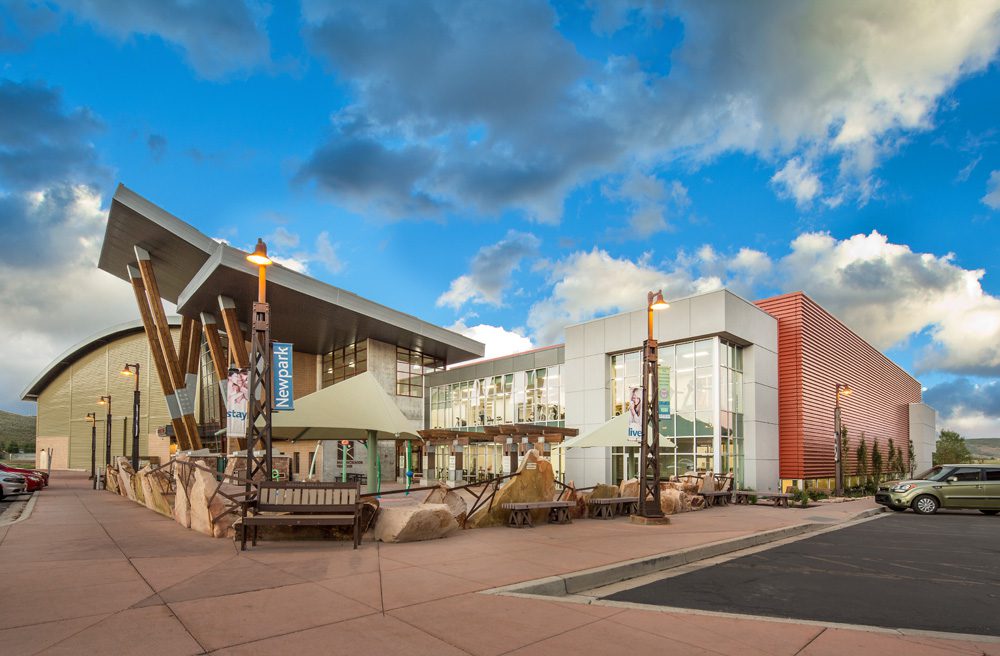
Summit County officials discuss the county’s long-term affordable housing strategy during an Aug. 5 County Council meeting. The council approved the Summit County Housing Authority Strategic Plan, which sets a goal of facilitating 1,500 affordable housing units over roughly the next decade. Photo: Summit County
Strategic plan calls for more affordable housing, higher density and regulatory changes, while council members say broader regional planning is still needed
PARK CITY, Utah — Summit County has formally adopted a roadmap aimed at creating 1,500 deed-restricted affordable housing units over roughly the next decade, but the vote opened a broader discussion among County Council members over how much growth the county is willing to accommodate to meet its housing goals.
The council approved the Summit County Housing Authority Strategic Plan on Aug. 5 with one dissenting vote, following a lengthy discussion about density, development, traffic and whether the county has sufficiently defined whom it is trying to house and where those homes should be built.
The Summit County Housing Authority was established in December 2024. In March 2025, the council set a goal of facilitating 1,500 new affordable housing units over 10 years, excluding units planned for the Altus and Cline Dahle properties. The strategic plan says the 1,500-unit target does not meet the county’s full current or projected housing needs, but instead serves as a starting point.
County staff estimates Summit County has an existing deficit of 1,621 deed-restricted affordable units and will need 3,745 new housing units by the end of 2036, according to the strategic plan. The document also says approximately 63% of the county’s workforce commutes from outside Summit County, citing U.S. Census Bureau OnTheMap data.
Under the adopted plan, approximately 1,050 of the 1,500 units would be targeted for the Snyderville Basin and 450 for Eastern Summit County, based on employment proximity and existing infrastructure.
The plan promotes a mix of apartments, condominiums, townhomes, accessory dwelling units and smaller single-family homes. It also calls for advocating for development code changes allowing more by-right uses and higher densities. Other strategies include prioritizing affordable housing along existing and planned transit corridors and exploring an affordable housing overlay zone.
Those strategies prompted council members to question how the county’s broad housing goals will translate when individual development proposals come before them.
Council member Christopher Robinson said the county has repeatedly established housing goals while finding their implementation more complicated.
“We set goals, want 1,500 units, we have all these aspirational things, but then when we come to do them, we say, ‘Well, geez, we don’t want that. That’s going to induce growth,'” Robinson said. “I’m not opposed to these strategies, but I think the application of them has been thorny in our experience and will be in our future.”
The discussion also exposed questions about the relationship between the Housing Authority and County Council. The Housing Authority is a separate entity and can support or oppose individual housing projects, but its position does not constitute approval by the County Council or a planning commission.
Council members spent considerable time discussing whether Summit County needs a more comprehensive housing strategy that looks beyond the 1,500-unit target.
Roger Armstrong questioned how the county determined its housing deficit and whether officials have sufficiently defined who should be prioritized for affordable housing, raising examples including law enforcement officers and teachers. He also questioned the population and development impacts that could accompany additional affordable and market-rate housing.
Other council members pushed back on portions of that argument, noting that providing housing locally could reduce the number of workers commuting into Summit County. The discussion reflected a broader disagreement over how additional housing could affect population, traffic and demand for services.
Council members also discussed coordinating more closely with Park City and neighboring communities. During the meeting, members said Park City has its own 1,800-unit housing goal and acknowledged that the county and city are not yet fully aligned regionally on housing strategy.
“We may not all agree on what the outcome is or the target should be, but we need to do the work together,” Canice Harte said during the discussion.
Council members asked County Manager Shayne Scott to organize another housing strategy session building on a March 2025 housing summit. During the meeting, council members suggested holding the session by mid-October and using it to develop more specific housing targets and priorities.
The adopted plan also expands the Housing Authority’s work on short-term rentals. A revised strategy calls for researching the effects of short-term rentals on housing availability and affordability and working with the county’s short-term rental subcommittee when appropriate.
Another newly added strategy calls for the Housing Authority to develop policies for prioritizing and supporting projects that meet community needs, including housing for the local workforce and what the plan describes as “generational housing solutions.”
Despite the questions raised during the meeting, most council members said the Housing Authority should be allowed to move forward with its strategy while the council continues its broader planning.
Several members emphasized that adopting the Housing Authority’s plan does not bind them to approve individual developments. The Housing Authority does not have land-use authority, and council members said proposed projects will continue to be evaluated individually.
The unresolved question is less whether Summit County needs affordable housing than how the county intends to pursue it while weighing density, growth, traffic and the cumulative effects of development across the region. Those are the questions council members said they want to tackle in their next housing strategy session.
By: Rebecca Brenner


1548 W Woodsview Lane
St. George, UT 84770
1263 E Wild Maple Court
Draper, UT 84020
336 W Broadway Unit 201
Salt Lake City, UT 84101
29 Marilyn Court
Park City, UT 84060Talk of the Town


Park City Jobs

Math Instructor / Tutor, Mathnasium of Park City
Today Part time $22.00 - $24.00 hourly

Technician, Park & Facility Operations, Basin Recreation
Today Full time $51,192 - $63,990 yearly

Intermediate Architect, A43 Design.com
1 day ago Full time $63,000 - $81,000 yearly
Interior Designer, A43 Design.com
1 day ago Full time $62,000 - $70,000 yearly

Boutique Manager, Blue Sky Nomads
1 day ago Full time