From side hustle to sisterhood

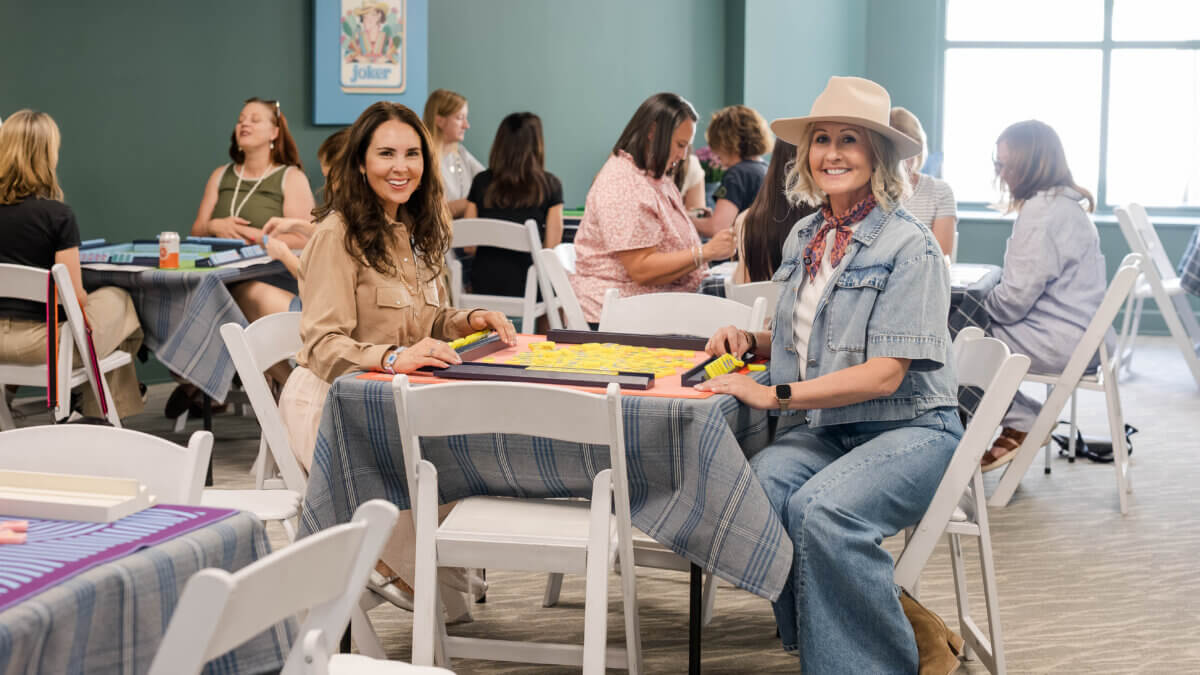
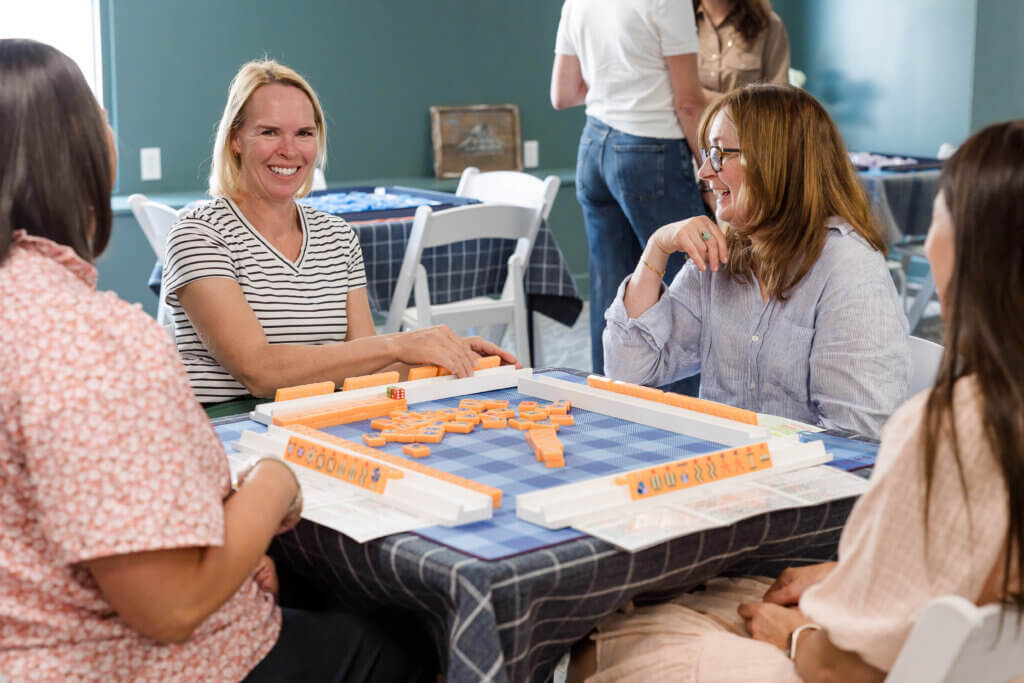
Before the tiles, tournaments, and Instagram-worthy tablescapes, there were just two women in a living room, saying yes to something new.
Natalie Stouffer and Bethany Jordan did not know each other well before that night. They were connected the way so many Park City women are, through mutual friends, overlapping circles, and familiar faces at kids’ events.
“They’re like, ‘Hey, do you want to come to this person’s house, who you don’t know, to learn this game you know nothing about?’” Natalie remembers with a grin. “I was like, ‘Yeah, sure.’”
That small “yes” would eventually grow into a business that now employs a team of instructors, fills events, and has touched the lives of more than a thousand people. But at the center of it all are still the same two women: Natalie and Bethany, each bringing her own history, skillset, and curiosity to a partnership that works because they are so different.
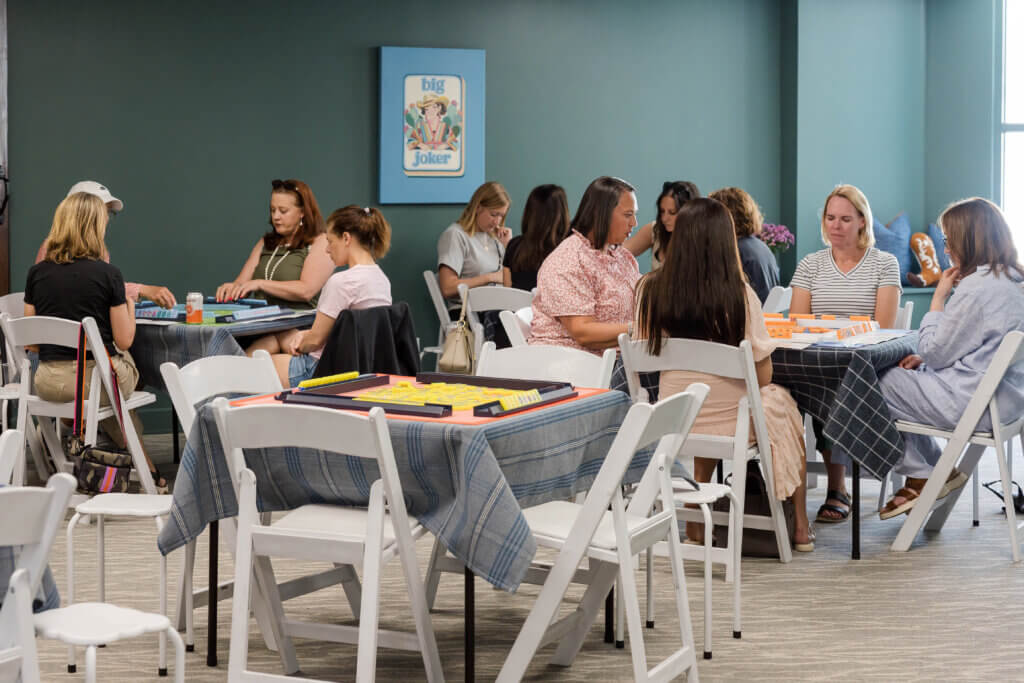
Two Very Different Roads to the Same Table
Bethany’s life before Utah was not quiet.
“I’m a former NBC News producer,” she says, almost as an aside. “Today Show, Nightly News with Tom Brokaw. I traveled the world for a couple of decades of my life.”
She is used to deadlines, complex logistics, and crafting stories on the fly. After years of high-pressure media work and part-time life in Deer Valley, her husband suggested they move to Utah full-time.
“He had a midlife crisis and asked that we try this out for one year,” Bethany laughs. She eventually agreed. They moved the family, and she stepped back from the career that had defined much of her adult life. She supported the family, remodeling houses, working in the Sundance Press Office for a time, and, for a while, simply allowing herself to land.
Natalie’s path was different, but it was just as layered.
“I was born in Utah, raised in a military family, and after spending time living in Italy, I eventually found my way back home,” she says.
Education became her world. She taught in public schools before moving into administration and district leadership roles, helping teachers grow and ensuring that systems work better.
Along the way, she remarried and moved to Park City, where she watched her husband build a successful business of his own. While stepping away from education and navigating the medical challenges of starting a family, Natalie found herself drawn to entrepreneurship from a different angle.
“I helped launch a couple of local startups,” she says. “I wasn’t the founder, but I loved being part of building something from the ground up.”
When Natalie’s son was born, life shifted again. Much of her focus went toward motherhood, but the idea of owning a business never fully left.
As her son grew more independent, she found herself thinking about what might come next. She had spent years helping schools, organizations, and startups solve problems.
“I always knew I wanted to be my own boss someday,” she shares. “I wanted to bring all of my skillsets together and create something that was mine.”
She just didn’t know yet that Mahjong would be the thing that made it happen.

Saying Yes to Each Other
The original Mahjong group that changed everything was never meant to be a company. Bethany wanted a piece of that connection she witnessed in Texas to be created here.
“I saw what was happening,” she tells me. “Since about 2020, it became this Covid phenomenon. Mahjong is known as an ‘old grandma’ game, but it had this resurgence with young people and all ages.”
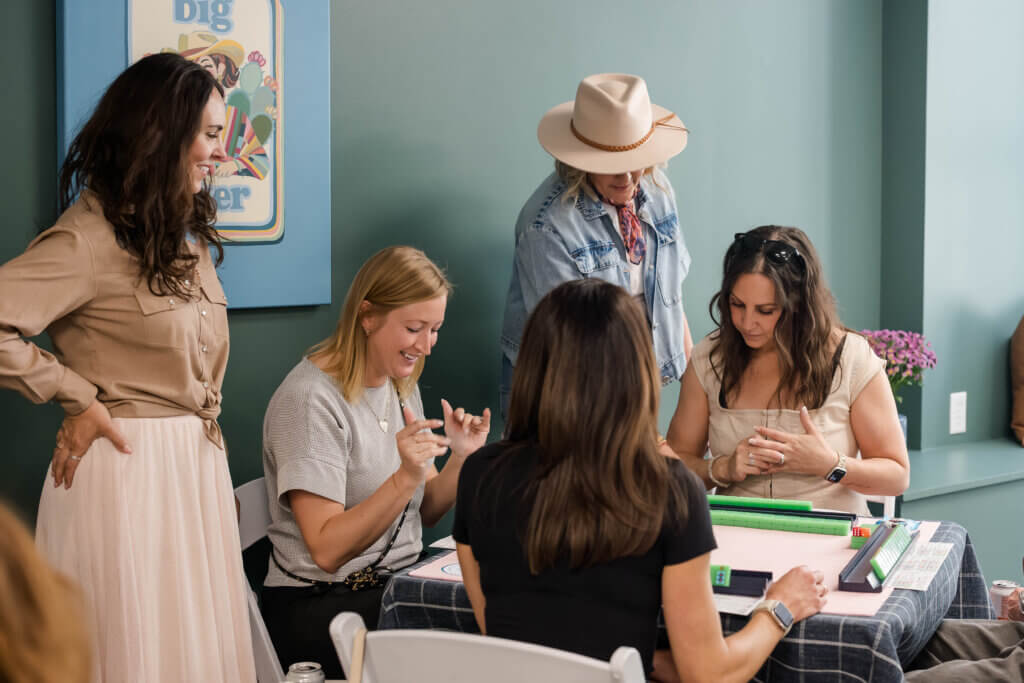
Bethany pulled in some friends, also friends of friends. Natalie showed up. They bonded over the game, but more importantly, over how it made people feel: present, engaged, and a part of something.
“I think we had maybe been like, ‘Hi,’ and I was like, ‘Who’s that bougie chick over there?’” Natalie jokes about her first impression of Bethany, whom she realizes isn’t actually bougie. “She is creative and unique, with great taste.”
Bethany, for her part, remembers hosting, mixing strong margaritas, and having no idea that her dining table would eventually be the birthplace of a business.
Over time, their roles became clear. Bethany handles financial numbers, sales, design, scheduling, correspondence, and local business partnerships. Although she’s frequently at her computer, she is the storyteller and big-vision driver, the one who can stand at the front of a room and make 40 strangers feel like friends.
Natalie designs the lessons and trains other teachers, in addition to posting on social media, updating their website, and managing league and tournament operations. She spends most of her time teaching lessons, hosting open plays, and growing community with their players.
And: She is the systems brain, quietly noticing what’s inefficient and how to make it better.
“Natalie is our tech guru,” Bethany says. “Our processes can be clunky. She’s seeing those pressure points, fixing those, and making us a real business.”
The way they tease each other is affectionate and familiar.
“She’ll be here 70 minutes early,” Bethany says.
“And I’ll be here on time,” Natalie fires back.
Different brains. Different tempos. Same goal.
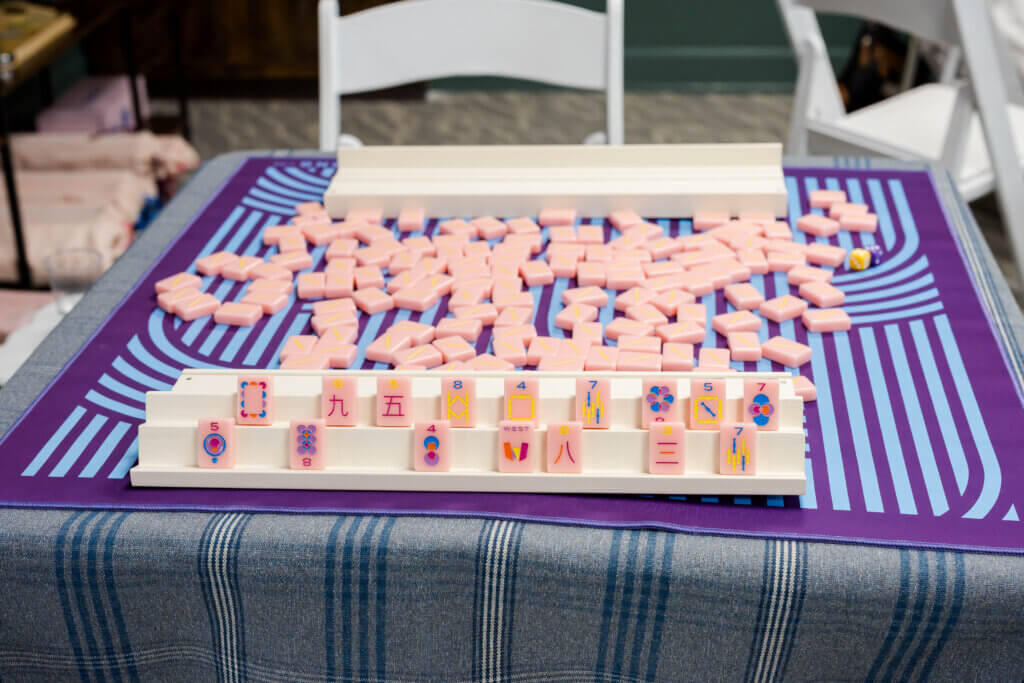
Building Something That Looks Like Them
When they realized they could be trained as instructors, neither of them imagined what was coming.
“We thought we would teach a couple lessons here and there,’” Bethany admits. “Natalie still teaches almost weekly—or more than weekly—to keep the pulse of what our players think.”
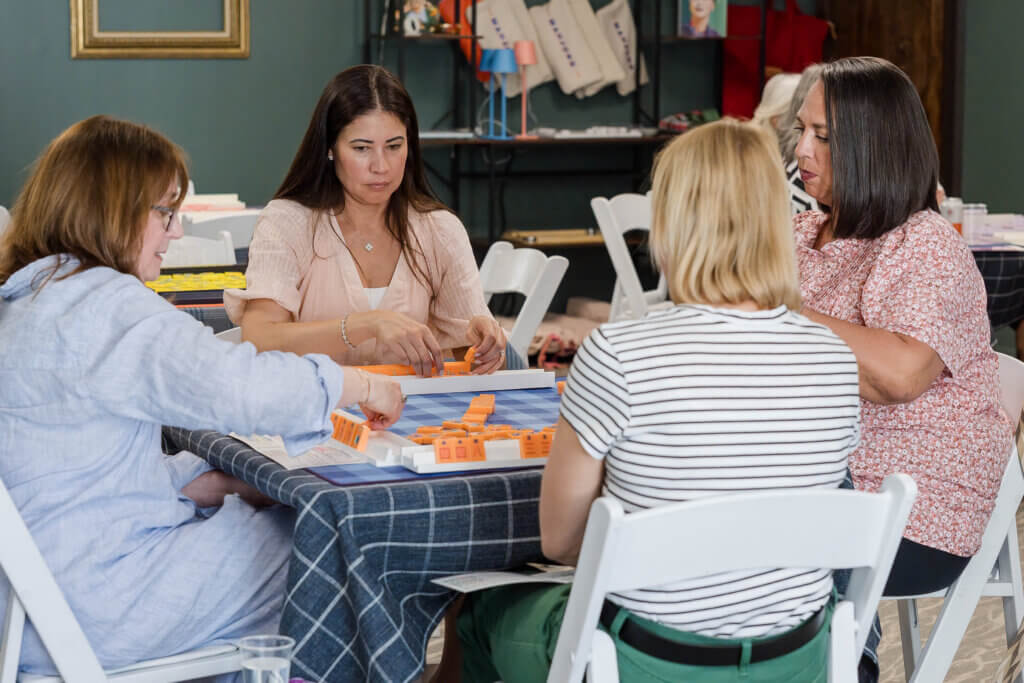
The demand came quickly. Their weekly game morphed into structured lessons, then leagues, then open-play and special events. They now oversee about 10 instructors, ranging in age from their twenties to their seventies, all trained to teach the same way, with the same warmth and standards.
Bethany’s production background shows up in the way she thinks about scalability and brand.
“Everything is very formulaic,” she explains. “We are keeping everything very uniform and branded so that it can be interchangeable. It needs to still have our stamp on it, even if we’re not there in person.”
Natalie’s education and leadership training show up in the way they onboard instructors: through shadowing, demonstration lessons, and feedback loops. Most of their teachers started as students who fell in love with the game and the atmosphere, then stayed.
And their personal relationship didn’t stay at the table.
“Since that time, our families have grown really close,” Natalie says. Her young son idolizes Bethany’s teenage boy, and Bethany helped coordinate a surprise birthday party for Natalie’s milestone birthday.
Starting a business together has tested and strengthened that friendship, not replaced it.
The Invisible Labor Behind a “Fun” Business
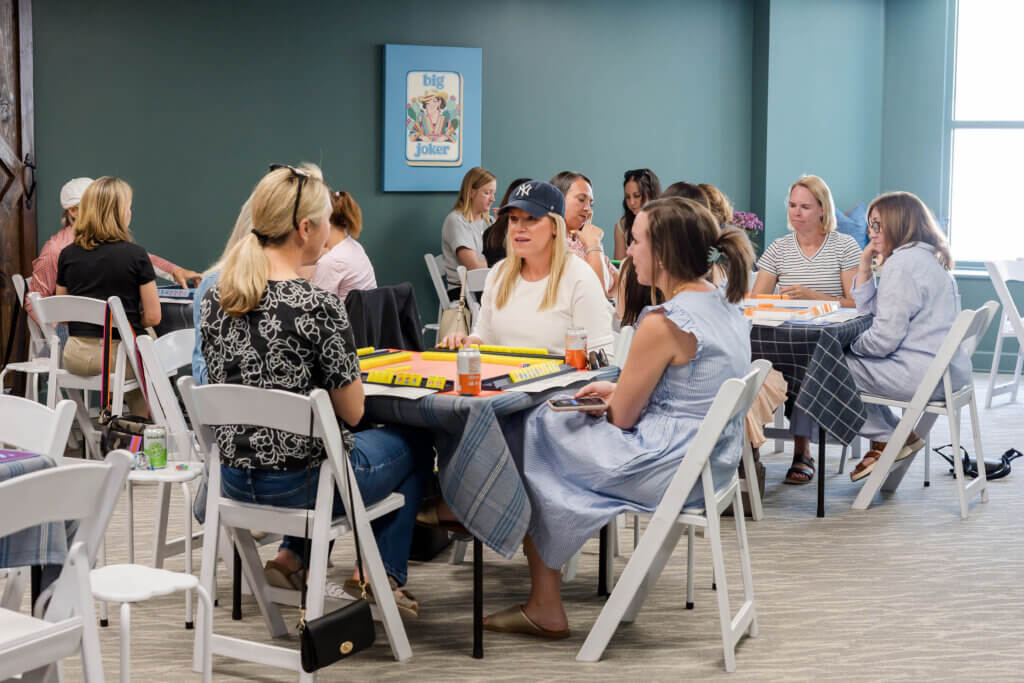
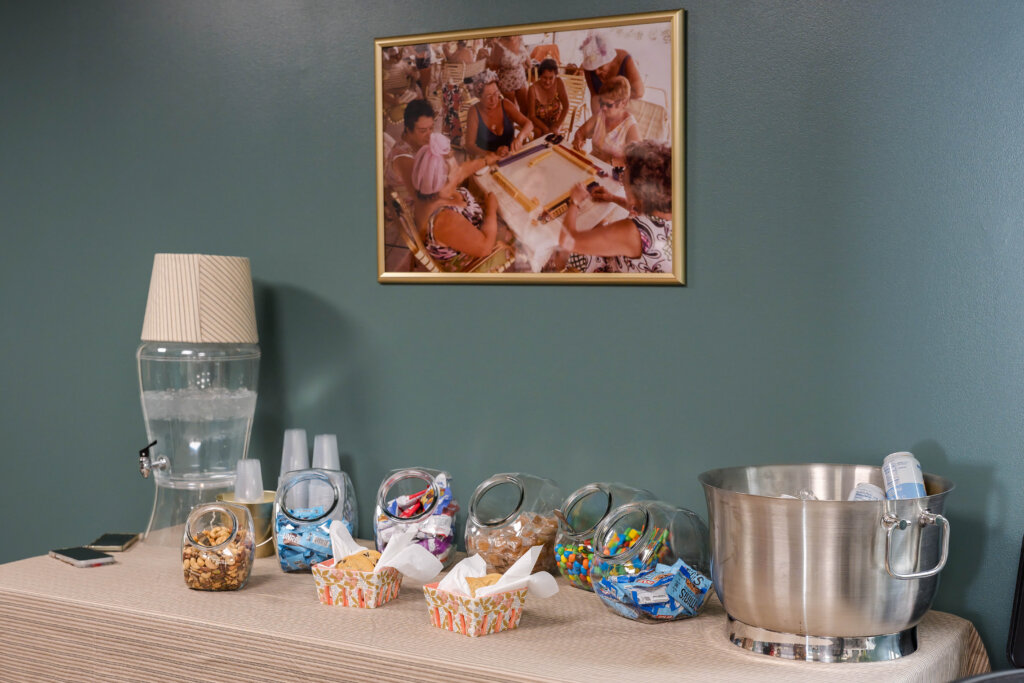
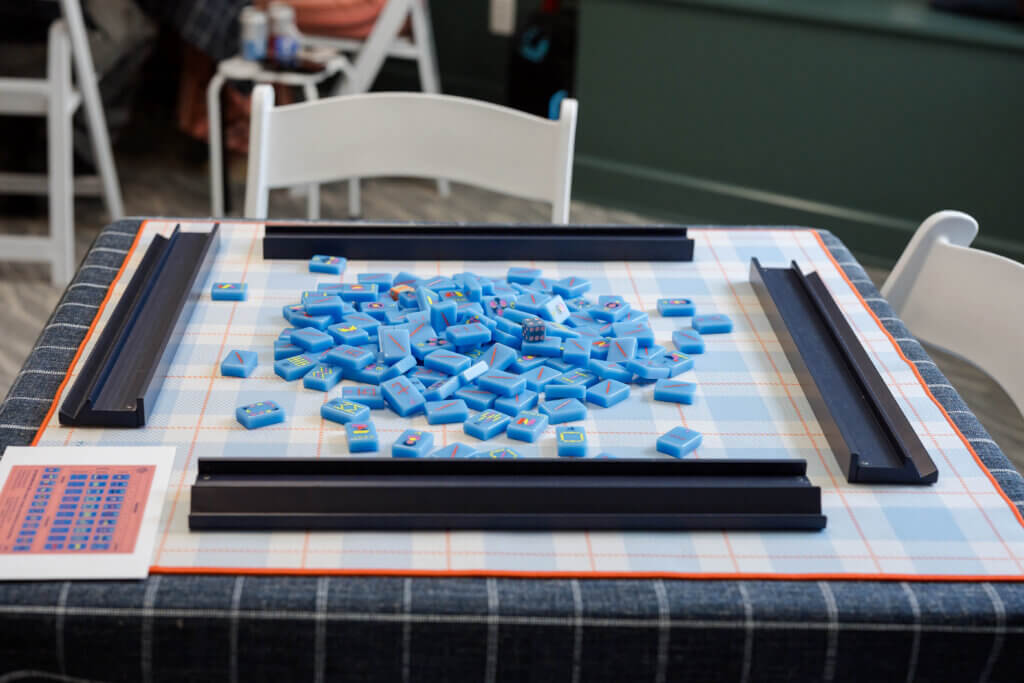
From the outside, what they do looks like a constant party: colorful tiles, laughter, wine glasses, and smiling women around beautifully set tables. The reality includes a lot of heavy lifting—literally. For a long time, they were hauling folding tables, chairs, and expensive Mahjong sets in and out of venues all over town.
Natalie recalls one event that perfectly captured the unglamorous side of their success.
“I drive a truck. It doesn’t have a truck-bed cover,” she explains. “We had a push-in event, and it actually snowed. I’m driving up with all these wet tables and chairs. I had to unload them in the snow, then dry them down and make sure the space was clean.”
It was a turning point. They began to ask harder questions about where to say yes, and when to finally say no.
They juggle logistics across counties, lending sets back and forth between instructors, coordinating events with local businesses, and managing a growing calendar that shows no sign of slowing.
“Success is tough,” Bethany says. “We did not think this was going to be as big as it already is. This was going to be a little side hustle, and it just had legs of its own.”
Brains, Healing, and the Need to Belong
For both women, this work also intersects with something more personal: the state of their own brains and lives in midlife.
Bethany talks about a cultural hunger she sees everywhere.
“There’s this need in society of putting away our phones and having something that’s tactile, that’s social, that’s in-person,” she says.
For Natalie, there was a more urgent need after a ski accident left her with a serious concussion.
“I was forgetting names of people. I couldn’t finish my sentences,” she recalls. “Having something like this to do was so good for my brain, for my cognitive recovery.”
Natalie speaks tenderly about her mother, newly arrived in Park City, finding confidence in slower, solitaire-style practice at home, using the same tiles they teach with.
In all of this, what they are really building is not just a gaming company, but a web of care: for women navigating divorce and reinvention, for neighbors who don’t yet know each other, for families in transition, for brains trying to recover or simply stay sharp.
What Comes Next
Natalie and Bethany are now working full-time on their venture, with bigger dreams coming into focus:
- A modern parlor they recently opened, where locals can hold memberships and drop in to play.
- A Mahjong retreat at a local hotel, a “bougie girls’ weekend” for locals and visitors, including breakout sessions for other small Mahjong business owners.
- Deeper partnerships, community groups, and wellness practitioners who see the game as a tool for connection and mental health.
As we talk, it has become clear to me that while Mahjong is the visible surface of their work, the real story is these two women: a former national news producer, and a former educator who also had been heavily involved in the startup phases of some very successful businesses, both standing at a new chapter in their lives and choosing to build something rooted in friendship, curiosity, and courage.
Park City is better for it.
Sitting down with Jennifer Billow, I quickly realize her story is less about titles and job descriptions, and more about a steady practice of showing up. For her kids. Teachers. Neighbors. And for a town that grew from a sleepy ski community into the Park City we know today, with all its bustle, nonprofits, and continual asks.
We had agreed to meet so that I could interview her, but within minutes, the “interview” slipped into something else. After some gabbing and swapping of stories, we’d nearly forgotten why we were there. That’s when I decided to hit “record” on my phone, suggesting I needed to capture her words accurately if I were to do her story justice.
Our conversation began simply. I asked her to start at the beginning.

From “Just Another Stop” to a Life in Park City
Jennifer first came to Utah in the late 1980s with Nestlé, expecting it to be another rung on the corporate ladder.
“I really thought it would be just a two-year stop,” she recalls. She was living in Salt Lake City at the time, and the culture felt unfamiliar.
Her husband was already rooted in Park City. He had come out from the east as a ski instructor, fallen for the mountains, and never left. They married and eventually bought a house near the junction, in Silver Springs, around 1992.
Back then, Park City felt like a small town with plenty of open space in between. 224 was “a two-lane highway.” The junction still seemed a world away from Main Street. Bike trails were not yet linked.
“You just couldn’t believe you were living in a place like this,” Jennifer says of those early years.
They started their family here. Park City didn’t have a hospital back then, so the kids were born in Salt Lake. They attended Parley’s Park Elementary; there was no preschool yet, just kindergarten onward, and at that point, Jennifer stepped away from corporate life to be at home with her kids.
Discovering the Classroom
Jennifer’s path into education didn’t begin with a master’s degree or a formal plan. It started the way many quiet revolutions do: She raised her hand to volunteer in her son’s kindergarten classroom.
“It was super fun, and also really eye-opening,” she says. She tells the story of a teacher who would not allow plastic knives for frosting cupcakes because they were “dangerous.” It was a small thing, but emblematic. The classroom was its own ecosystem, with its own logic and care.
She also volunteered to teach CCD (Confraternity of Christian Doctrine), the Catholic Church’s traditional religious education program for children, at St. Mary’s, where one moment in particular stuck with her. A boy raised his hand, asking, “What is a prostitute?”
Jennifer redirected. “Oh, do you mean ‘Protestant’?”
“No, I mean a prostitute,” he insisted.
She finally told him he should probably ask his mom, then offered a soft explanation: “Someone who sells their love.”
The boy’s face lit up. “Oh yeah, I meant ‘Protestant.’”
Retelling that moment, she laughs, but beneath the humor is a growing understanding. Education is not a fallback career; it requires grace, timing, emotional intelligence, and a lot of patience in real time, with real kids.
Jennifer took on leadership roles in the PTA, gaining a behind-the-scenes look at how decisions are made and how families can influence their children’s educational experience. Then, the 2008 financial crisis hit. Her husband asked if she could help out financially. With her kids still in school, she looked for something that would fit their schedule.
She became a substitute teacher. Even for someone as capable as Jennifer, those first days were humbling.
“Every kid would come up and tug on your shirt,” she remembers. “Teacher, I have to go to the bathroom. Teacher, my stomach hurts.” The stress of a substitute, even for kindergartners, was palpable.
Teaching math without training, along with managing 20-something small bodies and big feelings, made her aware of what it takes to run a classroom. She watched teachers expertly timing transitions, like how long it takes for 5-year-olds to get snow boots on and line up for recess, then still fit everything into the day.
Her own classroom-management solution was characteristically human and lighthearted: When she was ahead of schedule, she had the kids sing the SpongeBob SquarePants theme together. It filled the gaps.
Jennifer subbed for a few years, then took on a long-term role in physical education while the regular teacher was on maternity leave. That meant every student came through her gym at some point. She saw the entire spectrum of kids and needs, including one girl whose awkward gait immediately worried her. When she raised the concern with the principal, she learned that privacy limitations prevented staff from fully briefing subs. It was another eye-opener: The system is complicated. Children are vulnerable. The adults around them need support.
For a time, Jennifer considered becoming a full-time teacher, but eventually she decided against it. Starting over in her forties, coupled with the reality that teachers struggle even to take a sick day, did not quite fit.
“I was thinking, there has got to be a way I can take my business background and my passion for teaching and public education and blend them,” she recalls.
That’s when Park City Education Foundation (PCEF) entered the picture.
Finding a North Star
In 2011, Jennifer saw an opening for a marketing and events manager at PCEF. The listing said “262 days”; she assumed it was part-time.
“If you subtract all the weekends from the year,” she laughs, “it is full-time.”
She applied anyway. By then, her son was entering his sophomore year at Park City High School. The foundation’s office was in a classroom inside the school, so when he had a serious health emergency just before she started, Jennifer’s mother gently pointed out that working in the building might be the best-case scenario. She would be closer to him than almost any other job would allow.
She got the position and walked into a tiny organization of two-and-a-half people: Executive Director Abby McNulty, a half-time staffer, and now Jennifer, who says she had “no idea” what she was doing. This humility hides a sharp business instinct and a deep intuitive sense of community.
From the beginning, she explains, the foundation’s North Star was clear.
“Teachers and students are our North Star,” she acknowledges. As a parent, she could easily get behind that. She’d already seen the difference it made for her own kids, especially in music and the arts, areas the foundation has long supported.
Jennifer is candid about the larger ecosystem. Park City is unusual among ski towns, with strong public schools that are richly resourced in comparison with those in many similar-sized districts or comparable resort economies.
“The number-one thing is the teachers here are amazing,” she says. “If you do not have great teachers, the rest does not matter.”
The foundation’s role, as Jennifer sees it, is to fund the dreams, ideas, and experiments that aren’t covered by tax dollars, allowing educators to try things without risking public funds. Some work beautifully, some don’t. But what they all do is move the system forward.
“Running with Ed” and a Community in Costume
If you’ve ever seen a group of adults in wigs, tutus, or superhero capes running along Park City’s roadways in May, you probably witnessed Running with Ed, the signature community fundraiser Jennifer helped grow from a quirky idea into a beloved tradition.
Long before her time at the foundation, the annual event had been a midnight advance screening of each Harry Potter movie. When the final film arrived, the board had to rethink everything. Around that same time, Ragnar relay races were exploding in popularity. A board member, Tim Chesley, proposed a local relay that would connect all the schools.
The original concept was intense: 10 legs, 40 miles, teams of five, everyone running twice. The course touched every school, climbed up to ski resorts, and looped back through town.
So much of that early effort was powered by volunteers. Tim and his team marked the course days in advance. Volunteers grilled hamburgers through the night before the race. Teachers signed up. Maybe 300 people ran that first year. It snowed, naturally. Costs and revenue nearly washed out. What they created: energy.
By the time I moved to Park City, Running with Ed was already a thing. I remember walking my dogs and suddenly seeing all these people, costumed and laughing, running down the street. I thought, “What is this? Who is Ed, and how do I get involved?”
People still ask Jennifer who Ed is. She smiles every time.
There’s a beloved high school teacher named Ed Mulick, and former McPolin principal Bob Edmiston, so for years, people assumed the race honored one of them. In reality, of course, “Ed” is short for “Education.”
Under Jennifer’s watch, Running with Ed has grown into a townwide reunion: costumes, team names, volunteers at handoff stations, kids cheering on their teachers. It’s joyful and a little ridiculous, and that’s exactly the point.
Jennifer shares that at one strategic-planning session, she proposed adding “We bring joy” as a core value. Some colleagues were skeptical—foundations, to them, were supposed to be serious. Jennifer held on to it personally anyway.
“For me, that kind of became a mantra,” she says. Whether it was Running with Ed, Excellent Educator Awards, or Classroom Grants, she wanted their work to bring joy first. Joy invites people in, opens wallets, and builds commitment.
That commitment showed up clearly in 2020. When the race had to be canceled, most sponsors still honored their support. Two teachers ran the entire course by themselves, sending photos along the way, and raised roughly $10,000.
Jennifer is stepping toward retirement, and this year marked her official last overseeing Running with Ed. She says it’s bittersweet, acknowledging that the logistics are exhausting. “Events are kind of a young person’s game,” she admits. Yet, she’ll miss being in the center of that joyful swirl.

A Legacy of Quiet Leadership
My most vivid image of Jennifer came not on race day, but at the PCEF gala. Late that evening, after the stories and the speeches, the auctioneer started the raise-the-paddle portion. One by one, people held up their numbers to pledge support.
They were also recognizing her upcoming retirement. In true Jennifer fashion, she’d asked not to be made the focus, wanting the night to be about the students and the teachers. But word had gotten out.
In a packed, buzzing room, her paddle went up for a major personal gift. It was a quiet, decisive moment. The benefaction was in honor of her father, who had passed away the year before, and her grandmother, who modeled a life of community service as the first woman on her local school board.
“This was going to be my parting gift,” she shares. She had begun her career at the foundation with that same gala. Almost a decade-and-a-half later, she chose this stage to impart thanks in the language she’d spent her career helping others speak: generosity.
Jennifer is quick to credit others. She learned from Abby McNulty, her first executive director, then from current director Ingrid Whitley, whom she describes as younger but endlessly wise. She lights up when she talks about volunteers, like the gala chair who once told her, “You are surrounded by people who know what they are doing. It is going to be okay. Let them do their job.” That line stayed with her, and she built a practice of encircling herself with people who are “smarter” and willing to challenge her thinking.
When I reflect on my time with Jennifer, what stands out is her consistency. Whether she’s laughing about her early years in Park City, tearing up over the joy of supporting teachers, or talking through the thicket of permits required for a single relay race, the throughline is the same: She believes in public schools. In community. And that joy isn’t a byproduct of good work. It’s part of the work itself.
In a town where “asks” arrive daily, in inboxes and at front counters, Jennifer has spent 15 years helping the community say yes in a way that matters. Yes to teachers and kids, to programs that might not exist otherwise, and to the slightly wacky idea of running through town in costume for education.
Who is Ed? For a long, important chapter in Park City’s story, Ed looked a lot like Jennifer Billow.


2266 E Garfield Avenue
Salt Lake City, UT 84108