Park City’s creative future takes shape

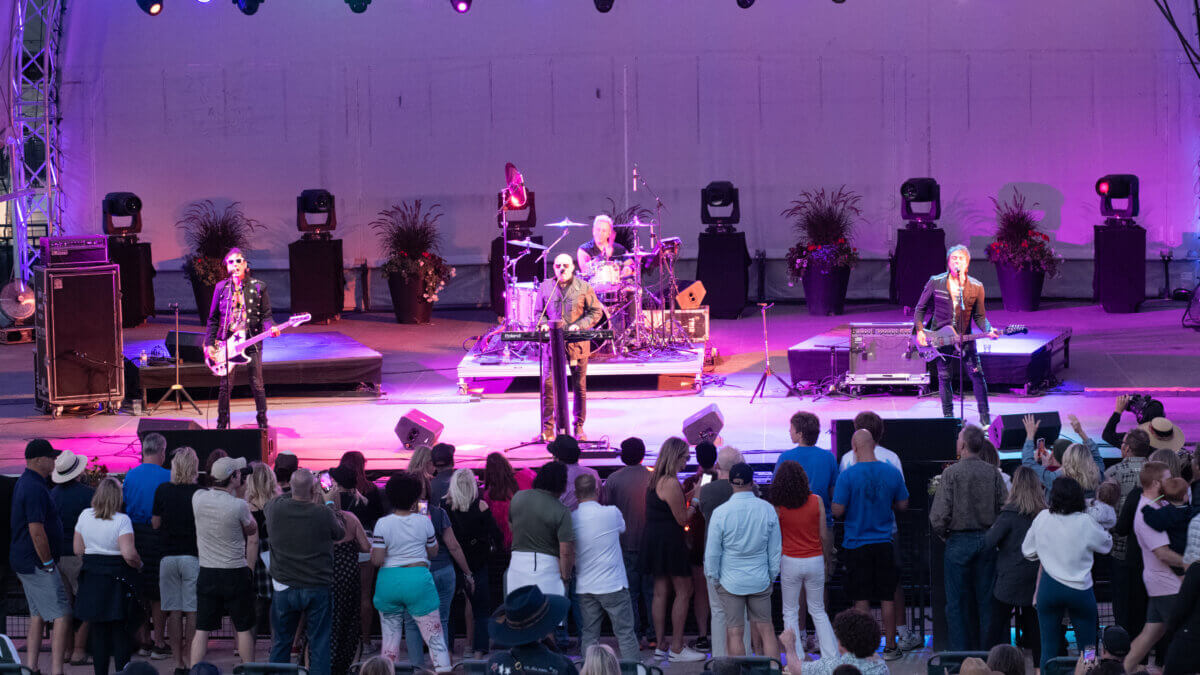
PARK CITY, Utah — As the nation marked 250 years of history this year, Park City is taking a look forward at the creative life that has shaped this mountain town, from fostering young artists through schools and programming to adding new events to the year-round arts scene; there’s a lot to look forward to.
Established in 1869, Park City is young compared to the country celebrating its semiquincentennial. But long before it was known as a world-class ski destination, it was known as an arts town, according to those who have spent their careers building the local creative economy.
“Park City has always been a very art-centric village,” said Leslie Miller, co-founder of the Arts Council of Park City and Summit County, in a previous interview with the organization, describing why forming the council in 1986 felt less like an invention than a response to momentum already underway.
Arts Council of Park City & Summit County
The Arts Council marks its 40th anniversary this year, a milestone that traces an unlikely arc from a single part-time employee to an 11-person team under current Executive Director Jocelyn Scudder. The organization got its start with help from a National Endowment for the Arts grant secured by longtime local Leslie Miller and a small group of residents, including Claudia Ward, David Chambers, Katherine Scott Henney, Paul Sincock and Bruce Shapiro. Its first project grew directly out of the Sundance Film Festival, then known as the U.S. Film Festival: When Sundance opened its screenings to the community in the mid-1980s, the response was strong enough that the fledgling Arts Council took on the job of keeping film screenings going year-round, a program that eventually grew into Park City Film.
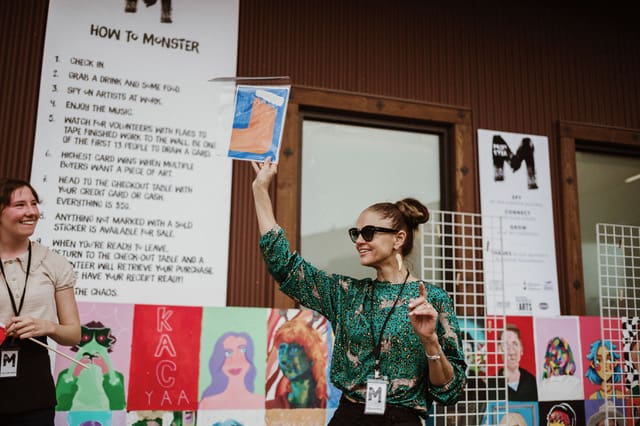
That pattern of incubation became a hallmark of the organization. The Arts Council also helped launch Mountain Town Music and the Park City and Summit County Public Art Boards, and it played a role in passing RAP tax legislation in 2000, 2010 and 2020, a funding mechanism that continues to support local cultural groups. In partnership with the Kimball Art Center and the Park City Gallery Association, the council also produces the Monster Drawing Rally and the Art and Music Gallery Strolls, which pair live performances with the visual art on display during the Gallery Association’s regular Main Street strolls.
Its programming today includes the Latino Arts Festival, Dia de los Muertos, Art on the Trails and the Summit Arts Market. One of its most visible successes is Create PC, the local artist collective that grew out of a 2016 pop-up called Brand PC. That project’s founding manifesto, produced by the Arts Council, put it simply: Being a maker “takes guts. It takes hope. It takes hard work. It takes community.” What began as a holiday pop-up that moved between temporary spaces has since become a permanent, year-round home for local artists, generating more than $1 million in artist sales.
Celebrate Arts Council of Park City & Summit County’s 40th birthday on November 4 at CREATE PC from 4-8 p.m.
Kimball Art Center
The Kimball Art Center, founded in 1976 by Bill Kimball, remains one of the region’s oldest creative nonprofits. Its current exhibition, “(Re)sounding,” features artists including Jon Bernson, Janet Cardiff & George Bures Miller, and Mary Toscano & Andrew Rease Shaw, and its Kimball Arts Festival, returning to Main Street Aug. 7-9, marks its 57th year as one of the top-ranked art festivals in the country. The center is also looking toward its own future, both in the classroom and on the map. It is in the middle of selecting an architect for a new building at Kimball Junction, near the Utah Olympic Park and the Swaner Preserve, in an area local officials envision as a growing civic hub alongside a planned library expansion.
“We’re thinking a lot about the Olympics and people coming in, and what are they going to see when they get here,” said Alex Regenold, director of marketing and communications for the Kimball Art Center. Regenold said the goal is a building that bridges indoor and outdoor space and lets visitors experience every step of the artistic process, from making art in its studios to seeing art in its galleries. The center is hopeful the project will be realized by 2030.
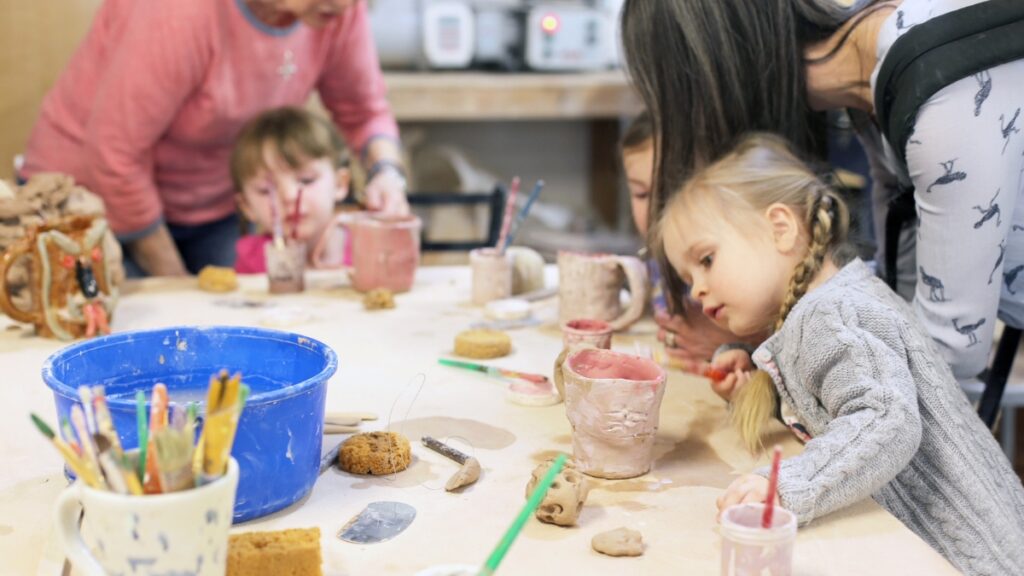
Closer to home, the Kimball Art Center is expanding its role in local schools to foster future local artists. Starting this school year, all four Park City elementary schools will have a professional, licensed arts educator working directly in classrooms, up from three of four previously, as the center shifts from a partnership with the Park City Education Foundation to working directly with the district. An outreach coordinator also brings exhibitions and lessons on contemporary art to thousands of students across Utah each year, a program with enough demand that it now carries a waiting list.
For teenagers, the center’s Young Artists Academy offers a competitive, juried professional-development program that pairs students with working artists in the community, including muralist Anna Nazoni, and gives them their own booth at the Kimball Arts Festival to learn the business side of selling art. This year’s festival T-shirt design, selected through a blind jury process, turned out to be the work of a former Young Artists Academy student. The center’s summer camps, meanwhile, awarded more than $16,000 in scholarships in 2025 to help students attend.
Park City Performing Arts and Concerts on the Slopes
Live music in Park City has its own long build-up. In 1993, a group of community members set out to bring what they envisioned as world-class entertainment to town, working with Sundance and the local school district to pass a bond that built the Park City Performing Arts Eccles Center, a 1,240-seat theater that opened in 1998 and still doubles as the high school’s auditorium. “It was the vision that Sundance would have that as the premier theater,” said Ember Conley, executive director of Park City Performing Arts, which now oversees the venue.
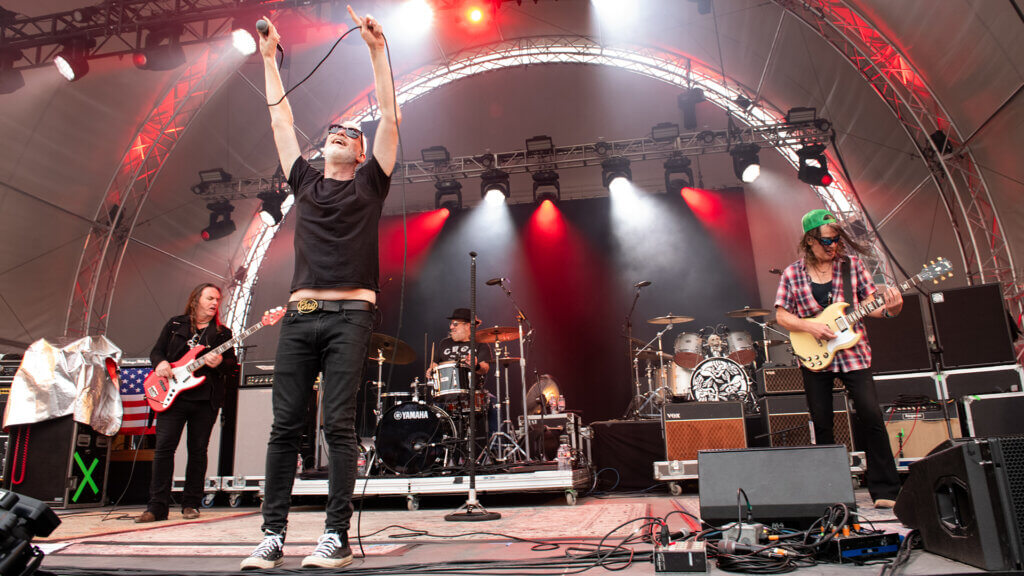
The organization ran a summer concert series at Deer Valley until 2017. After that, Park City Performing Arts partnered with Canyons Village Management and Vail Resorts to launch a new outdoor series on Canyons Village’s ski slopes. What began four years ago as six shows grew the following year into a full rebrand, Concerts on the Slopes. This year’s lineup includes 14 shows, and Conley said the series has built enough of a reputation that booking agents have started calling them directly. “We want ours to be the one that people go to for fun and enjoyment and live music,” she said, describing the nonprofit’s role among Park City’s arts organizations.
With Sundance’s departure, Conley said the organization is scaling back its winter programming at the Eccles Center to focus on a smaller number of bigger-name shows and comedy acts, running from September through April. She teased an announcement coming later this summer on the season’s opening show, an act with roots in 1980s music.
Park City Performing Arts also runs three community outreach programs: discounted tickets for veterans and active-duty military, in-school outreach that pairs its touring musicians with students, and free tickets for seniors through the local senior center.
Park City’s summer season also brings the Utah Symphony and Utah Opera to town, which hold their summer residency at the Deer Valley Music Festival. The town is also home to a newer addition to the scene, Park City Opera, now entering its third season of live opera performances.
Park City Chamber of Commerce and Visitors Bureau
Becca Gerber, senior director of community and government affairs for the Park City Chamber of Commerce and Visitors Bureau, said supporting year-round arts programming is part of the Chamber’s strategic plan. “We have a really strong arts and culture economy as well, with our history with Sundance,” Gerber said. She said the Chamber helped fund the Arts Council’s new 10-year strategic plan and has looked for other ways to support the sector, including new additions to the calendar such as a Chef’s Table event with Netflix and two Park City Wine Festivals, held in spring and fall.
Gerber said that support mattered in practical ways this past winter, when a lean snow year meant the town leaned more heavily on its arts and culture organizations to keep visitors engaged. “There is always something going on,” she said. “There’s never really a lull.”
No conversation about Park City’s creative identity can avoid the Sundance Film Festival’s departure. After more than four decades in town, the festival held its final Park City edition in January and February before relocating to Boulder, Colorado, starting in 2027. Sundance Institute founder Robert Redford, who died in 2025, gave his blessing to the move before his death, and the institute’s labs and fellowship programs will remain at Sundance Mountain Resort in Utah.
Gerber said the town is choosing to see the moment as an opening rather than a loss. “We continue to evolve our relationship with our arts organizations,” she said, adding that arts and culture serve both as a benefit for residents and a draw for visitors who come to Park City for reasons beyond the ski slopes.
As Claire Wiley with the Arts Council put it, the question facing the community now is less about whether Park City is an arts town and more about what comes next. “Are we still planting those seeds?” she asked. “Where are we going?”
For a town marking its own long relationship with the arts alongside the nation’s 250th anniversary, organizers say the answer is already unfolding, one gallery stroll, one festival and one new collaboration at a time.


4251 E Lipizzan Jump
Moab, UT 84532