July night sky brings Venus, the Buck Moon, and late-month meteors

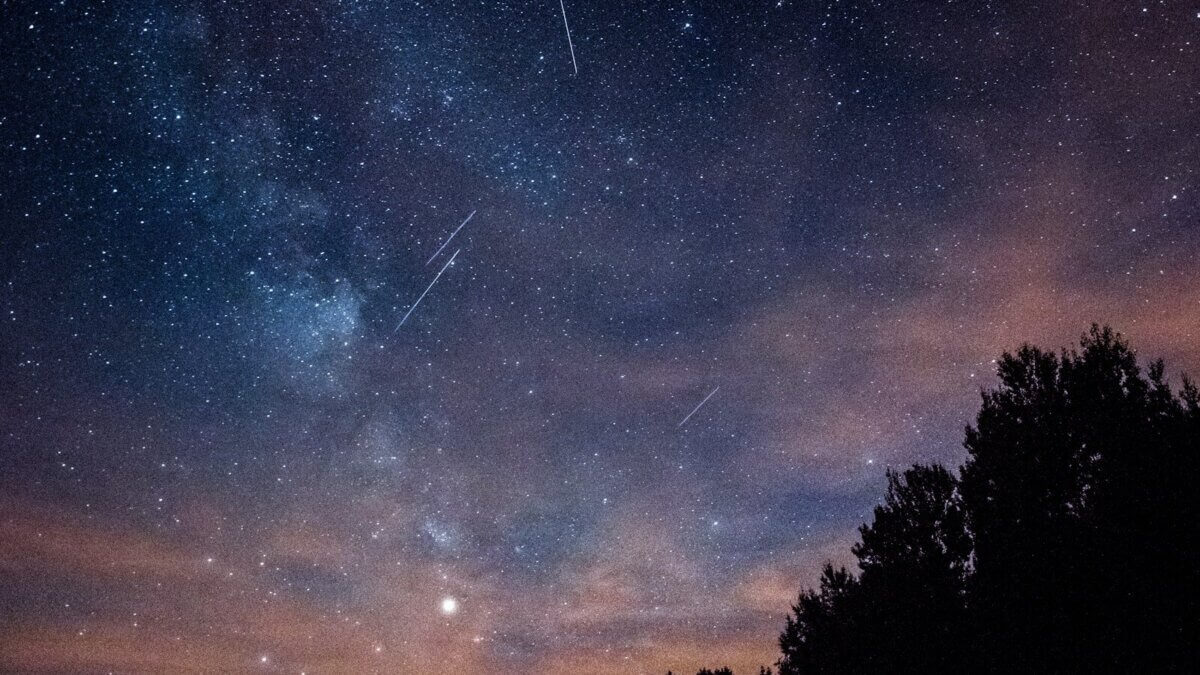
Park City stargazers can look west after sunset for Venus, southeast for the full Buck Moon and toward the dark early-morning sky for late July meteors.
PARK CITY, Utah — July brings a bright, steady rhythm to the summer sky, with Venus shining after sunset, a dark-sky window near midmonth, the full Buck Moon near the end of the month and two meteor showers arriving just as July gives way to August.
The Old Farmer’s Almanac says Venus will be the standout planet of July 2026, visible after sunset in the western sky. For casual skywatchers, that means the month’s easiest target is also one of its brightest: look low to the west as twilight deepens, before the planet follows the sun below the horizon.
The moon will begin the month waning toward its last quarter, which The Old Farmer’s Almanac places on July 7 at 3:29 p.m. EDT. The new moon arrives July 14 at 5:43 a.m. EDT, offering the darkest skies of the month for stargazing, especially from higher, darker areas away from city lights. First quarter follows on July 21 at 7:05 a.m. EDT.
NASA lists several July targets for Northern Hemisphere observers, including M13, the Great Hercules Cluster, and M92, both globular clusters rated among the easier July targets in NASA’s guide. NASA describes the challenge as a year-round observing guide for amateur astronomers and star parties, inviting viewers to compare what they see in the sky with Hubble’s images.
The month’s full moon arrives on Wednesday, July 29. The Old Farmer’s Almanac says July’s full Buck Moon reaches peak illumination at 10:36 a.m. Eastern time, when it will be below the horizon, so the best viewing will be after sunset as it rises in the southeast. The Almanac says the name Buck Moon refers to the time of year when the antlers of male deer are in full growth.
Late July also brings meteor activity. NASA lists the Southern Delta Aquariids and alpha Capricornids meteor showers for July 30-31 among its notable 2026 sky events. The Old Farmer’s Almanac also points to the Delta Aquariid meteor shower as one of July’s skywatching highlights.
For the best chance at seeing meteors, look after midnight from a dark location with a wide view of the sky. No telescope is needed. Give your eyes time to adjust and avoid looking at your phone, since even a brief burst of white light can make faint meteors harder to see.
July’s best viewing window may come around the new moon on July 14, when darker skies favor stars, clusters and the Milky Way. By the end of the month, the bright Buck Moon will wash out some fainter objects but offer a strong summer moonrise, especially along open eastern horizons.


2266 E Garfield Avenue
Salt Lake City, UT 84108