After $1M Richins tab, Summit County turns to state fund for appeal relief

The unanimous vote, contingent on the state accepting Summit County's mid-case application, would commit $233,000 to enter the Indigent Aggravated Murder Defense Fund and roughly $80,000 each year to stay in.
COALVILLE, Utah — The Summit County Council voted unanimously last Wednesday to apply for entry into the state’s Indigent Aggravated Murder Defense Fund, a move county staff said could shift hundreds of thousands of dollars in expected appeal costs from local taxpayers to a state-managed pool.
The vote on Resolution 2026-13 came with a condition added from the dais: the county will not finalize its entry — and will not pay the roughly $233,000 assessment to join — unless the Utah Indigent Defense Commission agrees to cover an anticipated appeal in the Kouri Richins case.
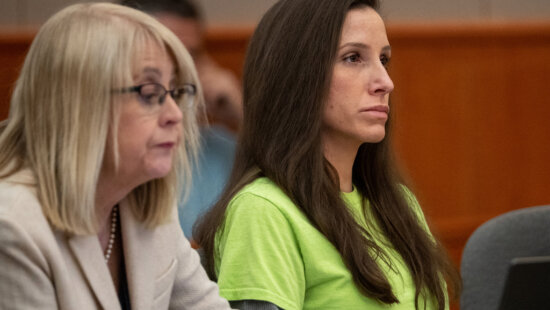
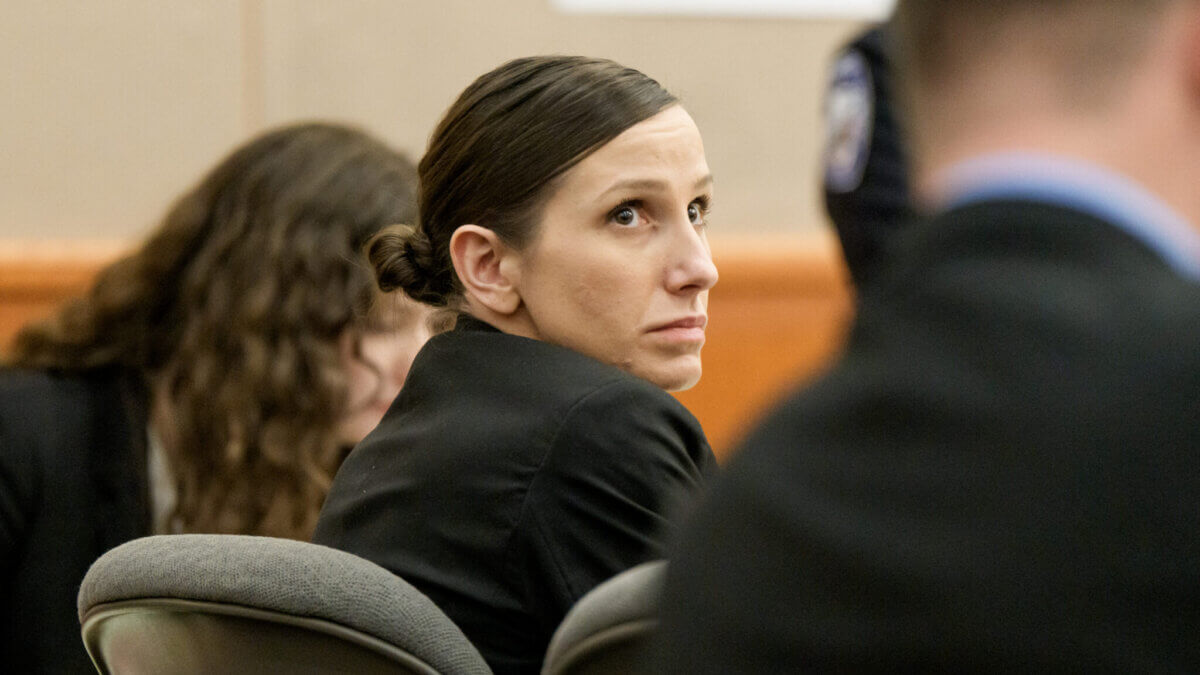
Richins, the Kamas mother of three convicted in March of fatally poisoning her husband, Eric Richins, with fentanyl, is scheduled to be sentenced May 13 in 3rd District Court. She faces 25 years to life in prison. Her defense team is widely expected to appeal.
Deputy County Manager Janna Young told the council the fund exists precisely for cases like this one.
“This issue is really with the goal in mind of how to be the best stewards of taxpayer dollars,” Young said. “We weren’t aware when the Kouri Richins case came to the county that there was an aggravated murder fund that the state provides to help us with these costs.”
A fund built for the most expensive cases
The Indigent Aggravated Murder Defense Fund has existed in some form since the 1990s but has been managed since the mid-2000s by the Utah Indigent Defense Commission, which sits within the state Commission on Criminal and Juvenile Justice. It is authorized under Utah Code §78B-22-702.
The mechanics are roughly those of a self-insurance pool. Counties pay an entry assessment plus annual dues based on their property values. In exchange, the fund covers indigent defense costs in aggravated murder cases — the rare category of homicide charges that can carry the death penalty and that typically require more experts, more hours, and longer timelines than standard murder prosecutions.
Under Utah law, third-class counties like Summit are normally reimbursed by the state for criminal appeals. But aggravated murder is specifically carved out. Without participation in the fund, the county bears the full appeal costs.
To enter, a county must adopt a resolution committing to the assessments and submit it with an application to the commission. The statute also requires new participants to pay assessments for the two prior years in addition to the current year — a guardrail Young said was put in place after counties tried to join and exit the fund based on whatever cases happened to be pending.
For Summit County, the back payment plus the 2026 dues total roughly $233,000. Annual assessments thereafter average about $80,000.
Why the state could still say no
The county’s application will go before the Indigent Defense Commission in June. Young told the council the commission could decline to admit Summit County because the Richins case is already underway, but she said the more likely concern is cost.
“My expectation would be, if they do deny, it would be because it’s a very costly case,” she said.
If denied, the county owes nothing.
Council member Tonja Hanson pressed Young on whether Summit County should pursue a direct appropriation from the Utah Legislature, citing the roughly $1 million lawmakers awarded Utah County for the prosecution of Tyler Robinson, the man accused of fatally shooting Charlie Kirk at Utah Valley University last fall.
“That is very unprecedented,” Young said. “I don’t think counties have done that before. It didn’t occur to us that it was an option.”
She told the council the county’s lobbying team at Foxley & Pignanelli has begun exploring whether a similar request could be made on Richins-related costs.
‘An insurance policy’
The longest exchange came from Council Vice Chair Roger Armstrong, who questioned whether the county sees enough aggravated murder cases to justify the recurring $80,000 annual cost. He noted the council had budgeted $500,000 for the Richins case in 2026 and had spent about $143,000 of that, leaving room in the existing budget to cover the entry fee.
In the back-and-forth, council members framed the fund as an insurance policy — protection against future aggravated-murder prosecutions that, while rare, are nearly impossible to absorb when they occur. Armstrong also asked the county attorney to brief the council on another active murder prosecution in Summit County, which would not qualify for the aggravated murder fund.
Council member Megan McKenna asked whether the fund would cap what it pays per case. Young said she did not yet know the limits or whether the commission contracts directly with defense counsel or reimburses the county.
“I’ll have to find that out,” Young said. “Really, what are the caps and limitations, and how does that arrangement work?”
The amendment
Before the vote, Council member Christopher Robinson asked to amend the motion to make the entry contingent on the fund covering the Richins appeal.
“I don’t want — we wouldn’t join this fund or this pool if they denied coverage of any appeal that may occur,” Robinson said.
The amendment was accepted.
Young will report back to the council when the Indigent Defense Commission acts on the application.
Background
Summit County has now spent more than $1 million on the Richins case overall. The county became financially responsible for her defense in May 2024, after her private attorneys at Ray Quinney & Nebeker withdrew, citing an “irreconcilable and nonwaivable situation,” and 3rd District Court Judge Richard Mrazik appointed Salt Lake City-based Nester Lewis to represent her as a public defender.
A jury convicted Richins on all five counts on March 16 after a nearly three-week trial, finding her guilty of aggravated murder, attempted aggravated murder, two counts of insurance fraud, and one count of forgery. Prosecutors did not seek the death penalty.
A separate financial-crimes case against Richins, filed in 2025, remains pending.


4251 E Lipizzan Jump
Moab, UT 84532