Snow
Vail Resorts, Alterra Mountain Company face federal antitrust lawsuit

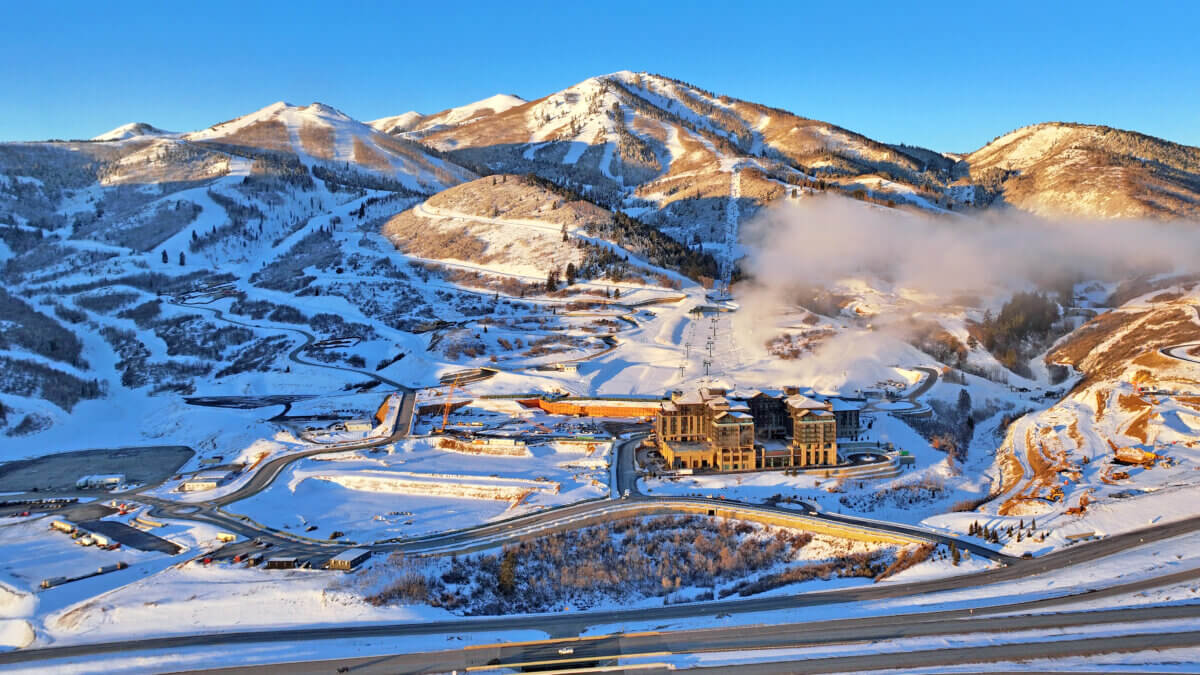
Alterra's Deer Valley Resort on November 6, 2025. Photo: Deer Valley Resort
PARK CITY, UT — A new federal lawsuit filed in Colorado accuses Vail Resorts and Alterra Mountain Company of operating an illegal duopoly that has driven up the cost of skiing across North America and limited competition through their dominant season pass products.
The class-action complaint, Goloja v. Vail Resorts Inc., filed March 23 in U.S. District Court in Colorado, alleges the companies have used their flagship Epic and Ikon passes to coerce consumers into bundled purchases while inflating single-day lift ticket prices.
Park City is home to two of the industry’s most prominent resorts: Park City Mountain Resort and Deer Valley Resort. The resorts serve as marquee destinations for Vail Resorts and Alterra Mountain Company, respectively, anchoring their competing multi-resort pass offerings.
The lawsuit was brought by four individual plaintiffs on behalf of potentially millions of skiers and snowboarders who purchased passes or lift tickets since March 2022. It seeks monetary damages and a court order to halt the alleged anticompetitive practices.
At the center of the complaint is the claim that both companies deliberately raised daily lift ticket prices to push consumers toward season-long passes.
According to the filing, single-day tickets for the 2025–26 season reached as high as $356 at Vail-owned resorts and $339 at Alterra’s Steamboat resort. Plaintiffs describe those prices as “penalty prices” designed to make pass purchases appear more economical.
The complaint cites public statements from Vail Resorts CEO Rob Katz acknowledging that lift ticket prices were “intentionally” set high to encourage Epic Pass sales.
Plaintiffs argue that the strategy results in both options — day tickets and passes — being overpriced, with consumers effectively forced into buying bundled products.
The lawsuit also alleges the companies engage in unlawful “tying” or bundling practices by packaging access to high-demand destination resorts with smaller regional mountains.
Consumers seeking access to marquee resorts such as Park City or Whistler Blackcomb must purchase passes that include dozens of additional ski areas, many of which they may never use, the complaint states.
That structure, plaintiffs argue, allows the companies to leverage their dominance in destination resorts — which the filing says are almost entirely controlled or affiliated with one of the two firms — to suppress competition among regional ski areas.
The complaint details decades of consolidation in the ski industry, alleging the two companies now control or partner with the vast majority of major resorts in North America.
As of 2026, Vail operates 42 ski areas and has partnerships with about 30 more, while Alterra operates 18 and partners with roughly 70 others, according to the filing.
It further claims that nearly all “destination” ski resorts — large, nationally recognized mountains that draw long-distance travelers — are tied to one of the two pass networks, leaving competitors with limited ability to attract customers.
The companies’ passes have also become central to their business models. Vail reported that Epic Pass products accounted for about 65% of its lift revenue and 75% of visits in fiscal 2025, according to the complaint.
Plaintiffs argue the alleged practices have contributed to sharply rising prices and changing skier behavior.
Lift ticket prices have more than doubled in recent decades and now routinely exceed $300 at major resorts, the filing states. At the same time, pass sales have surged into the millions, concentrating skiers at large destination resorts and contributing to overcrowding.
The lawsuit contends those dynamics have “crowded out more price-sensitive locals” and reduced consumer choice across the industry.
In a statement, Vail Resorts said the claims are “without merit” and defended its pass model, saying the Epic Pass has lowered the cost of skiing by reducing season pass prices by roughly 60% since its introduction in 2008.
Alterra has not publicly commented on the lawsuit.
The case comes amid growing scrutiny of consolidation in the ski industry, where multi-resort passes have reshaped pricing and access over the past two decades.
Plaintiffs argue the outcome could have sweeping effects, potentially forcing changes to how ski access is sold in the United States and beyond.
The case is in its early stages, and no court rulings have been issued.
By: Marina Knight


4251 E Lipizzan Jump
Moab, UT 84532
2266 E Garfield Avenue
Salt Lake City, UT 84108
733 Summit Way
Alpine, UT 84004
5758 Cobalt Circle
Park City, UT 84098Talk of the Town


Park City Jobs

Treehouse General Manager, Treehouse
1 day ago Full time $75,000 - $85,000 yearly

Associate Manager and Part -Time Sales Associates, JCrew Factory
4 days ago Full time $17.00 - $32.00 hourly
Accounts Payable Specialist – Part-Time, Surefoot LC
5 days ago Part time
Assistant General Manager, InvitedHome
5 days ago Full time $80,000 - $100,000 yearly

Line Servers, Aubergine Kitchen
7 days ago Full time $17.00 hourly