March night sky: Total lunar eclipse, equinox, and a Venus-Saturn pairing

Park City area residents have a packed lineup of celestial events to look forward to this month, from a rare blood moon to a close meet-up between Venus and Saturn.
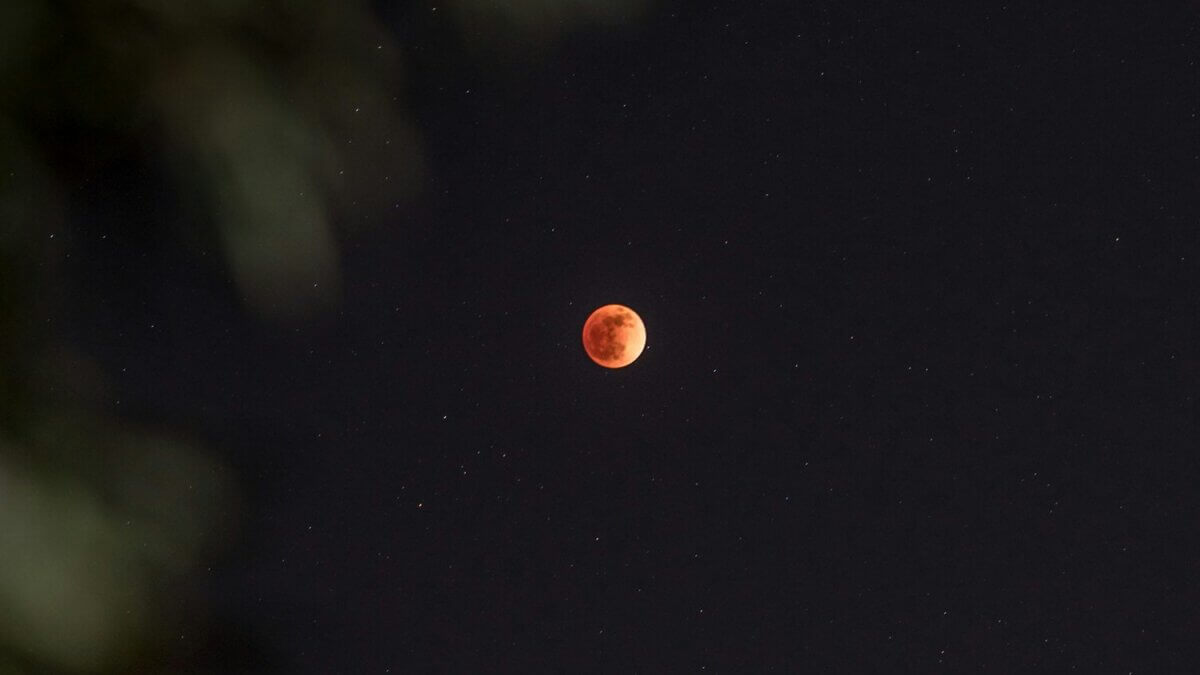
PARK CITY, UT — March brings one of 2026’s biggest skywatching moments: a total lunar eclipse just before dawn Tuesday, March 3, with the moon turning a coppery red as it passes into Earth’s shadow, according to NASA.
For Utah skywatchers, the eclipse starts subtly at 1:44 a.m. Mountain time when the moon enters Earth’s outer shadow, NASA says. The darker “bite” of the partial eclipse begins at 2:50 a.m., totality begins at 4:04 a.m. and runs until 5:03 a.m., before the moon gradually brightens again through sunrise, based on the stage-by-stage timing NASA publishes in Pacific and Eastern time zones.
NASA notes the March 3 eclipse is best for early risers and is visible across North America, with especially strong viewing for western regions. You don’t need special equipment — just a clear view of the moon — though binoculars can make the color and shading more dramatic.
On the calendar, the Full Worm Moon peaks on March 3 and lines up with the eclipse, with the Old Farmer’s Almanac listing peak illumination at 4:38 a.m. Mountain time (converted from 6:38 a.m. ET). The Almanac also lists the last quarter on March 11 at 3:38 a.m. Mountain, New Moon on March 18 at 7:23 p.m. Mountain, and First Quarter on March 25 at 1:18 p.m. Mountain.
That March 18 new moon is your built-in dark-sky window: the few nights around it tend to be the best for spotting star clusters and faint fuzzies from a driveway, trailhead, or open space away from town lights. The Old Farmer’s Almanac timing puts the moonless stretch squarely in the middle of the month.
If you miss the eclipse, don’t miss the quieter alignments. NASA says to watch for a close apparent pairing of Venus and Saturn on March 8, a conjunction that makes two planets look near each other in the same patch of sky.
And the season turns: NASA lists the March equinox on March 20, the moment that marks the start of spring in the Northern Hemisphere.


2266 E Garfield Avenue
Salt Lake City, UT 84108