Canyons Resort less than half built, with major growth still ahead


Traffic concerns persist as development agreement shapes future of Summit County's largest revenue generator
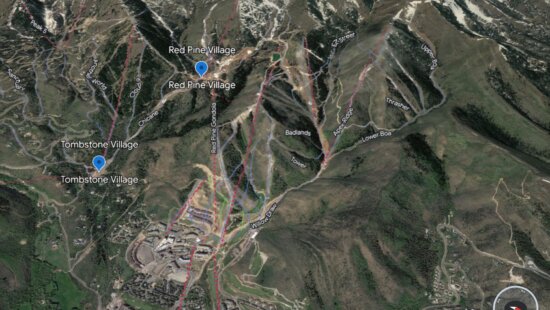
PARK CITY, Utah — The Canyons resort area is still less than half built out, with significant development ahead and longstanding traffic concerns continuing to shadow future growth, Summit County Deputy County Attorney Dave Thomas told the Snyderville Basin Planning Commission on Tuesday.
During a work session on the Canyons Specially Planned Area and its development agreement, Thomas said the resort core is about 53% built out and the broader SPA is roughly 40% to 45% complete.
“So you’re only seeing half the development out there,” Thomas told commissioners.
Thomas said the Canyons is the largest tax and revenue generator in unincorporated Summit County, bringing in about $45 million in taxes and fees annually.
Thomas and Senior Planner Tiffanie Robinson presented the work session, which focused on the history and current status of the development agreement that has governed growth in the area since 1999.
A major amendment approved in December 2017 and recorded in March 2018 reduced overall density in the resort core while reorganizing parcels and development rights after what Thomas described as a lengthy public process.
Commissioner Matthew Nagie asked where the 2017 amendments originated and whether additional major amendments could still come forward. Thomas said the changes were brought by Vail Resorts and TCFC, not the Canyons Village Management Association, and noted that some of the largest remaining development parcels are currently used as surface parking. Those parcels could become available for development once a new parking garage is complete.
Thomas said the garage is expected to be finished by Dec. 15, 2026.
That timeline fed into one of the most persistent issues tied to Canyons’ buildout: traffic.
Nagie pressed Thomas on the development agreement’s target of a 27% reduction in trips on state Route 224, asking how the figure was determined and how it is being measured. Thomas said the goal was tied to transportation demand measures built into the agreement, including paid parking, internal transit, employee use of the Ecker Hill Park-and-Ride, a larger transit center, and other strategies intended to reduce vehicle trips.
Thomas acknowledged that the 27% figure has not functioned as a simple formula in practice. He described an approach that has evolved around whether Canyons is continuing to implement and fund the transit and parking strategies meant to reduce impacts on Route 224.
When commissioners asked whether those efforts appear to be working, Thomas said county transportation staff believes traffic has improved.
Thomas also said a future transit hub is expected near the existing Cabriolet area. He noted the county’s recently approved public infrastructure district includes $1 million for a more robust transit center that would need to align with High Valley Transit’s bus rapid transit planning along Route 224.
The commission took no action Tuesday. The session was intended as background on the development framework that continues to shape one of the county’s largest resort areas.


4251 E Lipizzan Jump
Moab, UT 84532