Year One: Park City Film Festival

A new chapter for independent cinema in Park City, as Katharine Wang brings a fresh vision to the scene
By Jacquie Symes, Neighbors of Park City
A curated beginning for independent cinema in Park City
The interview was done while I was parked just off US-40, on the Park City side, with sandhill cranes moving deliberately across a grassy patch in front of me, the valley opening up behind them. It felt like the right backdrop for the conversation. Katharine talks about film the way I might talk about family, friends, or a podcast episode: freely, warmly, as if she’s been waiting for someone to ask. Forty minutes in, I was already looking for an excuse to schedule another chat so that I could learn more about her and, maybe, weasel my way into her circle.
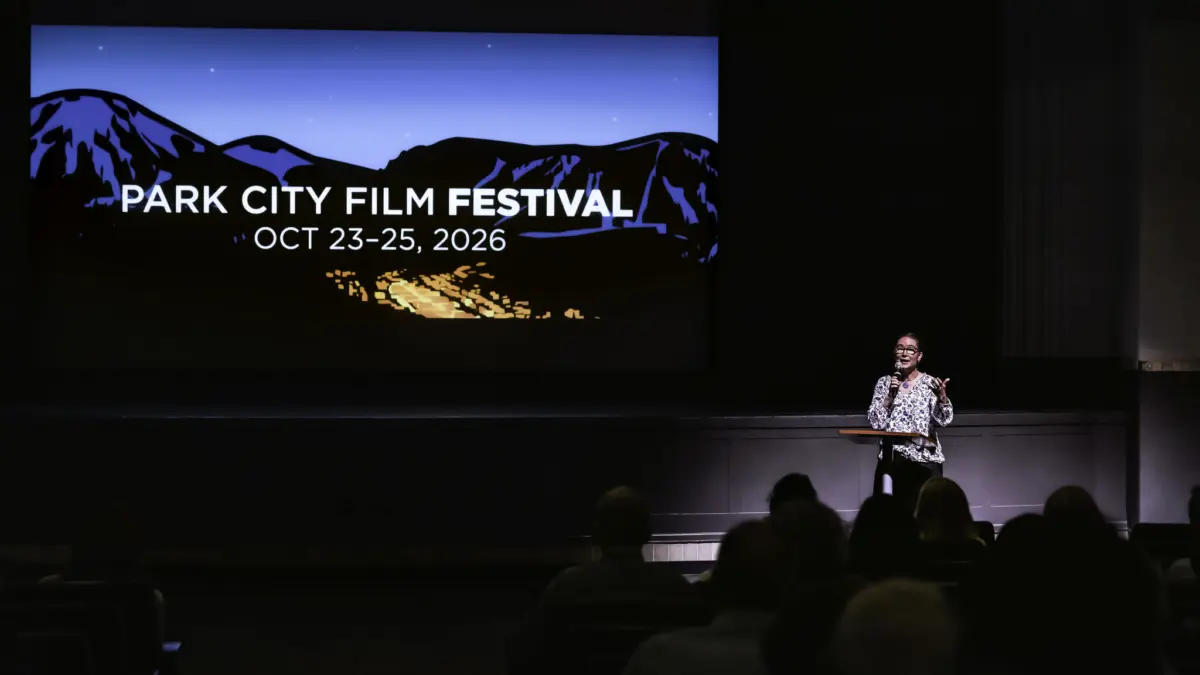
Katharine Wang is the director of Park City Film, and this October, she’s spearheading something new: the first Park City Film Festival, born in the space Sundance left behind.
Where it started
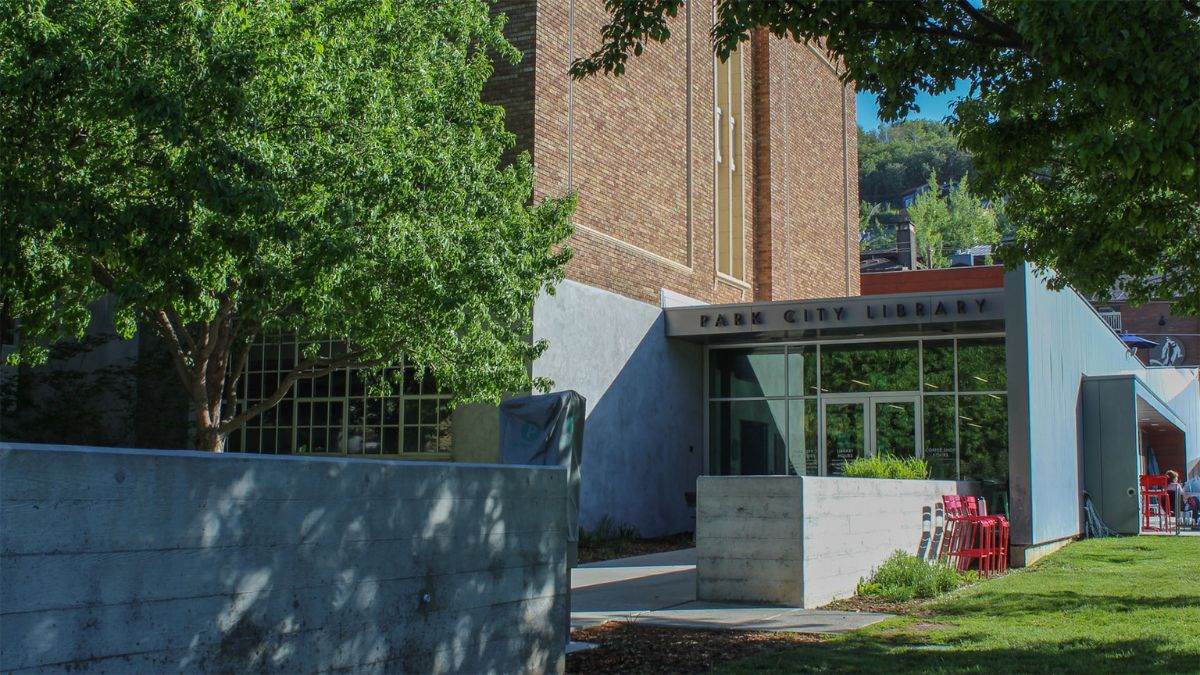
Park City Film exists because of Sundance. In the 1990s, as the festival was looking to grow, Sundance struck a deal with Park City Municipal: renovate the old high school (now Park City Library) and restore its auditorium, which was built in 1923, to its original purpose, and Sundance would bring it on as a venue, and help the community show films there year-round as a way of a thank you. That building is the Jim Santy Auditorium, and it’s still Park City Film’s home today. “It was designed as an auditorium, so it has beautiful acoustics,” Katharine says, “and it just has this kind of palpable sense of community and connection and history to it.” She’s lost count of how many filmmakers and film lovers, hearing where she works, light up with a memory of their own. “Almost to a person, someone has a story about seeing a film in what Sundance called the Library theatre,” she adds.
When Sundance announced it was relocating to Boulder, Katharine and her team felt the loss—and then felt something else. “Covid was a nice, perhaps not welcome, but certainly a nice reminder that change brings opportunity,” she says. She points back to the summer of 2020, when Park City Film launched a drive-in at Utah Olympic Park, with no idea whether anyone would show up. More than 20,000 people did. “Just to hear the laughter ringing throughout the canyon at some of those film screenings, it was a nice reminder of why we show movies.”
So when Park City Film needed space to grow beyond the 130 annual screenings allowed under its lease with the municipality, Katharine went to city council and asked for room to imagine. “We don’t know yet what we’re going to do, but we know we are going to expand,” she told them.
They said yes. That “yes” became the seed of the Park City Film Festival: two-and-a-half days this October, intentionally small and intentionally fast. “It was important that whatever we do, we do it quickly,” she says, “while we still had the momentum from the final Sundance.”
A different kind of festival, on purpose
The festival will unfold across two neighborhoods. Screenings stay at the Jim Santy, where Park City Film already knows how to operate screenings.. Panel discussions move to Distrikt F in Prospector Square, a deliberate choice to pull people into a part of town that doesn’t usually get the tourist spotlight.
“It doesn’t need to be the best-kept secret,” Katharine says of Park City’s quiet fall season—good weather, no snow yet, restaurants that would love the foot traffic. The two venues sit close enough to walk or bike between, which is the point. “Those kinds of serendipitous moments are the beauty to me of film festivals,” she shares. “Walking to the next film and being able to say, ‘Hey, what did you think?’”
The programming itself is intentionally eclectic. There is no single theme and no box it has to fit into. “What if that’s not your flavor?” asks Katharine rhetorically. “What if you want to watch something different?” Every film selected this year has already premiered on the festival circuit but isn’t yet available anywhere else, which Katharine calls the real joy of a festival: “You’re like, oh, I’m going to see some films that I may not be able to see in the theater.” For this first year, the festival films are by invitation-only rather than open submissions—a practical choice, she explains, after hearing from peers who described what happens once a festival opens the floodgates. “Sundance, I think, got something like 17,000 submissions,” she laughs. Curated, for now, means every film on the schedule was handpicked. “You can tell when you watch the films—someone picked this. It wasn’t an algorithm.”
Built on partnership
None of it happened alone. Katharine has spent the past six months writing grants, and the community has answered: support from the Park City Chamber, Summit County RAP and Restaurant Tax grants, an accommodations partnership with Park City Lodging, and backing from the Utah Film Commission, which connects filmmakers to Utah locations and tax incentives many don’t know exist. Beyond the public-facing screenings, Katharine sees the festival doing quieter work too: building relationships among filmmakers. “Maybe they find a creative partner that’s like, hey, I loved what you did—could we work together next time?” It’s a small piece of a larger ecosystem, she says, and a healthy one benefits everyone in it.
Why it matters to her
Ask Katharine what film has meant to her personally, and the answer reaches well beyond a favorite-movie list. She’s a first-generation American, sharing that her father’s family fled China during the Communist Revolution. Her mother is British and moved here as an adult, and she traces her love of story straight back to that inheritance. A high school class paired classics like 2001: A Space Odyssey with heavier questions of meaning; a college professor had her class sit through a six-hour Holocaust documentary designed to make the audience physically uncomfortable so that they might feel closer to what they were watching. “It just didn’t really occur to me that movies could be so physically powerful,” she admits.
That belief in film as connection shows up everywhere in how Katharine talks about her work. A Park City Film screening once moved a woman in the audience to tears during a Q&A—the first time, at nearly 30 years old, she’d seen her own Japanese American family’s story reflected onscreen. Katharine brought her own daughter to see Lady Bird because, she says, “I wanted her to know this is all normal, this painful adolescence. It’s far enough away that you can relate to it up close.” And after a screening of The Boy and the Heron, she found herself in a conversation where her teenage daughter, a staff member in their thirties, and a patron in their sixties had each walked away with a completely different film. “It was the most beautiful moment,” she says, “because we could each share our own perspective and gain a deeper understanding and appreciation of the story Miyazaki was trying to tell.”
Katharine mentions that her family’s history—her father’s escape from China, her mother’s path from England to Canada to the U.S., her own migration from New York City to the mountains of Utah —is its own remarkable story, one she’s only begun to tell. We think readers will want to hear more of it, and we hope to bring you that story down the road.
For now, Katharine is simply hoping people show up curious. “It gives you the freedom to interpret it in your own way,” she says, “and not just be spoon-fed.” That, more than anything, is what she hopes this festival will offer.


4251 E Lipizzan Jump
Moab, UT 84532