Oakley neighbors’ horses earn spots in Snaffle Bit Futurity finals and put Oakley on the map

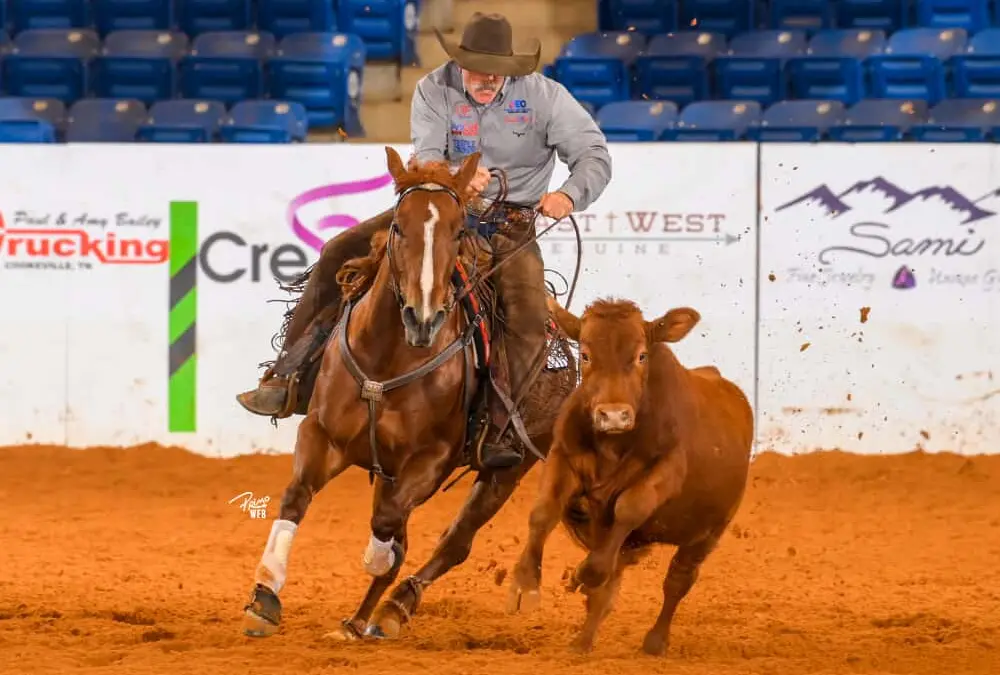
OAKLEY, Utah — Two horses owned by neighbors in Oakley earned spots in the finals of the National Reined Cow Horse Association Snaffle Bit Futurity, one of the most prestigious competitions in Western performance horse sports. One ended up being the best performing mare in the competition.
The Futurity, held each fall in Fort Worth, Texas, showcases 3-year-old horses early in their careers. The name comes from the snaffle bit, a mild bit used on young horses still in training.
Talkin Desires, owned by filmmaker and photographer Lori Adamski-Peek, and Reyz Little Peppy, owned by Kristine Getzie of 8D Ranch, were among 31 horses that advanced from a field of 345 entries in the Open division. The two women live about a mile apart in Oakley.
In the qualifications round, Talkin Desires landed in a four-way tie for 17th place with a composite score of 654, while Reyz Little Peppy tied for 26th with 653, according to unofficial results published by Horse&Rider. Trainer Brandon Buttars rides both horses.
Demonstrating just how tight the field is, a horse and rider team, Candy Shopp ridden by Corey Cushing, that placed behind both Oakley teams in the qualifications, won the finals on Oct. 24.
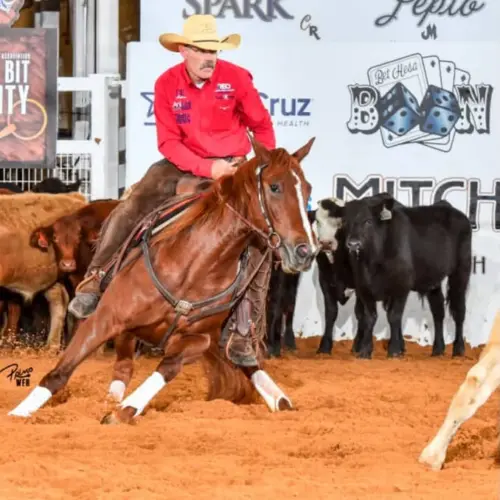
Talkin Desires had an impressive performance in the finals, coming in 4th in the herd competition and 6th overall, earning a $50,000 prize.
“Proud to have Talkin Desires ranked as the #1 mare out of 345 of the best 3-year-olds in the world. Having two horses from Summit County make the finals is an amazing achievement,” says Adamski-Peek. “Utah may have a small Reined Cowhorse community, but what we lack in numbers we make up for in passion. A big thank you to Brandon Buttars for his amazing riding and training and his team for their hard work and dedication.”
Reyz Little Peppy improved by one rank in the finals winning a $10,000 prize.
Each horse is judged in three events. In the herd work event, the horse and rider separate a single cow from a herd and keep it from rejoining the group. Rein work is a set pattern of spins, circles, and sliding stops scored for precision. The final event, cow work, asks the pair to control one cow on its own, turning it along the arena fence before circling it in the open.
That high-speed fence run gave its name to “Down the Fence,” the 2017 documentary Adamski-Peek co-directed with MJ Isakson. The film followed five professional trainers, including Buttars, through a season of reined cow horse competition that culminated at the Snaffle Bit Futurity, then held in Reno, Nevada. It won the Audience Award for best documentary at the San Luis Obispo International Film Festival and was later released on Netflix.
The finals are a clean slate, meaning preliminary scores do not carry over and every finalist starts even. Finals herd work took place Wednesday, Oct. 21, followed by the rein and cow work finals Saturday, Oct. 24, at Will Rogers Coliseum. The Open champion takes home $200,000.


621 E Canyon Gate
Park City, UT 84098
2266 E Garfield Avenue
Salt Lake City, UT 84108