Park City eyes regional emergency operations center as wildfires underscore need for preparedness

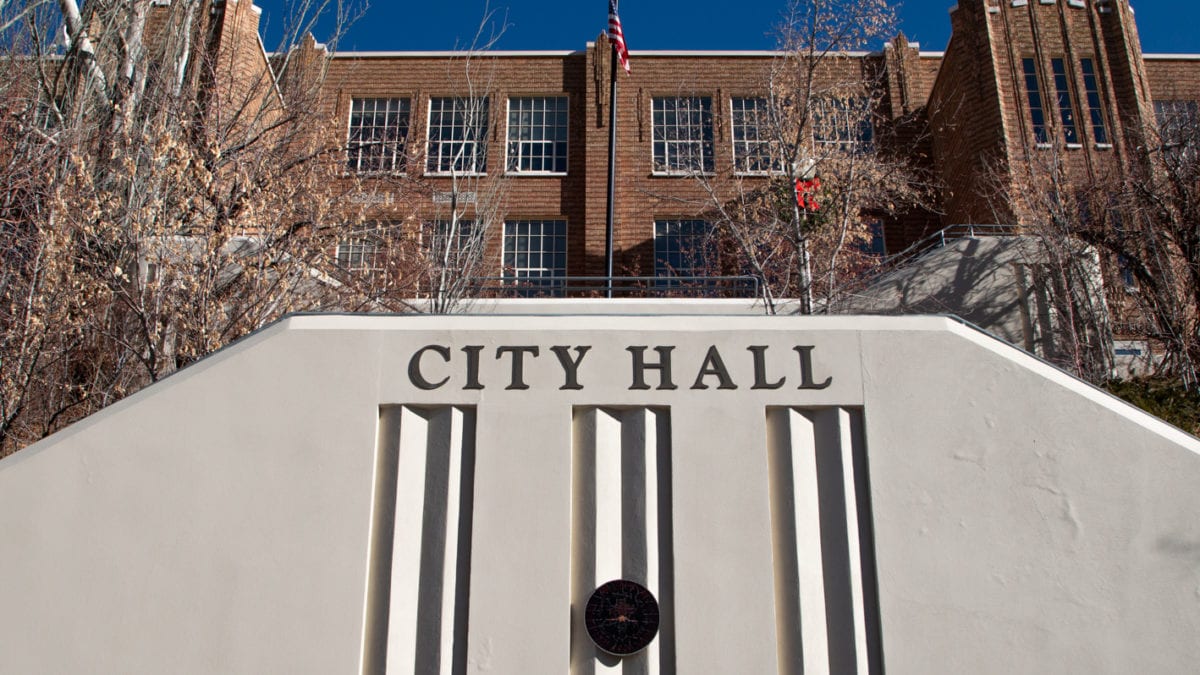
PARK CITY, Utah — As wildfires continue to test emergency response systems across Summit County, Park City officials are looking ahead at how the city and its regional partners could better coordinate during a major disaster.
At Thursday’s City Council meeting, Park City Police Chief Wade Carpenter introduced early planning for a potential regional emergency operations center and substation. The concept is still in its earliest stages, and Carpenter emphasized that staff was not seeking funding, project approval, or design direction from the council.
Instead, the presentation was intended to begin a conversation with potential partners, including the Summit County Sheriff’s Office and Park City Fire District, about what such a facility could provide and where it should be located.
The discussion comes as the region once again confronts wildfire threats. The Rocky Canyon Fire has prompted evacuations in the Henefer area this week, while an evacuation alert was inadvertently sent broadly across Summit County on Aug. 9, including to Park City residents. The alert was later clarified as applying only to residents between Hog Back Summit and West Henefer Road.
The incident offered a reminder that emergency communication and coordination can affect thousands of residents and visitors at once — including the thousands of visitors who were in Park City for the Kimball Arts Festival that weekend.
Learning from past fires
Park City’s emergency planning has been shaped in part by the Parleys Canyon Fire in August 2021, when a fast-moving wildfire threatened Summit Park, Pinebrook, and Timberline. The fire grew rapidly after igniting near I-80 and ultimately prompted evacuation orders affecting thousands of homes.
The response also highlighted the logistical challenges that come with a large-scale emergency.
Carpenter told the council that during the fire, the city and its partners established a large tent operation on the North 40, with as many as 300 tents. The city also used the ice arena during that response, he said.
The same facilities were later needed for COVID-19 vaccination operations.
“So that really put these other areas in a tight spot,” Carpenter said.
The proposed operations center is intended, in part, to address those kinds of challenges by providing a dedicated, flexible location that could expand to accommodate a large-scale response.
What a new operations center could do
Carpenter described the proposed facility as a potential regional command center that could serve multiple functions depending on the emergency.
During a wildfire or other major incident, it could provide space for incident command, emergency briefings, and coordination between agencies. It could also serve as a secure point of distribution for FEMA supplies such as food, water, and other materials.
Other potential uses include regional training and coordination, backup communications capabilities, redundant IT infrastructure, and hazardous-materials decontamination.
Carpenter also envisioned the site as a regional wildland-fire training center and a location where emergency equipment could be staged. He also suggested combining that function with a regional emergency operations center.
The goal would be to make the facility useful even when there isn’t an active disaster.
A regional need
Carpenter said the project would need to be considered in partnership with other agencies rather than as a standalone Park City facility.
Funding is also unresolved. The city recently sought $50,000 in emergency services sales tax funding to conduct preliminary conceptual design work, but the application was denied because it did not demonstrate a measurable tourism impact.
Carpenter said the city believed the project did have a significant tourism connection.
Mayor and council members pointed to the Aug. 9 evacuation alert as an example. With the Kimball Arts Festival taking place that weekend, thousands of visitors were in Park City when the alert was sent.
“Most of our impact is from tourism,” Carpenter said.
The proposed center also could become more important as Park City prepares for the 2034 Winter Olympics, Carpenter said. He pointed to concerns about the city’s ability to remain connected to areas east of town if a major incident blocks roads such as state Route 248.
He described the Round Valley area as a potentially strategic location because of its proximity to growing development, the hospital, Summit County Health Department and other regional facilities.
Preparedness starts before the emergency
While the city considers its own emergency infrastructure, officials also emphasize that residents play an important role in preparing for disasters.
Park City’s Be Ready Park City resource hub provides residents, businesses, second homeowners, and visitors with information on emergency preparedness and safety. The site includes guidance for building disaster kits, creating family emergency plans, preparing for evacuation, and responding to wildfires.
Residents can also sign up for the Summit County Emergency Alert Program.
For Carpenter, the proposed operations center represents another piece of that larger preparedness effort: improving the systems that allow agencies to respond when residents are told it is time to leave.
The city has not yet decided to move forward on the project. For now, Carpenter said the goal is to continue conversations with regional partners and determine what an emergency operations center should look like and where it can best serve the community.


4251 E Lipizzan Jump
Moab, UT 84532