Environment
Near-total lunar eclipse will darken Utah skies Thursday night

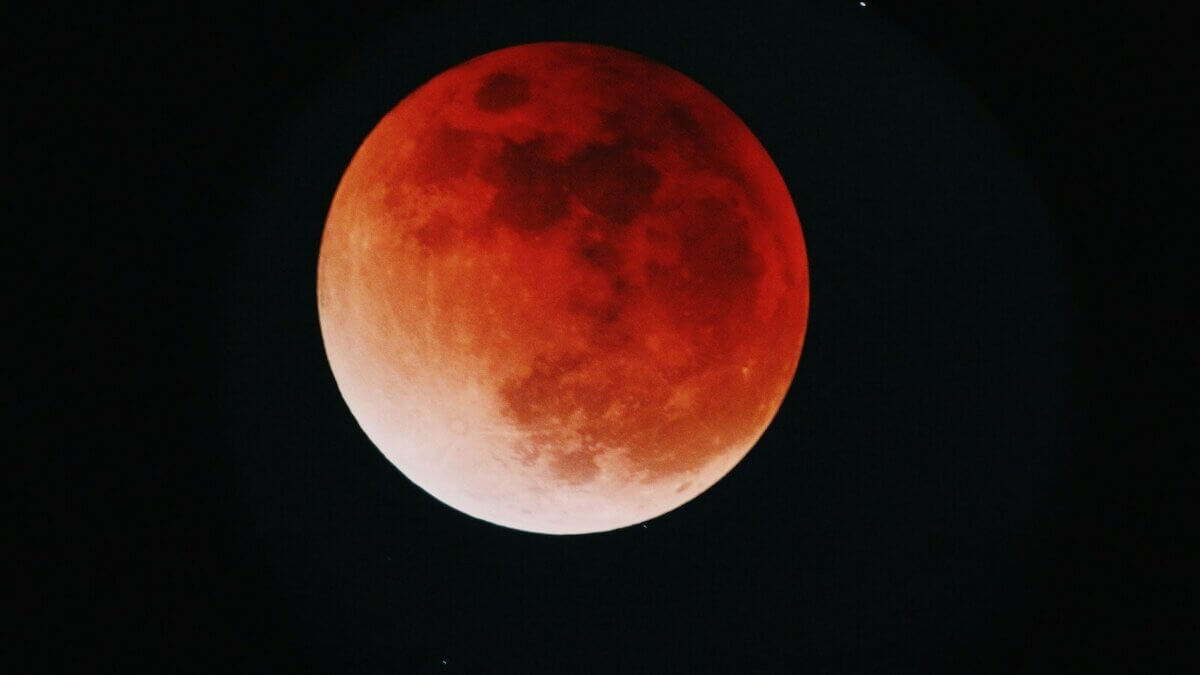
A deep partial lunar eclipse will be visible from Utah on Thursday night, Aug. 27, with more than 96% of the moon entering Earth’s darkest shadow at the height of the event. Photo: Yu Kato
More than 96% of the moon will enter Earth’s darkest shadow, creating a copper-colored display visible from Park City
PARK CITY, Utah — Utah skywatchers will have a chance to see an unusually deep partial lunar eclipse Thursday night, when more than 96% of the moon slips into Earth’s darkest shadow.
The eclipse will be visible from Park City and across most of the Americas on the night of Aug. 27 into the early hours of Aug. 28, NASA says. Although it may look nearly total, the event is formally classified as a partial lunar eclipse because a narrow portion of the moon will remain outside Earth’s central shadow.
The first, subtle stage begins at approximately 7:24 p.m. Mountain time, when the moon enters Earth’s penumbra, or faint outer shadow. The more noticeable partial phase begins around 8:34 p.m., as the moon moves into the umbra, where Earth completely blocks direct sunlight.
The eclipse will reach its maximum at approximately 10:13 p.m. At that point, 96.3% of the moon’s disk will be inside the umbra, according to NASA’s Goddard Space Flight Center.
The partial phase will end around 11:52 p.m. The moon will leave the penumbra shortly after 1 a.m. Friday, bringing the eclipse to a close.
As the eclipse deepens, most of the moon could take on shades of copper, rust, or deep red. Earth blocks direct sunlight from reaching the eclipsed portion of the moon, but some light passes through the planet’s atmosphere. Shorter blue wavelengths are scattered more readily, while red and orange light bends toward the lunar surface.
The same atmospheric process produces red and orange colors at sunrise and sunset. During a lunar eclipse, those filtered colors can be projected across the moon.
Because a sliver of the lunar surface will remain directly illuminated, Thursday’s eclipse will not include a period of totality. The contrast between the bright edge and the darkened portion may initially make the eclipsed area appear nearly black. As the illuminated section narrows, viewers’ eyes should adjust enough to reveal more of the moon’s copper coloring, according to NASA.
Unlike a solar eclipse, NASA says, a lunar eclipse is safe to watch without protective glasses. No telescope or other equipment is required, although binoculars can provide a closer look at the advancing shadow.
Observers should seek an area with a relatively open view of the sky and limited artificial light. Because Park City’s surrounding ridgelines can obstruct views near the horizon, an open location may provide better visibility during the early stages.
Weather could be the biggest uncertainty. As of Tuesday morning, the National Weather Service forecast a 30% chance of showers and thunderstorms in Park City before midnight Thursday, followed by a slight chance of showers. The sky is expected to be mostly cloudy, although forecasts can change as the event approaches. The overnight low is expected to be around 58 degrees.
Thursday’s eclipse follows a total lunar eclipse that occurred March 3. It is also the final eclipse of 2026. NASA lists the next lunar eclipse as a penumbral eclipse on Feb. 20 and 21, 2027, a subtler event in which the moon passes only through the lighter outer portion of Earth’s shadow.
For Thursday’s event, NASA recommends that the best viewing window for Park City will likely fall between about 9 p.m. and midnight, with the most dramatic appearance expected around the 10:13 p.m. peak.
By: Rebecca Brenner


1263 E Wild Maple Court
Draper, UT 84020
336 W Broadway Unit 201
Salt Lake City, UT 84101
1548 W Woodsview Lane
St. George, UT 84770
29 Marilyn Court
Park City, UT 84060Talk of the Town


Park City Jobs

Executive Asst / Marketing Coordinator, Limitless Advisor Coaching
Today Full time $50,000 - $60,000 yearly

Wellness Studio Sales/Client Service Specialist, Elements Massage
Today Full time $19.00 - $22.00 hourly

SOUS CHEF/COOK, Rebekah's Kitchen
6 days ago Full time $50,000 - $60,000 yearly

Live Like Sam: Marketing Manager, Live Like Sam
7 days ago Full time $60,000 yearly

Construction Assistant, Jorgenson Builders
7 days ago Full time $20.00 - $26.00 hourly