Bear incidents more than double in Utah as drought pushes animals into cities

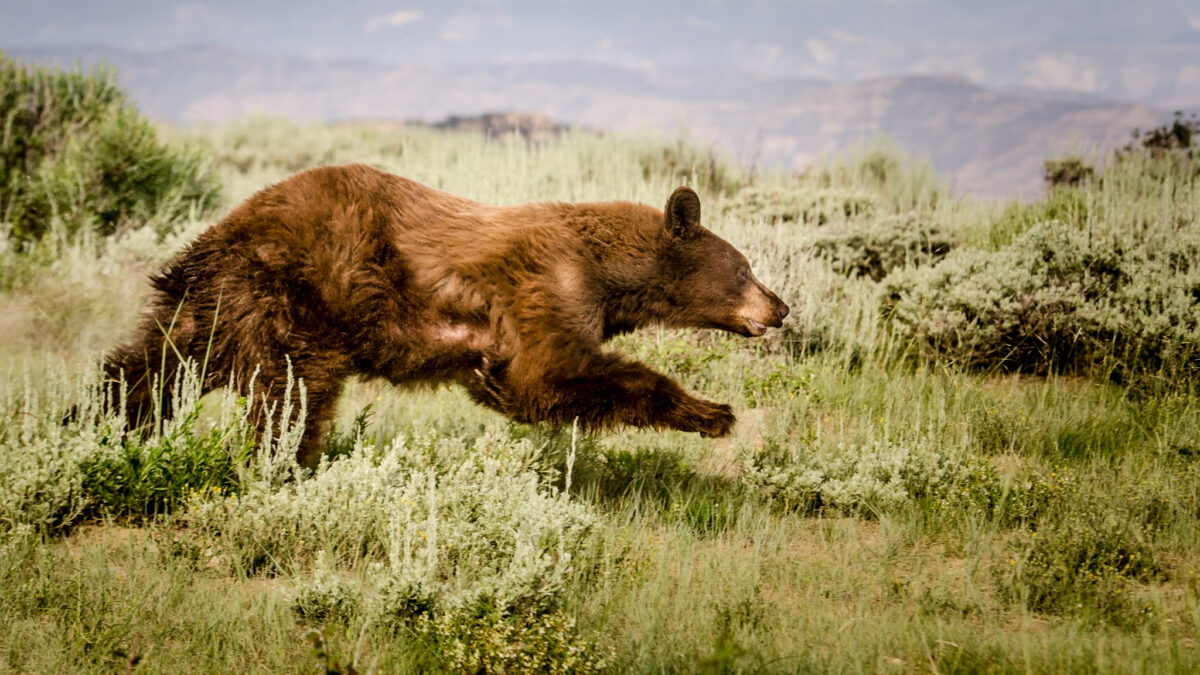
State wildlife officials say poor natural food supplies have driven black bears into neighborhoods and lower-elevation communities, including Park City
PARK CITY, Utah — Utah wildlife officials have responded to more than twice as many bear incidents this year as they did in all of 2025, a sharp increase they attribute partly to drought, extreme heat and declining natural food supplies.
As of Aug. 25, the Utah Division of Wildlife Resources and partnering law enforcement agencies had responded 168 times to bear-related issues across the state. The DWR responded 83 times in 2025.
The agency said Utah is experiencing its highest recorded number of bears entering cities.
“The likelihood of seeing a bear in places you wouldn’t think they would be is dramatically higher this year,” DWR Game Mammals Coordinator Chad Wilson said. “Unfortunately, their food search has created some conflicts in some of these areas.”
Black bears are Utah’s only bear species and live throughout much of the state. According to the DWR, warm spring weather followed by hard freezes, extreme heat, and drought damaged berries, acorns, and other vegetation that normally provide much of the animals’ diet.
The loss of those foods has driven bears into lower elevations in search of alternatives, including food available in residential neighborhoods.
One bear entered Park City in May, and DWR biologists captured and relocated it to the Avintaquin Mountain area. The same bear later traveled to the Vivian Park community in Provo Canyon in August, the agency said.
Relocation is not always successful because some bears return to populated areas. Wildlife officials may euthanize bears that injure people, behave aggressively, repeatedly return to populated areas, lose their fear of humans, or cause significant damage to homes or other structures.
Bears in poor health or with a low chance of survival may also be euthanized rather than relocated, the DWR said. Utah does not have certified wildlife rehabilitators equipped to care for bears or other predators, and zoos and accredited facilities have limited capacity.
“These decisions follow policy and are not made lightly,” Wilson said.
The DWR said black bear populations are difficult to count directly. Biologists instead use models based on harvest data to estimate population trends. Those estimates indicate that Utah has more bears than it did 30 years ago. At the same time, human development has expanded into canyons and foothills that provide natural bear habitat.
Although black bears typically avoid people, access to food can change their behavior.
“When a bear finds food, though, that can all change,” Wilson said. “A bear may become aggressive toward animals or people it perceives as threatening the area where it found the food.”
Wildlife officials are asking residents to remove or secure potential bear attractants, including bird feeders, fruit trees, compost piles, beehives, pet food, barbecue grills, and outdoor garbage cans. Do not leave pets outside unsupervised, especially at night.
Keep trash in a secure location or bear-resistant container. Residents without access to a bear-safe container should store garbage inside a garage and place it outside on the morning of collection rather than the night before. Cleaning garbage containers can also reduce odors.
Campers should secure food, snacks, toothpaste, deodorant, and other scented products in a locked trailer or vehicle trunk, not inside a tent or on a table. Visitors should clear campsites of food scraps, grease, and trash before leaving.
A bear that finds food around people can lose its natural fear of them, increasing the likelihood that wildlife officials will eventually have to euthanize it.
“Having to euthanize an animal — because someone didn’t do something as simple as keeping their campsite clean and storing food in a secure area — is tough,” Wilson said. “Please don’t put us in that situation.”
The DWR asks people to report bears that enter campsites, get into garbage or food, or enter cities and other heavily populated communities. Bears seen in foothills or canyons generally need to be reported only when they act aggressively, damage property, or get into garbage or fruit trees.
Anyone encountering a black bear should remain calm, stand their ground, and allow the animal to leave. People should not run, climb a tree, lie down, or play dead. If a black bear attacks, the DWR advises fighting back with whatever is available.
More information is available through the Wild Aware Utah website.


2266 E Garfield Avenue
Salt Lake City, UT 84108