Parenting without a manual: Katie Nelson helps families lead with connection

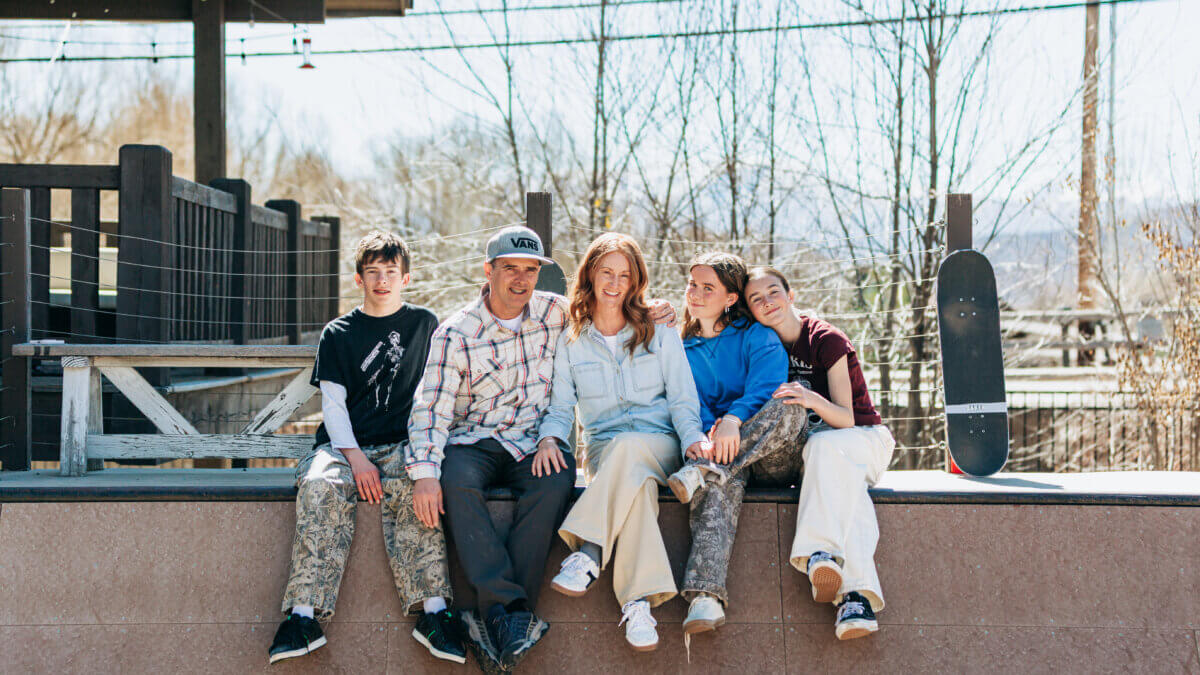
Our first baby was born in the early-morning hours of our second wedding anniversary. I had wondered what pieces of us he would carry. Would he have Daddy’s eyes? My athleticism?
In those early dreams of motherhood, everything felt soft and golden. I imagined hiking together through the wilderness, then reading while snuggled on a hammock.
I believed instinct would guide me, that the deep love I already felt for this tiny person would translate into wisdom, along with calm responses in every moment. I didn’t yet understand that love and skill are not always the same thing.
The truth is, I didn’t know a single thing about being a mom. My own was neglectful and abusive. She never wanted to be a mother, but I did. I knew if I wanted it badly enough, the rest would simply come. That loving and guiding my son, responding with patience and affection, would just…happen.
It didn’t.
Just 21 months later, we welcomed our second child. Almost overnight, the days blurred together in a haze of exhaustion. I wondered if other mothers felt this way too, or if they had quietly figured something out that I had somehow missed. Our baby girl screamed nearly nonstop for the first three months of her life, and our little boy’s natural setting pushed every boundary he could find.

As an unregulated adult, I grasped at anything that might help me survive the early stages of many parenting struggles. I yearned for knowledge—an education in how to do this.
There were parenting books, of course. On one end of the spectrum was strict dominance and control, like Battle Hymn of the Tiger Mother. On the other were more peaceful and progressive approaches, like How to Raise an Adult: Break Free of the Overparenting Trap and Prepare Your Kid for Success.
However, the books I read seemed to miss what I needed most: how to keep your relationship with your child at the center of your parenting. Because in the middle of the chaos and endless guessing, the relationship is the only thing that truly matters.
This is Katie Nelson’s expertise.
As a parent consultant since 2006, Katie has taught thousands of parents how to improve interactions and strengthen relationships with their children. Her practical approach teaches specific techniques that can be implemented immediately—yet have lasting positive effects.
As a lifelong resident of Heber City, Katie recalls that a focus on community and relationships was at the core of her youth. Her father owned the local Duke’s IGA, which was later sold to Smith’s Food and Drug.
“My dad held contests in the store. In a town like Heber, the grocery store wasn’t just a place to buy milk and bread; it was a gathering place. People lingered to talk, kids ran into classmates in the aisles, and relationships were built in everyday interactions. He once rented a flatbed truck and even had a dance in the parking lot. He was outgoing and really loved creating relationships within the community.”
As a local cheerleader and a bag girl at the IGA, Katie responded to that community involvement with joy. “I loved seeing the community come together and support each other,” she recalls.

After receiving an athletic scholarship in cheerleading, Katie attended Southern Utah University for two years before meeting her now-husband and transferring to the University of Utah, where she earned a bachelor’s degree in human development and family studies. Soon after, Katie completed an MA in Education and Early Childhood Special Education.
“I have always been interested in people’s stories. I genuinely love all people and cultures,” Katie says.
It seems natural, then, that she would gravitate professionally toward the very beginning of a person’s story: their childhood.
While working toward her graduate degree, Katie worked for the Davis School District as an early childhood special education consultant. She traveled to different schools, working with parents and educators on children’s IEPs (Individualized Education Program). An IEP serves as a customized roadmap to help students with disabilities succeed academically and functionally. Katie would sit in classrooms collecting data and working directly with special-needs children throughout the district.
“Many times,” she shares, “I saw children being referred to me for behavior problems when really, the parents had simply not been equipped for parenting.”
In every profession, there is a training program, a manual of procedures and policies. When X happens, Y is the action.
But kids don’t come with instruction manuals. Instead, we rely on instinct, advice from well-meaning friends, memories of how we were raised, and a stack of books that often contradict one another. Parents are left trying to piece together a strategy while the stakes—our children and our relationships with them—couldn’t feel higher.
What they do come with is a lifetime of care, concern, and cost mixed with joy and elation. Parenting is both the greatest privilege and one of life’s most demanding roles.
But what could be possible if parents did have a manual? A playbook of sorts?
When a child storms off in a huff without taking out the trash, what is the relationship-centered response that keeps a parent and a child united while still holding the child accountable?
Katie has implemented positive behavioral techniques with children of all abilities and behaviors while owning and operating her private preschool, working as a preschool teacher for Head Start, and serving as an early childhood special education consultant for Davis School District.
Through her online and in-person courses, she has worked with parents and children across the globe through her program, called “Lead, Guide, Walk Beside: Parenting With Purpose.” It is designed to be the manual many parents wish they had when learning how to respond with love, while also encouraging personal accountability.
“My family and I are perfect at nothing, yet we always strive to improve,” Katie admits.
After several moves from Salt Lake City to Houston, Texas, the Nelson family eventually settled back in Heber City to raise their four children.
“My husband was a ‘professional snowboarder turned physician’s assistant,’” says Katie, “so being back in my hometown surrounded by mountains felt like the most natural place to settle.”
As a homeschooling family, they value both the time they get to spend together and the efficiency that homeschooling provides.
As a homeschool mom myself, I understand that having kids at home more often than they are away creates many opportunities to guide behavior. It also encourages many more moments to get parenting wrong—moments where patience slips away, even when you begin calmly.
Sometimes that calm beginning ends with raised voices and regret.
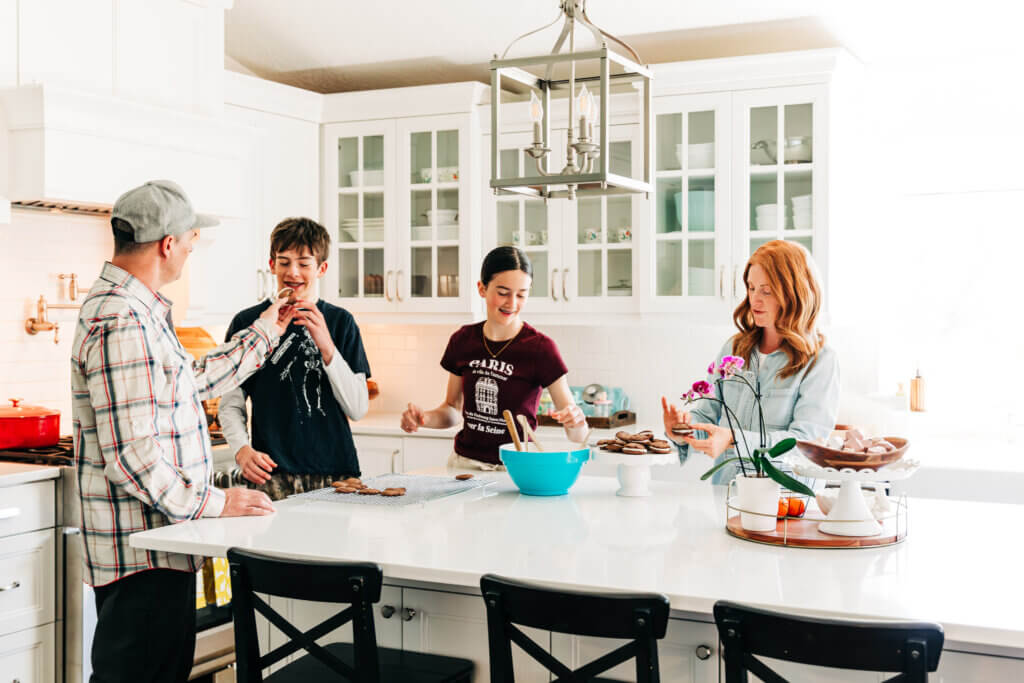
“We’ve all been there,” Katie acknowledges. “As you implement the techniques that I teach, your child can learn how to reset and own their behavior, which can benefit them throughout their lives. You will also learn how to teach at the appropriate time, follow through with age-appropriate consequences, and follow up with love.”
Katie offers an abundance of resources and products on her website. After exploring her services, one program stood out as a potential solution to a problem nearly every parent I’ve spoken with agrees on: cell phones.
A recent 2025 study indicates that owning a smartphone by age 12 or younger is strongly associated with increased risks of depression, anxiety, insufficient sleep, and obesity, particularly for girls. More than half of US children now have a smartphone by age 11, and research shows that for every year before age 13 a phone is acquired, mental-health outcomes can decline. Major outlets such as CNN, CBS News, and The New York Times have reported on this growing concern.
“I developed a program called ‘Phone School’ with the intent to help your teen establish healthy cell phone habits,” Katie explains.
By going through Phone School, parents can help their child or teen learn how to manage a cell phone responsibly. The program includes downloadable materials, direct video instruction, expectations, a contract, and a certificate of completion. It can be completed in an hour or less, yet the lessons are designed to create lasting positive habits.
If your teen already has a cell phone, the program can also help establish more appropriate boundaries and limits, especially if phone use has become a problem at school or in the home.
As a parent of seven children ranging in age from two-and-a-half to 18 years old, the question of what to do next often feels endless. Yet the idea of prioritizing relationship growth first feels like a concept that is much easier to anchor into.
Being a parent may be the toughest job in the world, but people like Katie Nelson, who holds workshops and creates resources that serve the needs of families through connection, honesty, integrity, and responsibility, are answering a calling that could have a ripple effect far beyond individual homes, with the potential to strengthen entire communities.
“My 20-year-old daughter just returned from a mission in Chile, and my 18-year-old son is currently in Africa,” shares Katie. “They were raised with these concepts of connection first and use a lot of what we’ve taught in their lives now.” And while Katie and her family are LDS members, this program is in no way religious. “Learning how to approach relationships that are heart-centered is for everyone,” she continues, “so I created this program to be agnostic in nature and accessible to anyone who wants to improve their relationship with their children.” (As a member of a practicing Catholic family, I believe it. I already have our class scheduled!)
So, perhaps I was right. When you step back and think about it, parenting philosophies don’t just shape individual homes. They shape the way children learn to treat others, how they handle conflict, and how they build relationships throughout their lives. The ripple effects of healthy connection can extend far beyond a single family.
This work really is impacting the world—and changing it.
To connect with Katie or inquire about upcoming in-person workshops, visit fullynested.com.


2266 E Garfield Avenue
Salt Lake City, UT 84108