The natural law of Sundance

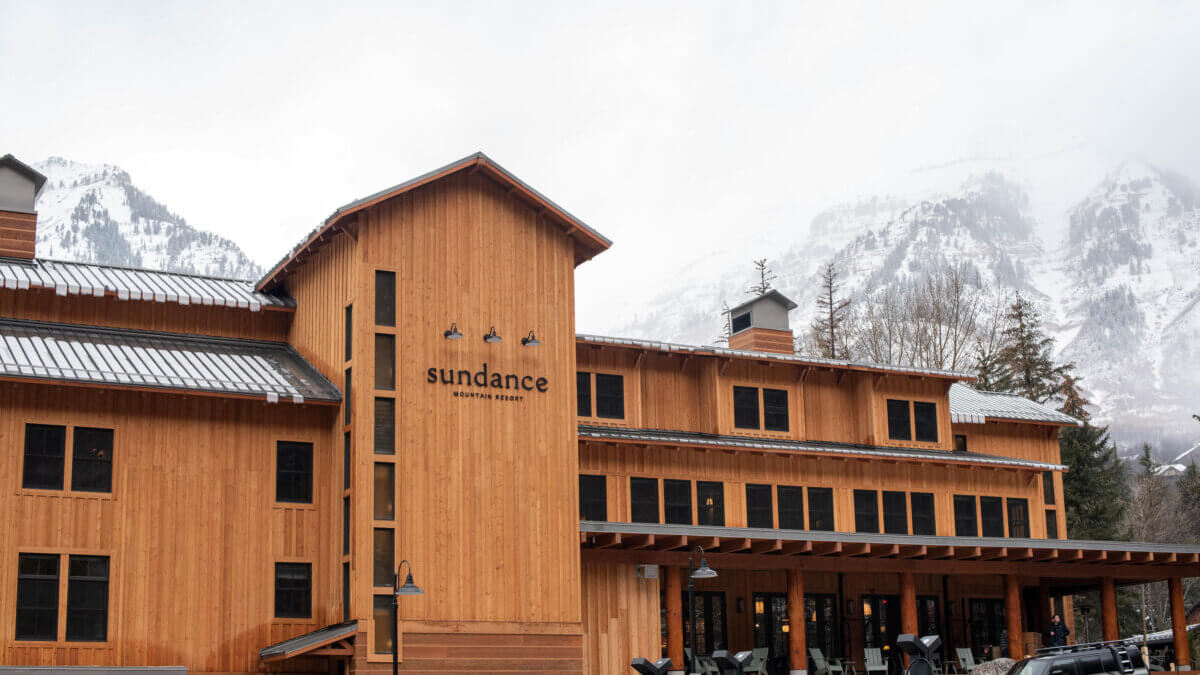
Amy Redford was 13 years old, riding her horse Romi on the Big Hole Trail, when they arrived at a washed-out section between a rock wall and a cliff’s edge. There was no space to turn around without plunging off the side, and Romi had been abused before Amy’s parents—actor Robert Redford and social activist Lola Van Wagenen—took him in at Sundance Mountain Resort, which they had purchased in 1968. “The previous owners had been hitting Romi on the head with two-by-fours, so he was very head-shy,” Amy explains.
Somehow, Amy needed to climb over Romi’s head and guide him backward to save both of their lives, but normally, Romi would rear up if Amy went anywhere near his head. So, they had a talk. “I was like, ‘Romi, we have a situation. I’m about to climb over your head.’” She did, and Romi stayed calm. The experience was a lesson in “natural law”—a term Amy uses frequently during our conversation in the Tree Room, a restaurant at Sundance Resort.
Natural law is an unseen force behind the Sundance Institute, founded in 1981 at Sundance Resort by Robert Redford to support independent filmmakers. Like all things human, the Institute has had to adventure, evolve, and learn hard lessons in its quest to thrive. The controversial relocation of the Sundance Film Festival from Park City, Utah, to Boulder, Colorado, will go forward in that spirit.
Yet unbeknownst to many in the Wasatch Back, the Sundance Institute’s Feature Film Program, with its iconic Labs for screenwriters and directors, is returning to Sundance Resort after a two-year stint in Colorado. If Amy has anything to say about it, the Labs will remain at Sundance Resort in perpetuity.
Natural law demands adaptability and change, but these are not synonymous with progress. Some changes could take the Labs away from their values and into a washed-out stretch of a trail with no turning around or backtracking. That is what worried Amy’s father before he passed in September 2025, and that has driven Amy to stand up for the Labs.
Raised between New York City and Sundance Resort, Amy says she grew up as “a feral kid running around the mountains” with her two siblings. Being the “boss’s kid” didn’t spare Amy from responsibility. She had her ski pass clipped more often than anyone else around.
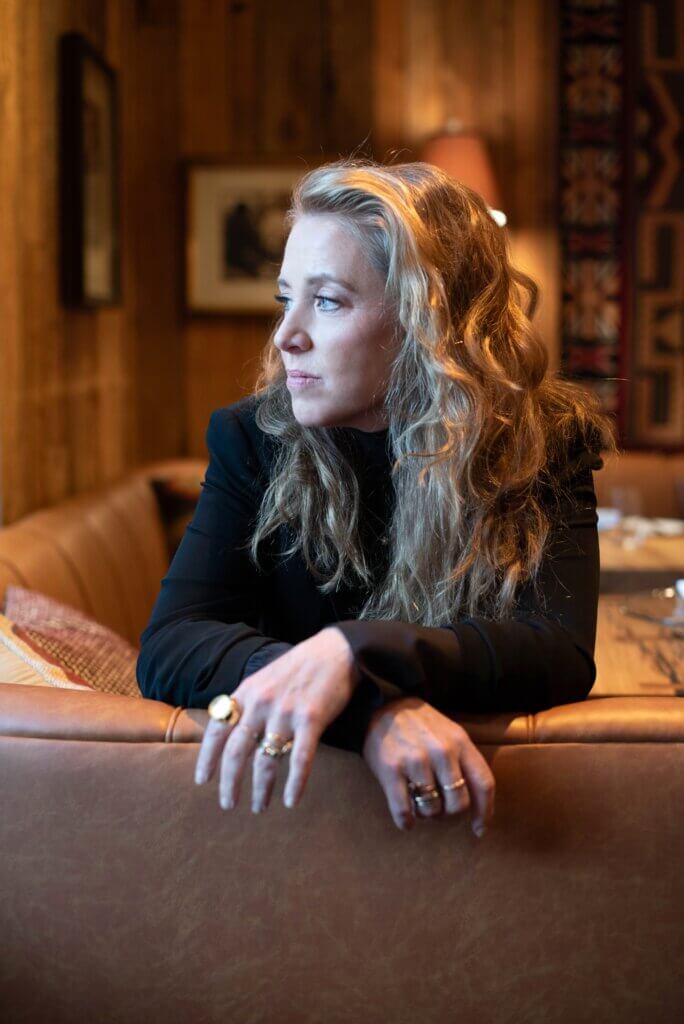
Sundance was the place, says Amy, “where my dad felt most like himself.” And part of Redford’s self wasn’t satisfied with the film industry that made his career and enabled him to purchase Sundance Resort. “He was a working actor who was also a storyteller by nature and was a curious being,” Amy says. “He recognized that not only storytellers, but stories, were not getting their fair shake. Part of it was born out of his difficulties getting his own independent films out into the world. If he was having that kind of problem, imagine if you weren’t a movie star.”
Robert Redford had begun to restore the land beneath Sundance Resort, worn down from decades of sheepherding. Could he restore the balance of nature in film, too, by mentoring and supporting emerging artists? He chose to host the first-ever Labs at the resort, says Amy, “because of the natural impact that these mountains have on your framing. They have a way of making you understand the thing that you’re trying to conceive.”
Amy took part in the Labs from the beginning. Initially, that meant pouring water for filmmakers, making copies of scripts, being a production assistant, and, eventually, playing Giancarlo Esposito’s mom in a play at the age of 22.
In 2003, Amy formally joined Sundance’s Theatre Lab (which was retired in 2022) to work on a project called Switch Track. “I was just as humbled as everybody else,” she says, recalling her sense of imposter syndrome. Switch Track, developed with Darrill Rosen and Yael Farber, was about the meeting of unlikely companions based on Rosen’s Lithuanian Jewish heritage and Amy’s Utah roots. Her great-great-grandparents on her mom’s side were among the early Mormon pioneers to arrive in Utah.
Although Switch Track never appeared on stage outside Sundance, the Labs were a formative experience for Amy. Having supported them and participated, she knows what’s at stake.
The principles behind the Sundance Labs are, like the land that inspired them, not to be taken for granted. They have shaped more than 11,000 artists over the last 45 years. Amy, true to her roots, explains these principles through story.
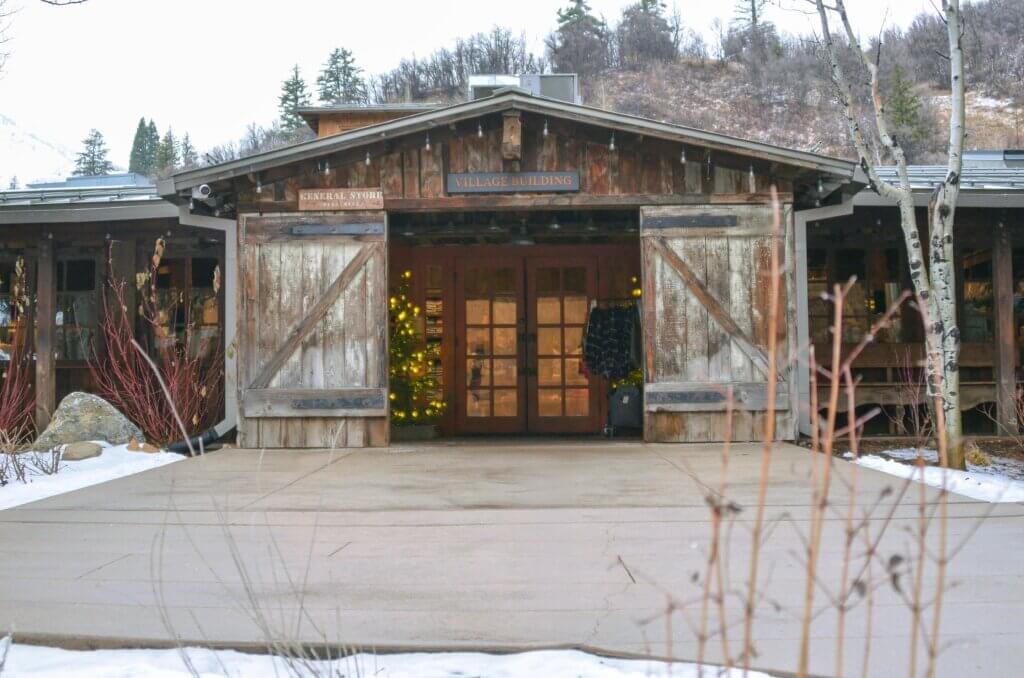
The fireplace grate beside us in the Tree Room reminds Amy of a Labs project featuring actress Reese Witherspoon. They had to shoot a Catholic confession, and Provo Canyon is not the easiest place to find a confessional booth. So, they used a fire grate, plywood, and side-by-side restroom stalls to create the set.
These creative constraints in the mountains, Amy believes, “…were challenging and also a great gift, because you could get hung up on what you don’t have.” Artists at Sundance figure out how to use whatever is available. “That is what they end up taking out into their professional lives. They’re sort of unstoppable.”
Another core principle of the Labs, says Amy, is the advisor–advisee relationship. “Advisors know their job is to catalyze the best of the story that the filmmaker wants to tell. It’s not to speak at them. It’s not to fix for them. It is, ‘How do we create enough opportunities for you to really discover what your voice is?’”
This form of mentorship can be hard for emerging artists to find, and Michelle Satter, senior founding director of the Sundance Institute’s Artist Programs, is legendary for providing it. “Everyone is sort of terrified of her,” Amy says, lovingly. She cites Ryan Coogler, writer and director of Sinners, which is nominated for a record-breaking sixteen Academy Awards: “Ryan said that the day he felt like he was born as an artist was the day that Michelle said, ‘That’s not good enough.’”
Three other 2026 Best Picture nominees—Frankenstein, Hamnet, and One Battle After Another—have director-writers who developed their debut feature films in the Labs.
While other organizations have tried to replicate the Sundance Labs, none have had a commensurate impact. The long-term leadership of Michelle Satter, Labs Director Ilyse McKimmie, and Sundance Institute Head of Operations Michaela Buccola have helped the program remain true to its purpose, Amy believes. Its location, however, shouldn’t be underestimated.
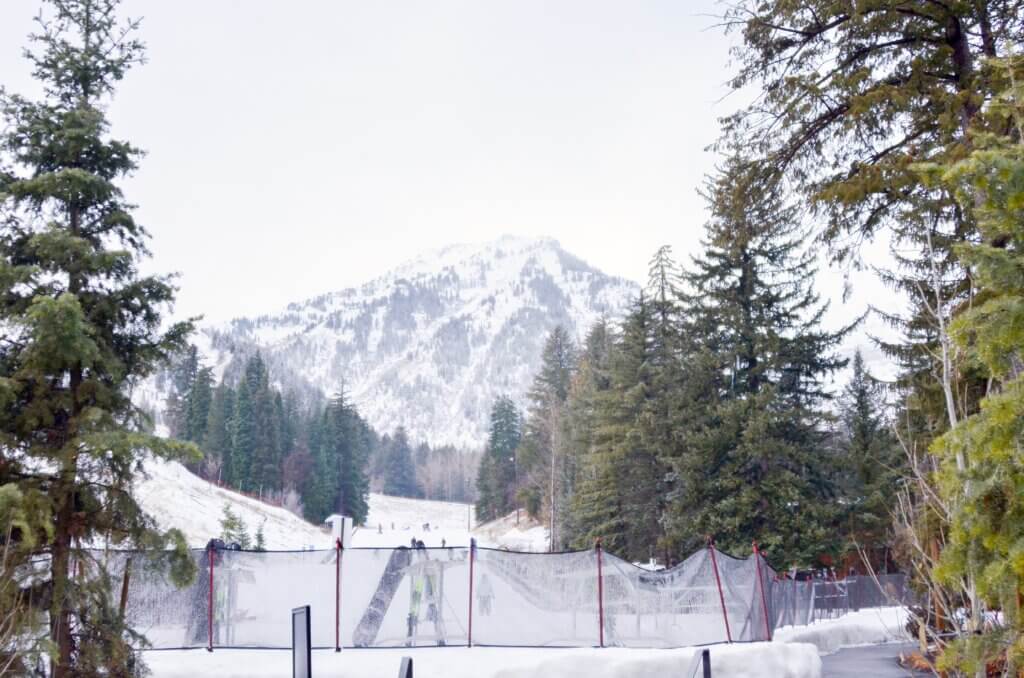
“My dad said, ‘Place matters,’ and it was a simple statement that had large implications,” Amy remembers. “What’s in the ether here is not reproducible anywhere else. The landscape of this mountain is something that has its own natural virtues that is hard to describe with words… I think that there is a lack of adornment here that allows people a little more breathing room to really figure out why they want to tell their stories.”
Robert Redford recognized the importance of not allowing himself, his kids, or emerging artists to live clouded by adornment, hidden from natural law. Indeed, he appreciated and sought out experiences like Amy’s near-catastrophic adventure with Romi. Those moments kept Redford sane, argues Amy, and kept him humble. “A horse doesn’t care what movie you made, how famous you are, who thinks you’re fancy. So, it’s the quickest and most efficient way to recalibrate back into who you are. And I think that’s why my dad constantly defaulted back to this place.”
That is perhaps why artists make immense progress at Sundance Resort. They arrive from frenzied lives (mostly in big cities), and the mountains effectively say, “You’re not that big of a deal. Drop your veneer and make art.”
Therein is the conflict between preserving and evolving the Sundance Labs. How much of the magic is attributable to place?
In her words and actions, Amy makes a case for location. She moved with her three kids from Los Angeles to Salt Lake City in 2018. “Quite frankly, I felt like I had more to offer here in Utah than I did in LA,” she explains. “I felt like I was in a sea of voices and didn’t really matter.”
Amy feels a responsibility to speak across cultural and political lines—something she grew up doing in Utah. Her mother’s family, born and raised LDS in Provo, made quite an impression on Amy. “My uncle Richard was somebody that really taught me a lot about civil discourse,” she says. “We didn’t always sit on the same side of the political aisle, but the way that he would articulate his point of view made me understand the responsibility I had to disagree with respect and intelligence.”
Utahn aunts, uncles, and cousins never treated Amy as the outsider, but they did keep it real. “No matter what kind of shape I was in when I would come to a family reunion from New York, they would throw open their arms and say, ‘Welcome home.’ I’d come with a shaved head, and they’d be like, ‘Amy, you look ridiculous. Pass the potato salad.’”
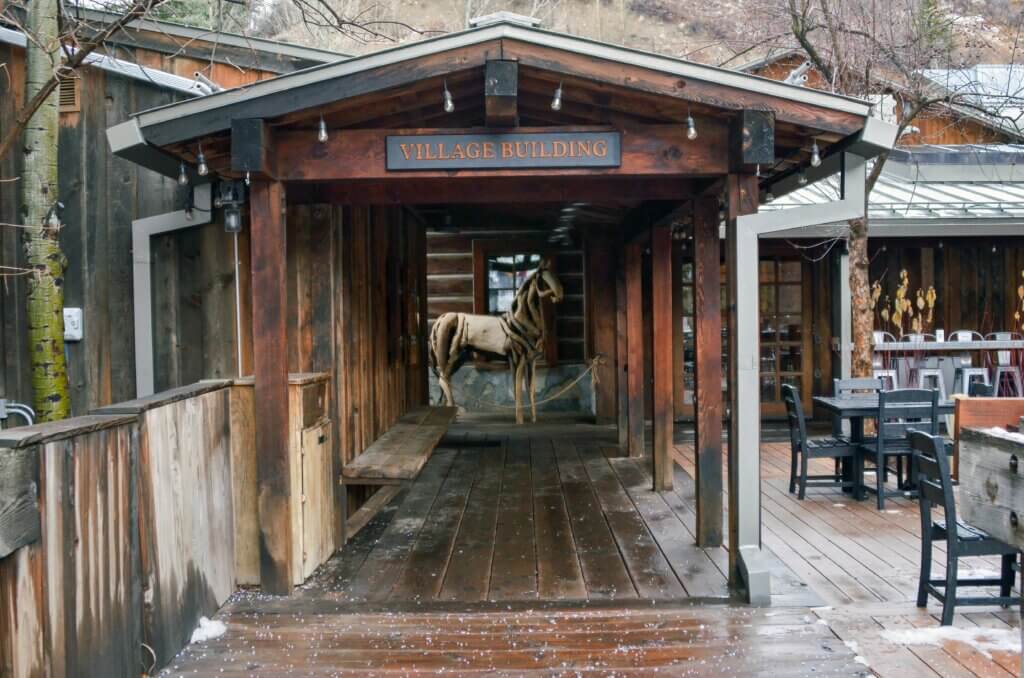
With her Utahn roots, her upbringing at Sundance Resort, and her career as an actress, director, and producer, Amy is making her voice heard. As of this writing, her feature film project, Salt & Honey, is about to shoot in Helper, Utah, just north of Price along U.S. Route 191. Directed by Amy and written by Skye Emerson and Annie Quan, Amy’s teammates at RedSkye Stories, the film imagines what it might have been like if Annie, a second-generation Chinese American, and Skye, of LDS pioneer stock, had met as kids and joined forces to save their community. Almost the entire crew and cast are based in Utah, and Amy has found local partners to back her, including Angel Studios, the Utah Film Commission, Harbor Fund, and Four J Films.
The Sundance Film Festival may have left Utah, but with the Sundance Labs—and youth media nonprofits like Salt Lake City’s Spy Hop, where Amy serves as a board director—the state will continue to nurture great stories and storytellers. Convincing people to believe in that vision and fund it is Amy’s mission.
“Part of the assignment right now is to continue to fortify the importance of storytellers,” says Amy. “They are very often our eyeballs on the frontline of civilization, and without them, I don’t know how we have empathy. I don’t know how we see the other side, which is so important right now.”
These days, Amy visits Sundance Resort regularly to recharge and drop the adornment, often on a hike to Stewart Falls or on skis, rather than on a cliffside with a horse. “I definitely put in an hour or two at the Owl Bar,” she adds. “You never know who you’re gonna meet. It’s just such a great community.”


2266 E Garfield Avenue
Salt Lake City, UT 84108