Environment
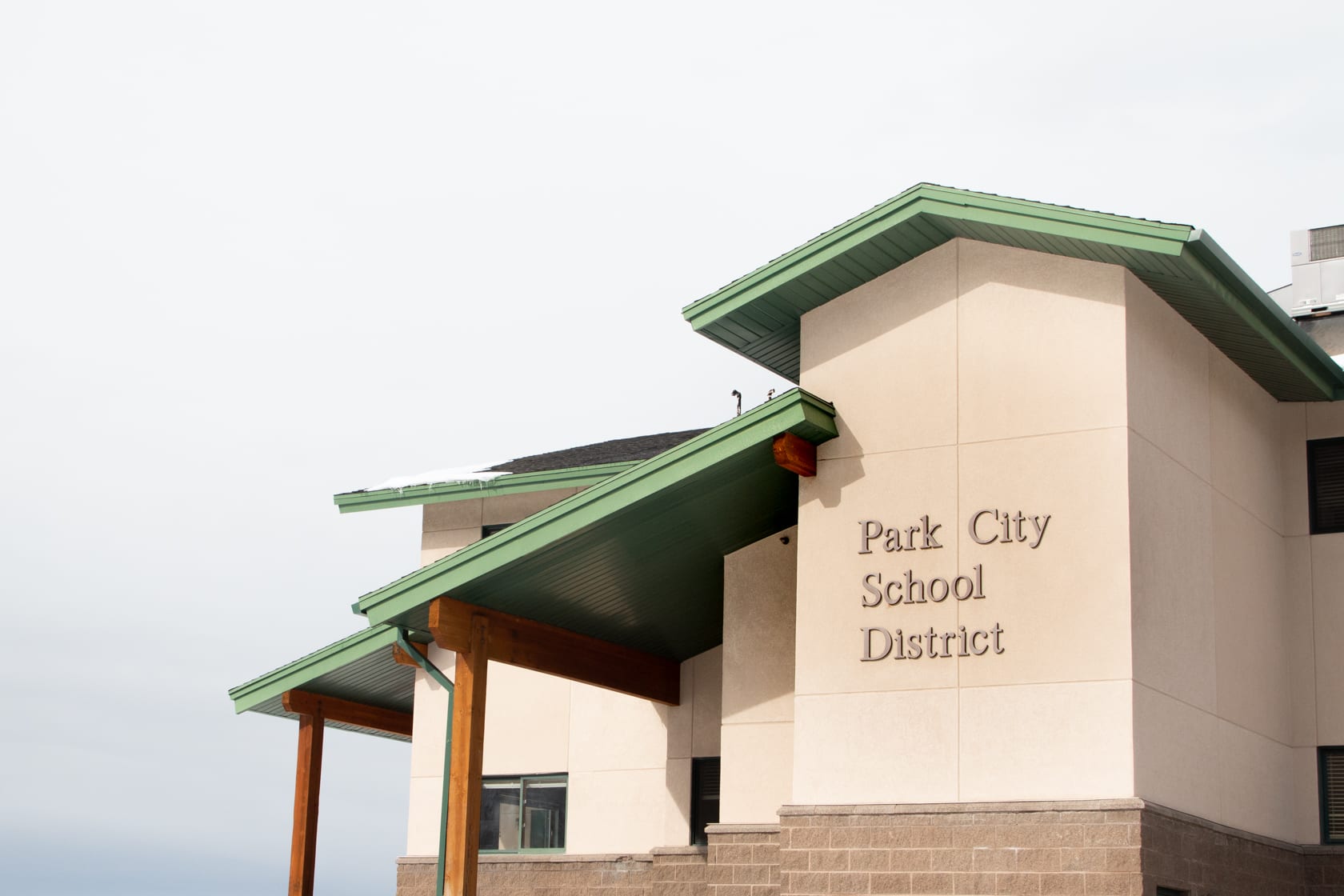
Park City School District narrative on Superfund site water discharge undercut by permits, emails, and city records

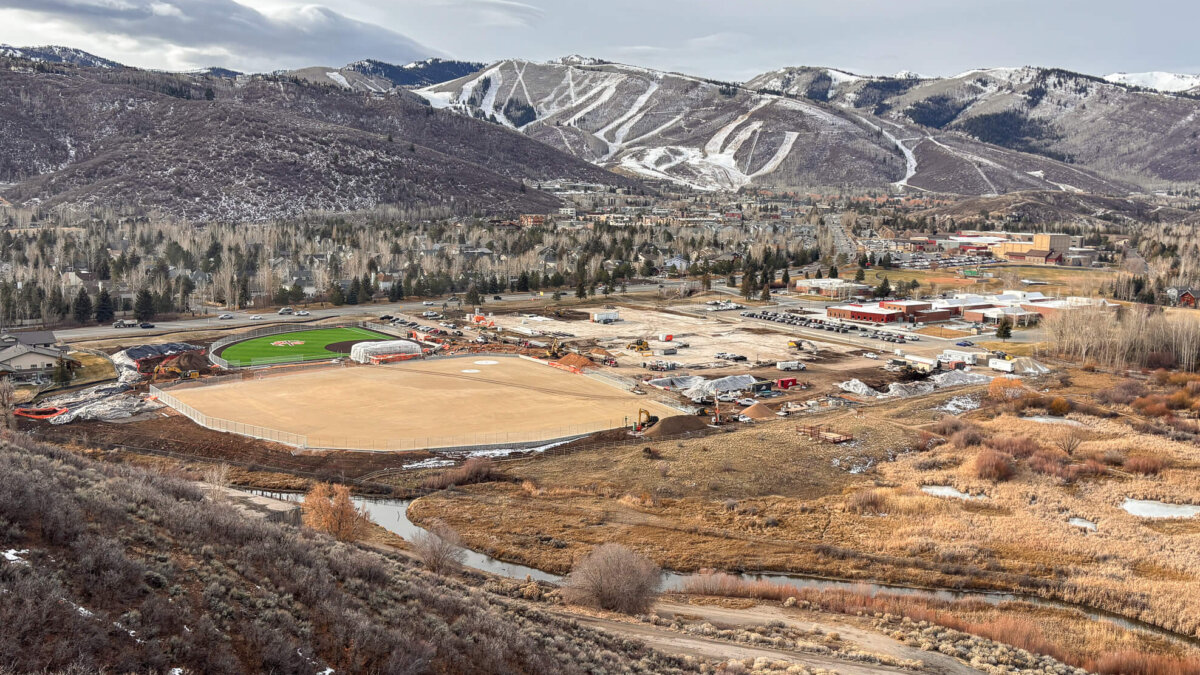
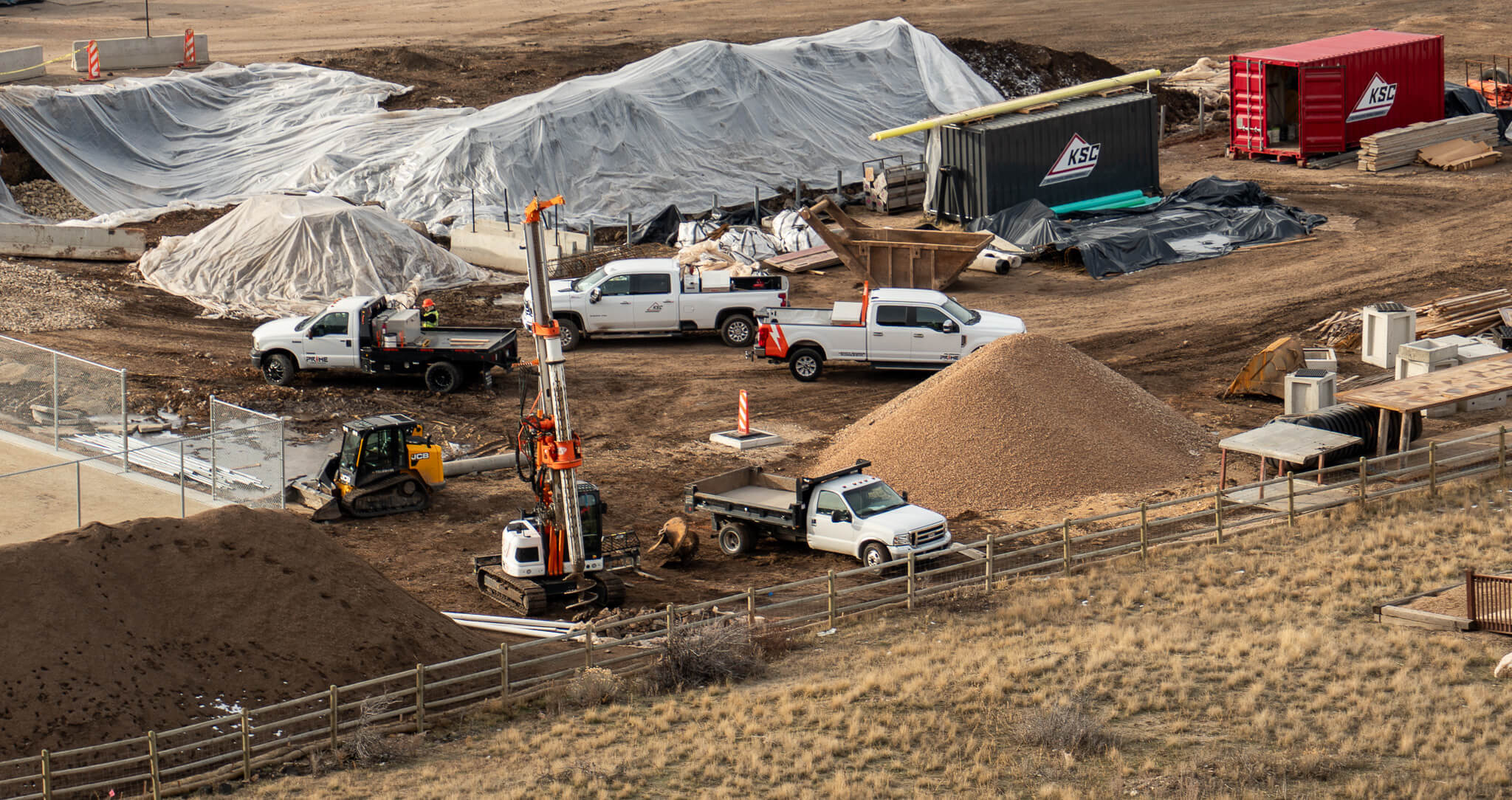
An elevated view of the Treasure Mountain School construction site on December 16, 2025, where groundwater was discharged into a ditch that flows into Silver Creek. Photo: TownLift
A required construction plan said groundwater would remain on-site, but district contractors instead pumped more than 500,000 gallons into a drain that flows to Silver Creek, a public waterway classified as a potential drinking source
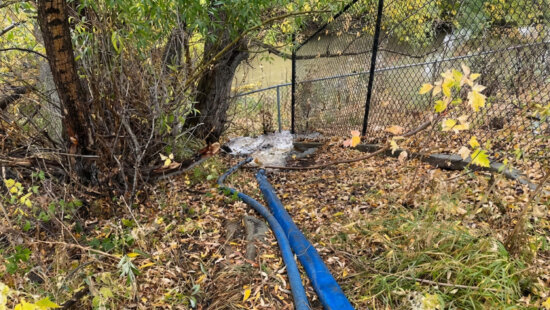
PARK CITY, Utah — It has been nine weeks since a Park City School District (PCSD) contractor called the Utah Department of Environmental Quality (DEQ) spills hotline in early October to report that groundwater had been discharged directly into a ditch on the eastern side of the Treasure Mountain Junior High construction site.
The site sits within a Superfund area linked to historic mining contamination. Certified lab tests collected from the site in August show district contractor, Hogan Construction, encountered water during excavation that contained arsenic and lead. The levels of contamination would have triggered thresholds that typically require more stringent contaminated water handling, pre-treatment, and heightened regulatory oversight under state law. Hogan’s pump logs and DEQ records show the contractor discharged about 500,000 gallons of groundwater into a system that ultimately flows to Silver Creek without required dewatering permits and state approvals in place.
The broader public learned of the incident Nov. 17 after a whistleblower contacted local media, alleging the school district had not disclosed the event. The state is now investigating the unpermitted discharges as well as contamination levels of the discharged groundwater and the receiving public waterway.
Water plan said groundwater would remain on-site
In addition to lacking dewatering permits, Hogan Construction’s Stormwater Pollution Prevention Plan (SWPPP), highlights conflicts with the school district’s statements. A SWPPP governs how water encountered during construction must be managed to prevent downstream pollution.
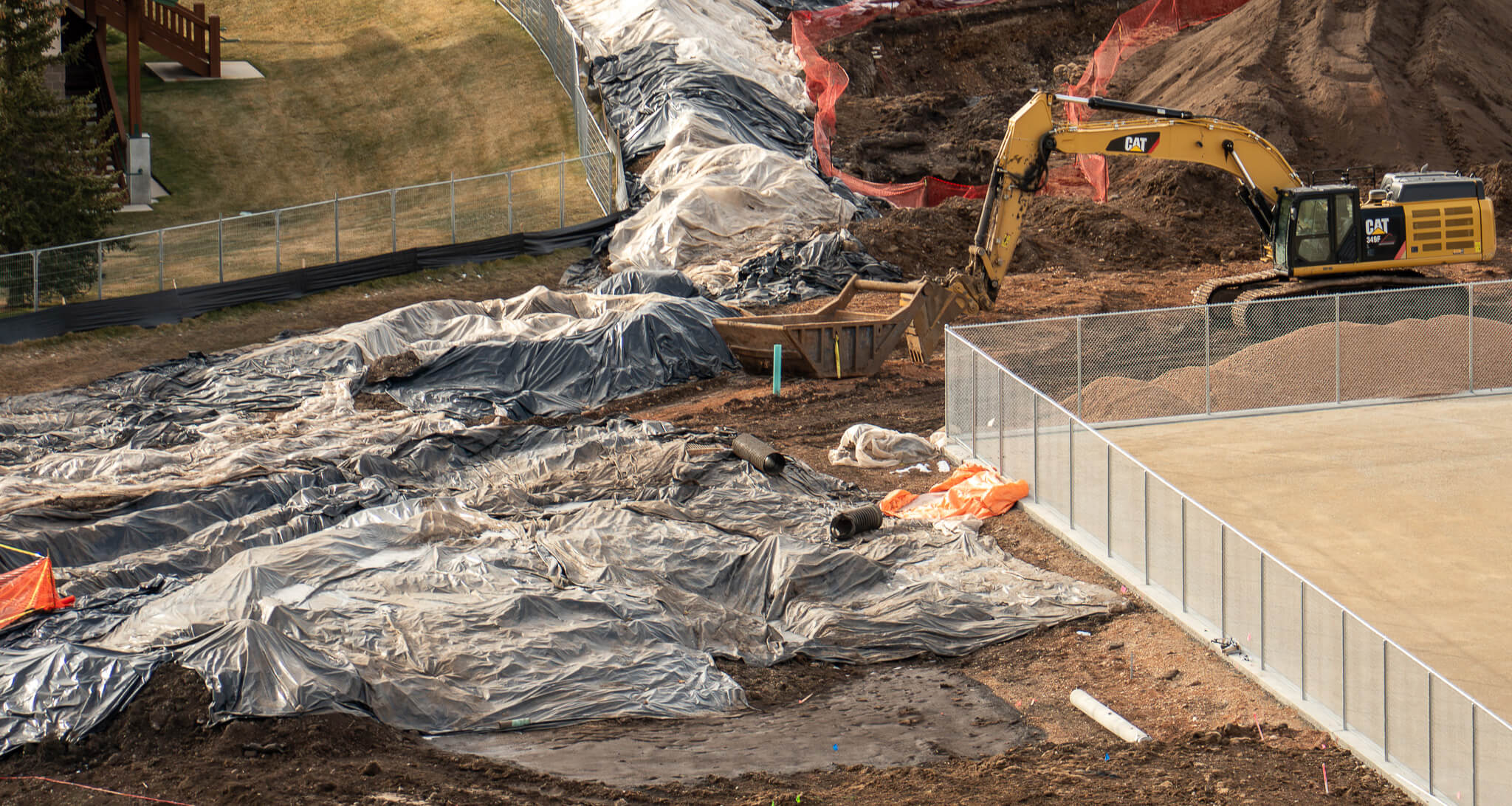
TownLift obtained a copy of the project’s SWPPP through a GRAMA request. It states that no dewatering would occur on the construction site, and any groundwater encountered would be pumped onto the site and left to evaporate, not discharged off-site.
“The SWPPP for this project states that they do not anticipate dewatering and that if it is needed, they will move the water and hold onsite for evaporation. They do not have a dewatering permit.” Christine Williams, Storm water coordinator for Park City Municipal, wrote in an Oct. 13 email to city colleagues, after the spill was reported to the DEQ.
The district claimed in an email sent Nov. 22 that “All other pumping events routed water into an existing municipal storm drain structure, located approximately 15 feet from the creek, consistent with permitted drainage pathways already in place.” The district later re-characterized the drain used as a private storm conveyance.
City officials have said there are no municipal drains on the Treasure Mountain site and that all drains and conveyances, public or private, lead to the ditch that flows into Silver Creek.
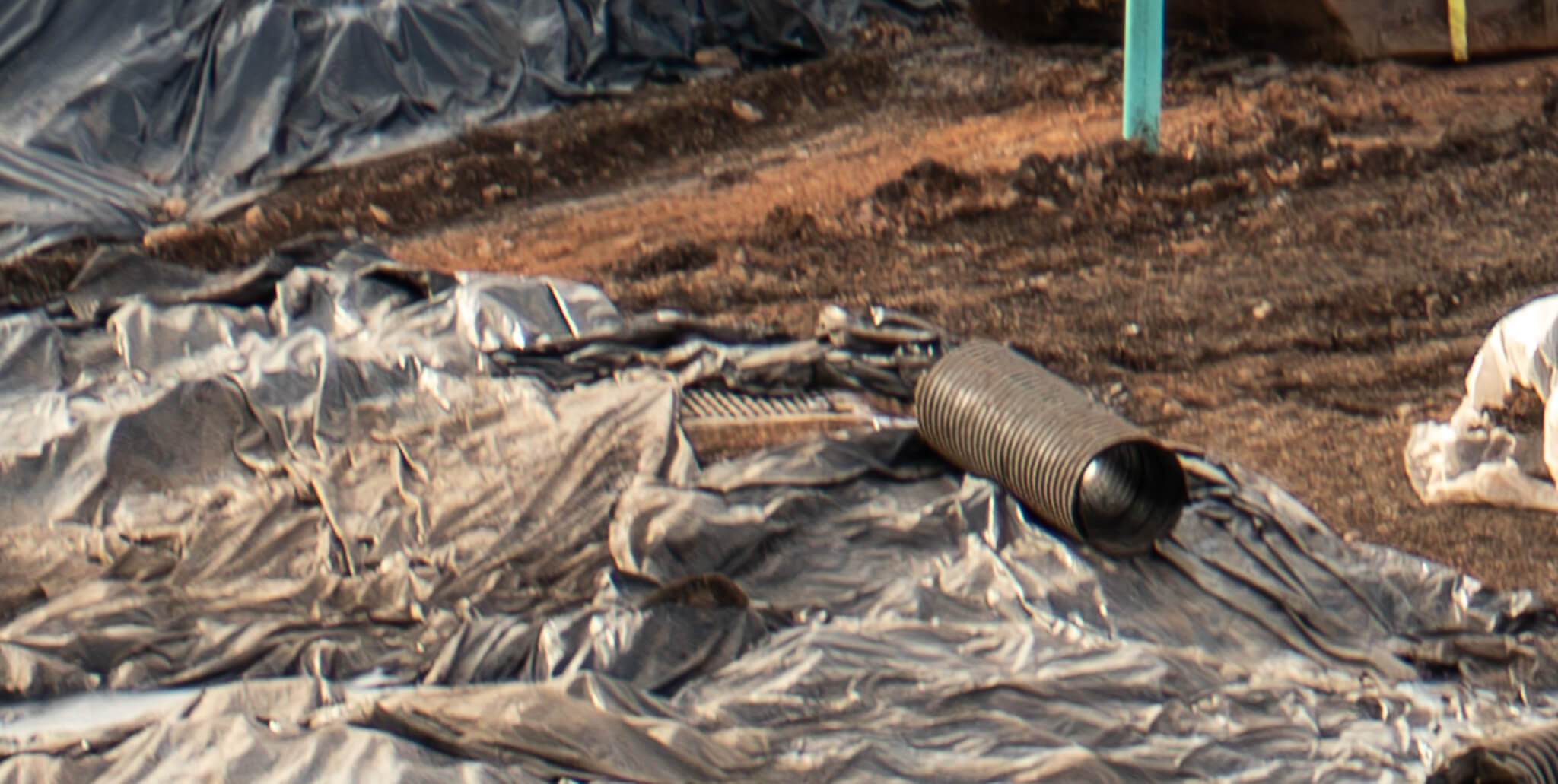
Under UPDES construction stormwater requirements a SWPPP needs to be updated as soon as groundwater is encountered. But an Oct 17 email from Williams shows that didn’t occur, and no permits or best-management practices were in place during the reported discharge.
Emails show district and contractors identified proper options in August but did not follow initial consultant guidance
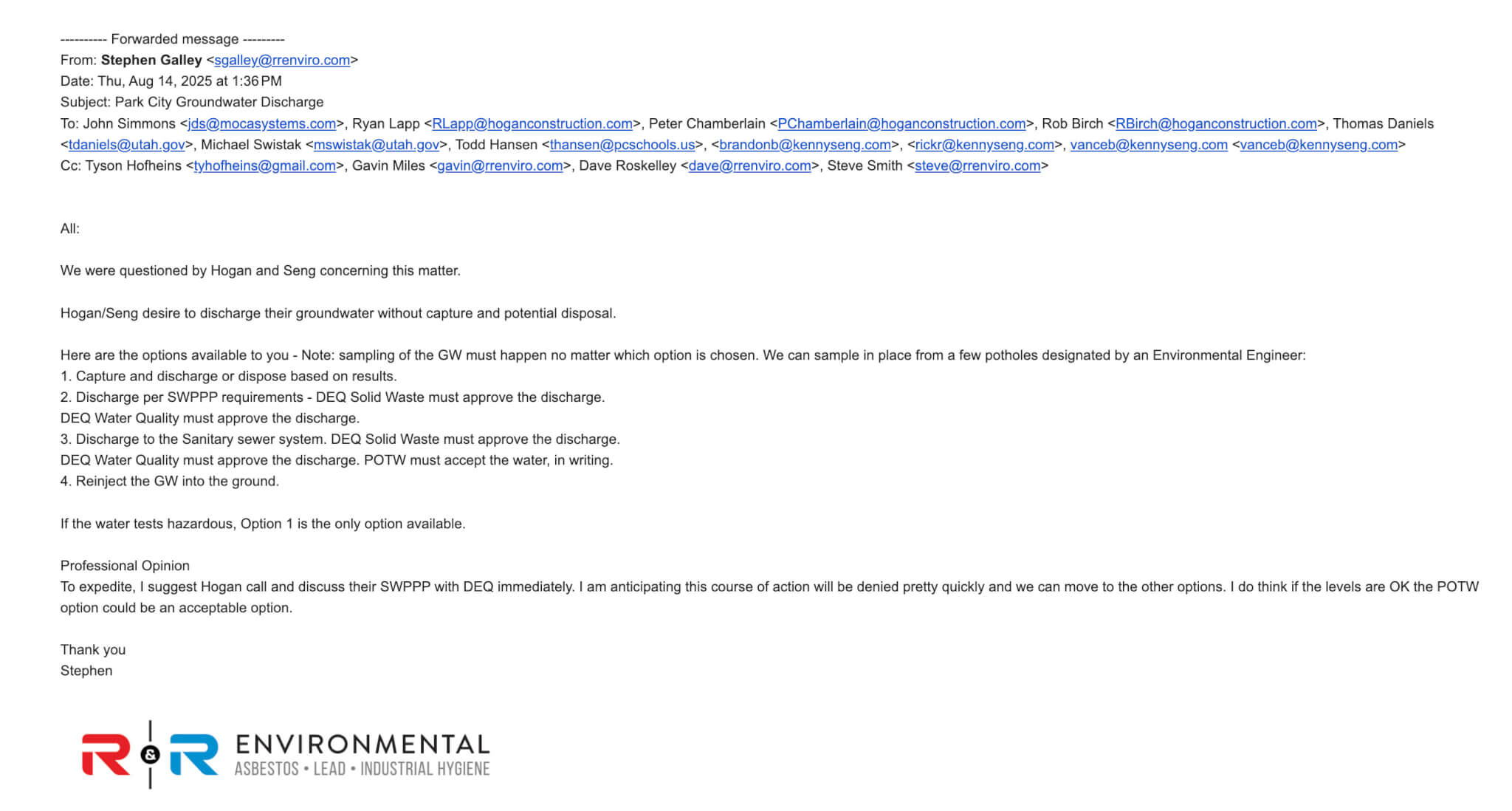
An internal email obtained by TownLift shows PCSD and Hogan Construction were advised by the district’s environmental consultant, R&R Environmental, that any off-site groundwater discharge would require water testing and prior approval from state regulators.
In the Aug. 14 email to Hogan, the district, and project manager MOCA Systems, along with DEQ officials and other contractors, R&R Environmental stated that groundwater sampling was required regardless of the disposal method and advised that the Utah DEQ would “quickly” deny any attempt to discharge groundwater under the project’s SWPPP.
The consultant outlined limited handling options, including capture and disposal based on test results, reinjection into the ground, or discharge only after obtaining multiple agency approvals and confirmation the water was uncontaminated.
The email did not identify discharge into existing drainage or stormwater infrastructure as an allowable option.
Groundwater samples taken Aug. 15 at the Treasure Mountain site showed arsenic and lead concentrations that would not be eligible for discharge under a dewatering permit, according to Linsey Shafer, a Utah DEQ environmental scientist. According to DEQ guidelines, the level of lead contamination in the Aug 15 sample was 19 times higher than the state threshold. Arsenic levels also exceeded those thresholds. The former school sits atop a Superfund site that underwent a large-scale cleanup of mining-related soil contamination about a decade ago.
A PCSD community statement sent via email on Dec. 9. portrays the groundwater as “non-hazardous,” discharged appropriately through a private storm conveyance line with consultant approval, and handled in a way that did not require additional permitting.
The district declined to explain what guidance supported its conclusion that DEQ approval and permitting was not required for the discharge, or to address discrepancies in how storm drains were classified as public or private, among other questions.
District officials ended their contract with R&R environmental in late October after the spill was reported and brought on a new environmental consultant group. The district says the contractor transition resulted from a routine contract review and was not related to the discharge or the asbestos compliance notice reported on previously by TownLift.
PCSD Board of Education Vice President Nick Hill said district officials found “no evidence of corner-cutting by the general contractor [Hogan Construction].”
Site Inspectors did not observe groundwater discharge during active pumping periods
Trained inspectors from Park City Municipal and Cearley SWPPP Management conducted three site inspections on days when contractor pump logs show groundwater was being pumped at approximately 58 gallons per minute, or about 30,000 gallons per day. The inspection reports document site conditions such as dust control, level portable toilets, and individual storm drain checks, but do not note the presence of pumps, weir tanks, hoses, or other equipment consistent with the volume of groundwater the district and pump logs indicate was discharged into the drainage system the inspectors were tasked with reviewing.
According to Williams, “During our onsite visual oversight inspection, we are looking for all potential pollutant-generating activities.” No activities related to groundwater pumping were documented in any of the field inspection reports reviewed by TownLift.
The district stated in a community FAQ that pumping equipment, including hoses and a weir tank, was readily visible on the site during the time when inspections were conducted and that images of the equipment exist in project documentation.
What’s next?
Environmental officials with the Utah Department of Environmental Quality say the release of more than 500,000 gallons of groundwater containing arsenic and lead into state waters could constitute a significant pollution event, depending on final findings. According to EPA and DEQ guidance, lead poses particular risks to children and arsenic is a known carcinogen; both metals are known to bind to stream sediments and can persist in the environment for years. Such releases often prompt expanded downstream sampling and, in some cases, long-term monitoring or sediment remediation.
Under Utah’s Water Quality Act, unpermitted discharges can carry civil penalties of up to $10,000 per day per violation. DEQ has not issued investigation findings and is withholding several records under exemptions for active enforcement and potential litigation.
The Park City School District plans a public forum Tuesday, Dec. 16, following the 5:30 p.m. Board of Education meeting to address environmental concerns surrounding the Treasure Mountain demolition project. The Park City School District office boardroom at 2700 Kearns Blvd and is open to the public or watch online.
Publisher’s note: Information the district noted during the public FAQ about images of pumping equipment being available in site reports was added to this report.
By: Marina Knight


2349 S Lava Vista Drive, Lot 32
Santa Clara, UT 84765
3267 W Deer Hollow Road, Unit 2305
Park City, UT 84060
80 West 300 North
Salt Lake City, UT 84103
438 Castle Valley Drive
Castle Valley, UT 84532Talk of the Town


Park City Jobs

Junior Interior Designer, Abigail Hill
Today Contractor

Dental Assistant, Rise Dental Wellness
1 day ago Full time

Sales & Marketing Coordinator – B2B Publishing, Power Trade Media
3 days ago Full time $40,000 - $45,000 yearly

Computer / Website Assistant, Summit Support
8 days ago Part time $20.00 - $30.00 hourly

Garden Steward and Educator, Summit Community Gardens and EATS
8 days ago Seasonal