
Summit County budget growth prompts questions about reliance on sales taxes

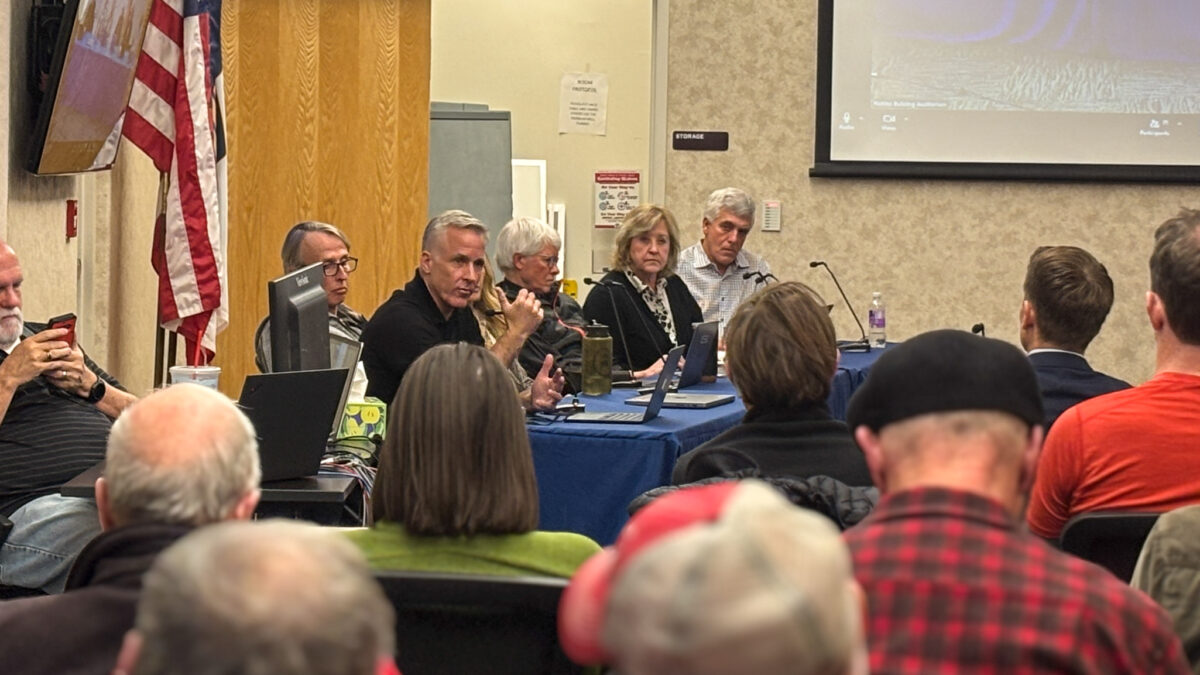
As officials review the 2027 budget, council members seek a clearer picture of how new tax revenue is contributing to county spending.
SUMMIT COUNTY, Utah — Summit County’s growing budget and increasing reliance on sales tax revenue prompted questions about spending and costs to residents during a special County Council work session Monday, Nov. 9.
As county officials reviewed financial projections for 2027, Council Vice Chair Roger Armstrong called for a closer examination of how property taxes, sales taxes, and expenditures have changed over time, particularly as the county has added new revenue sources to support government services.
The discussion followed a presentation by County Manager Shayne Scott and Finance Officer Matt Leavitt outlining the county’s operating funds, financial reserves, and spending trends.
According to the county’s 2027 budget presentation, the proposed operating budget totals approximately $107.5 million across the general fund, municipal services fund, and assessing and collecting fund. Those funds support services including law enforcement, emergency response, public health, roads, and county administration.
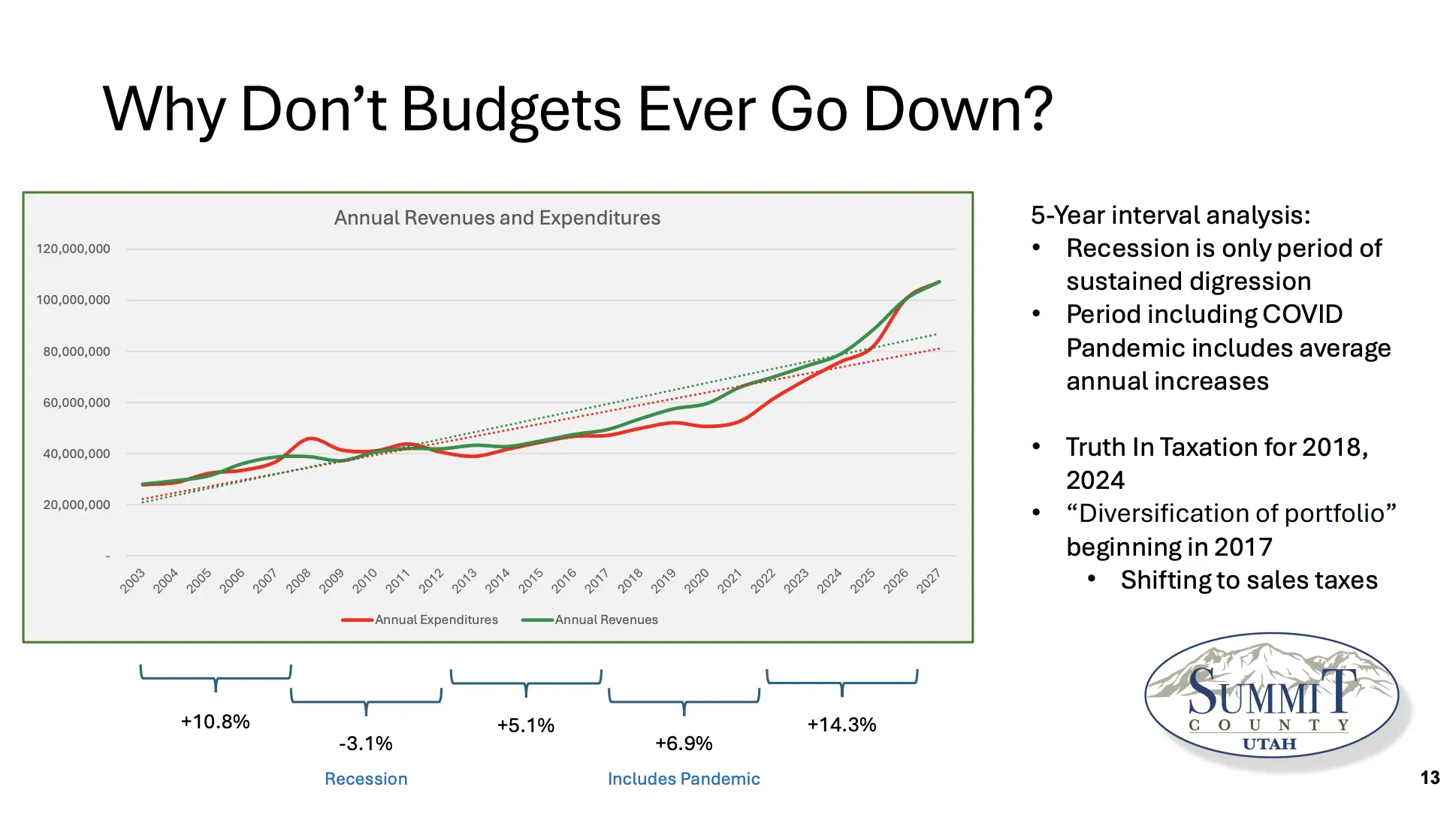
The presentation included a historical comparison showing that county expenditures have generally increased since 2003, with the most recent period showing particularly strong growth. County officials attributed the trend in part to expanded services, additional responsibilities, and new revenue sources.
Scott said the county has taken on numerous programs and initiatives since 2017, including expanded emergency medical services, transportation responsibilities, housing initiatives, and land conservation efforts.
The county has also shifted toward greater use of sales tax revenue, a change identified in the presentation as part of an effort to diversify its funding sources.
Armstrong said he wanted to see property tax and sales tax revenue compared separately with expenditures to better understand how those changes have affected the budget.
He noted that while tourism generates a significant portion of local sales tax revenue, residents also pay those taxes.
“Tourists are generating more of the funds, but it doesn’t mean that for the average person living in Summit County, they’re not paying more for sales tax. They are,” Armstrong said.
The discussion included the county’s emergency services sales tax, which Leavitt said added approximately $16.5 million to the 2026 revenue figures presented.
Armstrong said new revenue sources can help the county address major expenses, including infrastructure needs, potentially reducing the need for future borrowing. However, he said the additional revenue should be examined alongside spending growth.
County officials also reviewed financial reserves held across the county’s various operating, capital, and special-purpose funds.
Leavitt said the county may need to reconsider its existing reserve targets as sales taxes account for a greater share of revenue. Unlike property taxes, sales tax collections can be more sensitive to changes in economic activity.
The presentation projected a municipal services fund balance of approximately $40.9 million in 2027, above the county’s current internal upper target of $34.2 million.
Officials emphasized that reserves are maintained not only for emergencies but also to fund planned capital projects and reduce the need for borrowing.
Council member Megan McKenna asked whether the county should revisit those reserve targets. Scott suggested the council could consider the issue during its strategic planning discussions in early 2027.
No budget decisions were made during Monday’s work session, which was intended to provide council members with a more detailed understanding of the county’s finances.
The council is scheduled to continue its 2027 budget discussions on Nov. 18, with additional meetings and public hearings planned for December.


2266 E Garfield Avenue
Salt Lake City, UT 84108