After Dakota Pacific referendum dispute, Summit County clerk candidates offer different paths forward


Suni Woolstenhulme calls for more proactive transparency and a limited role in petition disputes, while Malena Stevens emphasizes clear guidance, consistent application of the law and government experience.
SUMMIT COUNTY, Utah – The controversy over a proposed referendum on the Dakota Pacific development in Kimball Junction offers a window into how Summit County clerk candidates Suni Woolstenhulme and Malena Stevens would approach the office differently.
In written responses to TownLift, the candidates outlined plans for improving public access to county records, helping residents navigate petition requirements and maintaining confidence in elections. Both say the clerk’s office should communicate clearly and apply the law fairly, but they differ in their assessment of the office’s responsibilities and how to prevent future disputes.
Woolstenhulme, the Republican challenger, argues the clerk should focus on applying the law as written and leave legal disputes to the courts. Stevens, the Democrat who was appointed in April, says the office must follow statutory requirements while doing more to ensure residents understand them before they make costly mistakes.
The disagreement highlights a broad contrast in their campaigns: Woolstenhulme emphasizes independence from government and greater transparency, while Stevens points to experience and working relationships as tools for navigating the office’s technical and legal demands.
Lessons from the referendum
The Dakota Pacific dispute began in 2025, when then-Clerk Eve Furse rejected most of the signature packets submitted by residents seeking a referendum on the county’s approval of a development agreement. Furse said the packets did not meet state requirements that referendum materials remain bound together as a unit. Petition sponsors challenged the decision, arguing the law did not require the specific interpretation the clerk applied. The county ultimately certified 3,214 signatures, short of the 4,554 needed.
Stevens said the episode demonstrated how small procedural details can determine whether signatures count, particularly when laws have recently changed and referendum campaigns are relatively uncommon.
“The Clerk’s Office has to follow the statute exactly, and it can’t waive requirements the legislature has set,” Stevens said. But she said the office can make those requirements easier to understand.
If elected to a full term, Stevens said she would work with the County Attorney’s Office to confirm the current requirements when a petition is filed, provide petitioners with the statute and a plain-language checklist, and offer to meet with them before they begin collecting signatures.
If a dispute arose, she said she would work with county attorneys, apply the law consistently and explain decisions publicly.
Woolstenhulme said the clerk’s role should be limited to receiving petition packets, verifying signatures under the law and reporting the results. She criticized the former clerk’s decision to reject packets based on questions about how they were bound, arguing the office should not use circumstantial evidence to invalidate signatures.
The state Legislature’s Interim Rules Review and General Oversight Committee voted unanimously in July 2025 to open a bill file and begin drafting potential changes to referendum law following the dispute.
“As clerk, I would give clear instructions and prompt feedback, and count signatures by the law as written,” Woolstenhulme said. “Any challenge would go to the courts.”
Two approaches to public access
The candidates also offered different ideas about how to make county government information easier for residents to find.
Stevens pointed to work already underway to consolidate decades of County Council minutes that remain split between an older system and a newer platform. She expects the project to be completed by the end of the year, allowing residents to find minutes in one place.
She also cited a new business licensing ordinance adopted by the council and software intended to simplify licensing and renewals before the January renewal period.
Stevens said those efforts require coordination among county departments, information technology staff, attorneys and elected officials. Her previous service on the County Council, she said, helps her understand what decision-makers need to move projects forward.
Residents should notice improvements through simpler access to records, clearer licensing requirements and an easier renewal process, she said.
Woolstenhulme said rising Government Records Access and Management Act requests, known as GRAMA requests, suggest residents are struggling to find information on their own. She argued the county should prioritize making records readily available rather than requiring residents to formally request them.
She wants the county to make its current meeting-minutes platform the default destination for residents, publish searchable summaries of County Council votes and put more information used to develop policies online.
“Voters want to know how their councilors vote on the issues they care about,” Woolstenhulme said.
Election administration and accountability
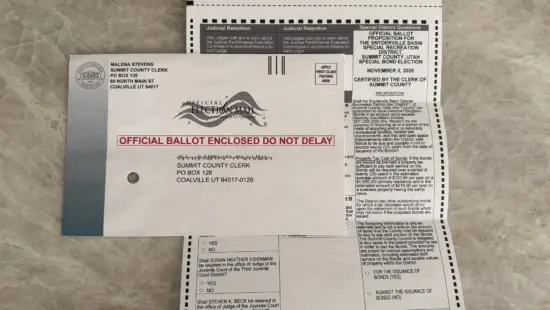
The candidates’ approaches also extend to election administration, as Summit County works through a recent ballot error that led the clerk’s office to mail replacement ballots to some upper Silver Creek voters after a $71 million Snyderville Basin Special Recreation District bond question was accidentally omitted.
The issue surfaced in late October after voters contacted the county. The Clerk’s Office reviewed tax records for the two affected precincts and confirmed 50 voters should have received ballots listing the measure. The county then worked to issue corrected ballots, which were expected to arrive early the week of Oct. 26.
Stevens said the office uses geographic information system (GIS) records, along with information from the County Recorder’s Office and the Utah Lieutenant Governor’s Office, to determine which races and measures appear on each ballot. In this case, uncertainty in records dating to the district’s creation in the 1980s complicated efforts to pinpoint the boundary discrepancy. The county is still investigating its origin.
Woolstenhulme called for accountability and clearer communication about the error. She also raised concerns about outdated voter registrations and households receiving ballots for people who no longer vote in the county.
If elected, she said she would prioritize updating voter records and educating residents about changes to vote-by-mail rules, including helping voters who want to receive ballots by mail opt in early.
She said the clerk should answer to voters and the plain language of the law. If she disagreed with the County Attorney’s Office on a matter affecting voting or petition rights, she would document the differing legal views and seek additional counsel.
Stevens emphasized the importance of consistent procedures and safeguards. Because she is a candidate on the ballot, she said she has stepped back from processing ballots and accessing election software. She also said the process is open to public observation.
Her approach to contentious petitions would follow the same principles she outlined for the Dakota Pacific dispute: provide written requirements, maintain communication with petitioners and apply the law consistently, regardless of the issue or who is involved.
“Our role is to apply the law consistently and explain it clearly, no matter who is petitioning or what the issue is,” Stevens said.
Election day is November 3. Many Summit County voters have cast their ballots by mail and the deadline to mail in ballots has passed, they must be received by the clerk’s office Nov. 3 at 8p.m. to count.
Voters who haven’t yet cast their ballots can drop them in a county drop box by Nov. 3.
The polls open for in-person voting at 7 a.m. on Election Day.
For more information visit Summit County’s website.


4251 E Lipizzan Jump
Moab, UT 84532