Summit County clerk candidates clash on how to build voter confidence

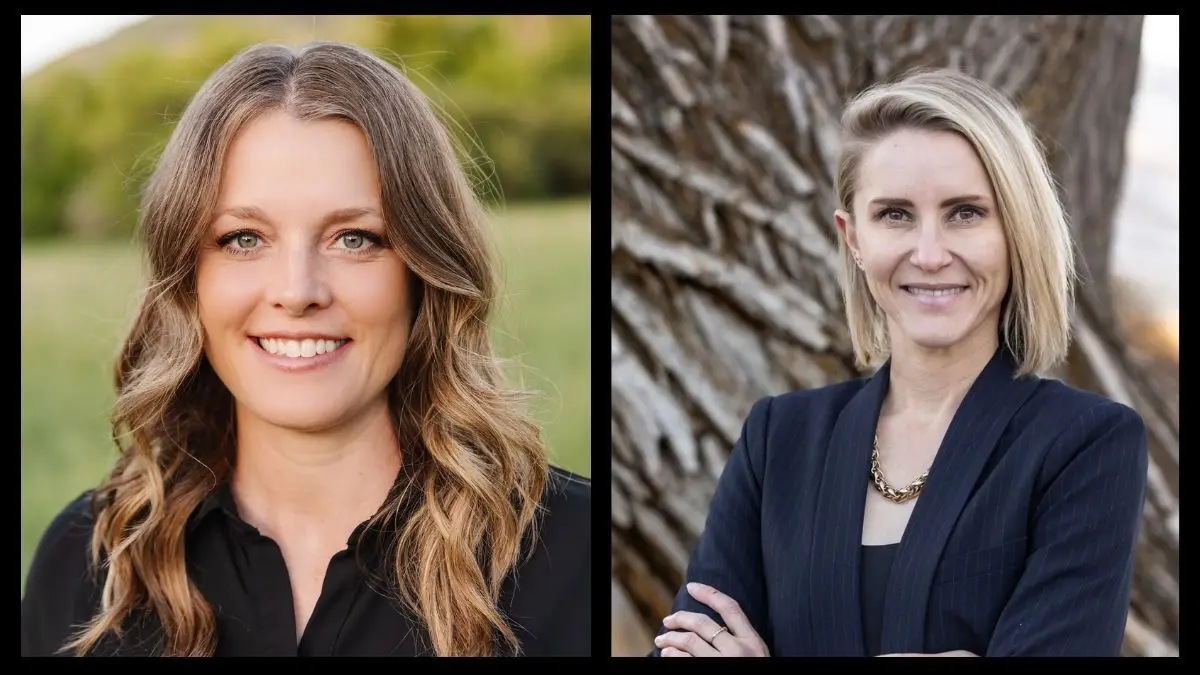
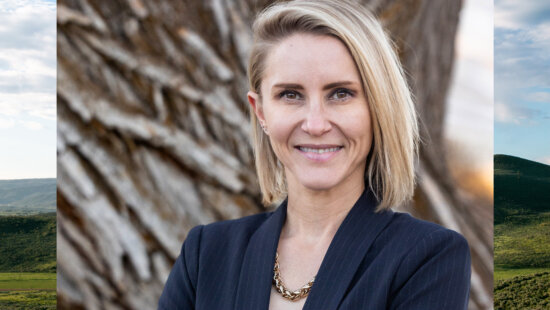
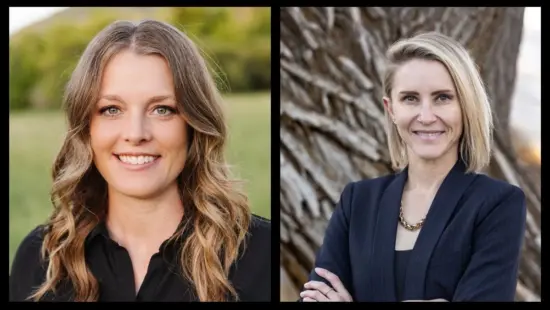
Malena Stevens touts institutional knowledge and relationships; Suni Woolstenhulme says the office should stand apart from politics and help residents exercise their rights.
PARK CITY, Utah – The race for Summit County clerk comes down to a fundamental question about public trust: Does the office best serve voters through experience and relationships within government, or by maintaining distance from the political establishment and helping residents navigate the system?
Democrat Malena Stevens, who was appointed interim clerk in April, argues that the job demands deep knowledge of government, election law and the relationships needed to carry out complex responsibilities. Republican Suni Woolstenhulme says the clerk’s role is more straightforward: follow the law, run fair elections, maintain accurate records and ensure residents can exercise their rights without political interference.
The candidates’ differences were clearest during a recent debate aired last week on KPCW when they discussed the controversial Dakota Pacific development and a failed citizen referendum, the clerk’s relationship with elected officials, and how the office should respond to residents who feel shut out of local government.
Dakota Pacific referendum divides candidates
In 2025, former County Clerk Eve Furse rejected referendum packets challenging the development, prompting criticism from residents who had sought to put the issue before voters. Woolstenhulme said the handling of the referendum damaged public trust and argued that a clerk should help residents understand petition requirements rather than become involved in a politically charged dispute.
“The clerk’s job and responsibility is to help them understand how to exercise those rights,” Woolstenhulme said. “It’s to make sure that they’re clear on the procedures so that they can do it, and then they allow everything else to be adjudicated in the courts.”
She described the episode as “a betrayal to the voters of Summit County” and said the community was left feeling its concerns had been dismissed.
Woolstenhulme also argued that state lawmakers changed the law affecting the petition late in the 2025 legislative session, after the referendum effort had begun. That timeline and the legal implications of the changes were part of her criticism of how the dispute was handled.
Stevens said the clerk must administer the law as written, working with the County Attorney’s Office to understand legal requirements. She said referendum laws had changed over several years to make the process more difficult and that the clerk’s responsibility was to follow those requirements.
“Going against the County Attorney’s Office can make you personally liable for anything that takes place,” Stevens said. “I would work very closely with the County Attorney’s Office.”
Stevens also pushed back on the suggestion that Furse had legislated against the referendum, saying the former clerk implemented laws passed by the Legislature.
“The clerk’s office is not a legislative body,” Stevens said.
Relationships versus distance from politics
The candidates also differ over whether close working relationships with elected officials and government staff strengthen the clerk’s office or risk undermining public confidence.
Stevens, who served on the Summit County Council for four years and was its legislative liaison, said her experience helps her work with lawmakers, county departments and other clerks. She pointed to her role in updating the county’s business licensing ordinance as an example of how those relationships can produce results.
“I understand how government works, because I understand and have relationships with the people that are governing us,” Stevens said.
She argued that election laws change frequently and that clerks must work together to implement them responsibly and protect voting systems, including vote-by-mail.
Woolstenhulme said a clerk should stay out of the political arena, particularly when it involves people whose elections the office oversees. She criticized Furse for publicly endorsing Stevens before Woolstenhulme had filed to run, saying that could make a prospective candidate feel the office was already aligned against them.
“No one should be discouraged,” Woolstenhulme said. “We really need to make sure that there’s a space for people that they feel that they can participate.”
Woolstenhulme said she has avoided contributions and endorsements from sitting local elected officials, though she acknowledged support from the Republican Party. Stevens, meanwhile, questioned whether Woolstenhulme’s claims of nonpartisanship were consistent with her party affiliation and political support.
Both candidates say they would administer the law fairly. Their disagreement is over what impartiality looks like in practice: Stevens emphasizes working relationships across government, while Woolstenhulme emphasizes distance from elected officials and political disputes.
They also differ on how vocal the clerk should be about legislation. Woolstenhulme said general legislation is outside the clerk’s purview, but the office should speak up when election laws threaten voting rights or election integrity. Stevens said relationships with state lawmakers help clerks influence how new requirements are implemented and can protect counties from costly or impractical changes.
Access and accountability
In the debate both candidates said the clerk’s office should be more accessible, but they disagree about how to characterize its current performance and what changes are needed.
Woolstenhulme said residents have told her they struggle to find public records and information about county government. She wants the county website to make meeting minutes and other records easier to search and wants residents to receive clearer guidance about petitions.
“The very beginning is making sure people feel comfortable that there’s bipartisan oversight in the election process, so that they feel their voice is heard in their vote,” she said.
Stevens said the office is already working to improve access, including consolidating decades of County Council minutes onto one platform and reviewing how agendas, minutes and other public information are communicated. She said those changes take time but that improvements have been underway during her first six months as clerk.
Stevens also challenged Woolstenhulme’s readiness for the job, saying her opponent had not met with clerk staff or observed election equipment testing. Woolstenhulme said she had asked Furse to meet to discuss the position, but Furse’s unexpected resignation changed her ability to do so. She said she did not want to put office staff in the middle of a campaign.
The candidates’ different assessments extend to the job itself. Woolstenhulme called the position straightforward and said she is qualified to administer the law, oversee elections and maintain records. She also said the job is overpaid and pledged to work to reduce the salary within state law, donating the difference to local charities.
Stevens rejected the idea that the position is easy, describing it as highly technical, with serious consequences when mistakes occur.
“Not understanding how government operates from the inside out is a detriment to this office,” she said.
This week, Summit County announced Stevens and county staff are sending replacement ballots to voters in upper Silver Creek after discovering that ballots mistakenly omitted the Snyderville Basin Special Recreation District’s proposed $71 million general obligation bond.
“The Clerk’s Office researched the issue and found a historical error in the official district boundary description, which led to this error,” the county said in a statement. “The Clerk’s Office will continue investigating this issue to ensure a permanent fix, in concert with other Summit County staff and elected officials, so this error does not occur again.”
Voters will choose between the two candidates on Nov. 3.
Editor’s note: This is the first of two stories examining the race for Summit County clerk.
A follow-up story next week will examine how each candidate says she would put principles into practice, including plans to improve public access, approaches to politically sensitive petition disputes and preparations for the technical demands of the office. We invited both candidates to respond to the same core questions and will incorporate their answers into that coverage.


2266 E Garfield Avenue
Salt Lake City, UT 84108