Town & County
Mountain Regional weighs new development as water projections show potential shortfall

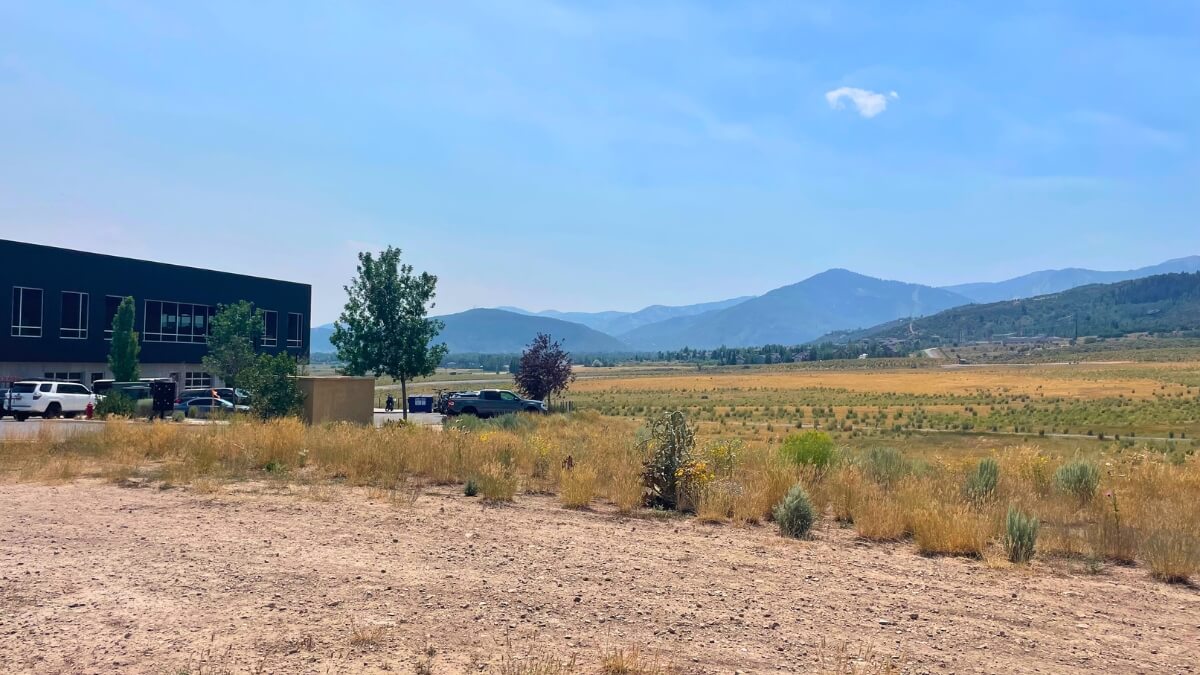
Development across the Snyderville Basin is prompting new questions about future water capacity as Mountain Regional Water considers requests for service beyond its existing commitments. Photo: TownLift // Marina Knight
District says existing commitments can be served, but requests tied to Altus, Junction Commons and other projects are forcing decisions about future capacity
PARK CITY, Utah — Mountain Regional Water Special Service District says it can meet existing commitments, but a growing list of developments seeking service could push demand beyond currently projected supplies.
Mountain Regional General Manager Andy Garland brought the issue to the Summit County Council on Wednesday during a discussion focused on water and anticipated annexations into the district.
“Water is finite,” Garland told the council. “We don’t have unlimited amounts of water.”
Mountain Regional is currently committed to serving 2,089 parcels within its annexation area, Garland said, with the majority of those commitments in Silver Creek Village and Promontory.
District officials stressed that it can serve existing commitments. Later Wednesday, during a separate public hearing on Mountain Regional’s proposed water revenue bonds, district officials said existing water sources could serve areas already annexed into the district and customers it is already committed to serve for roughly 20 to 30 years, based on current projections.
The uncertainty comes from additional projects seeking water.
Garland identified several developments and communities that have approached Mountain Regional or could seek service, including Six Ridge Partners, Junction Commons, Lincoln View, Lake Rockport Estates and development associated with Utah Olympic Park.
Six Ridge Partners is the company formerly known as Dakota Pacific Real Estate. Its Kimball Junction development, previously widely known as the Dakota Pacific project, is now called Altus Park City.
Junction Commons formally sought annexation into Mountain Regional about a year ago, Garland said, but the district declined the request. Lincoln View later sought annexation, but the district’s Administrative Control Board tabled the request while seeking direction from the County Council.
Garland said Lake Rockport Estates was scheduled to approach the district the following day about a wholesale water agreement.
Mountain Regional estimated the additional service requests discussed in its presentation would create approximately 650 gallons per minute of additional demand.
A separate district projection showed an approximately 800-gallon-per-minute shortfall without additional conservation or new water sources.
Garland cautioned that the figures are projections because actual water use varies.
Attention then turned to where additional water could come from and how additional infrastructure would be paid for.
Mountain Regional recently drilled a new well near Old Ranch Road for roughly $1 million to $1.2 million, Garland said. Additional wells are possible, but drilling does not guarantee how much usable water a new source will produce.
Another possibility is a long-discussed project that would import water from East Canyon. Garland said that project had previously been estimated at more than $100 million and estimated Wednesday that it could now cost between $150 million and $200 million.
“I think we’re really trying to avoid being the first ones to ask for the importation project coming from East Canyon,” Garland said.
Conservation could also become more aggressive.
Garland said Mountain Regional saw lower water use during the most recent irrigation year, but further reductions may be necessary as demand grows.
“As we move forward, grass may be a nonstarter for developments,” Garland said.
Council members said the district’s existing customers and residents already facing water problems should be considered as Mountain Regional decides how to handle future requests. They also questioned whether approved projects should receive greater consideration than developments that have not yet received land-use approvals.
No formal direction was given Wednesday. Only three of the five council members were present, and the discussion ended with plans to brief the remaining members before seeking further guidance from the district.
The conversation came the same evening the council, sitting as Mountain Regional’s governing board, held a public hearing on issuing up to $20 million in water revenue bonds to optimize and expand the Signal Hill Water Treatment Plant.
Chief Financial Officer Steve Anderson said the estimated cost of the treatment plant project had increased by roughly $15 million to $18 million as engineering progressed from about 30% to 90% design.
Mountain Regional already has a $38 million federal WIFIA loan for the project and is now considering additional borrowing. Anderson said the district hopes the additional direct-placement borrowing will be closer to $15 million, depending on construction bids, although the bond authorization allows up to $20 million.
The district is also planning its 2027 budget around an approximately 8% water rate increase, Anderson said. Mountain Regional’s overall debt could increase from about $40 million currently to more than $80 million by the time the treatment plant project is completed.
The expansion is expected to be completed by the end of 2028 and operating in spring 2029, before the heavy summer irrigation season.
Garland said the district is seeking county guidance because requests for water are coming from increasingly large developments outside Mountain Regional’s existing commitments.
“We are now getting so many different developers coming to us,” Garland said. “We just want to understand kind of what our direction should be.”
By: Rebecca Brenner


4251 E Lipizzan Jump
Moab, UT 84532
2266 E Garfield Avenue
Salt Lake City, UT 84108Talk of the Town


Park City Jobs

Compounding Pharmacy Technician, Alpine Apothecary
1 day ago Full time $19.00 - $24.00 hourly

Ski Instructor and Snowboard Instructor, National Ability Center
1 day ago Seasonal $20.00 - $23.00 hourly

Custom picture framer and art sales, Park City Frame & Gallery
2 days ago Full time $21.00 - $24.00 hourly

Hospitality and Operations Specialist, InvitedHome
4 days ago Full time $60,000 - $68,000 yearly
Payroll Specialist – Ski Industry – Full-Time, Surefoot LC
4 days ago Full time