Drying conditions across Utah point to strain on water supply and elevated fire risk

UTAH — The state is heading into summer under mounting water supply pressure, with water officials reporting Utah’s worst snowpack on record and local reservoir levels falling sharply compared to last year.
A June 1 water supply outlook from state hydrologists shows that Utah’s mountain snowpack peaked early and melted out about a month ahead of normal following a warm March, leaving limited runoff to sustain rivers and reservoirs through the summer.
While a few May storms brought brief relief at higher elevations, they did little to meaningfully rebuild snowpack. Statewide, cumulative precipitation at mountain SNOTEL sites sits at 89% of normal, with several central Utah basins significantly lower. Officials say the conditions have set the stage for reduced water availability across much of the state.
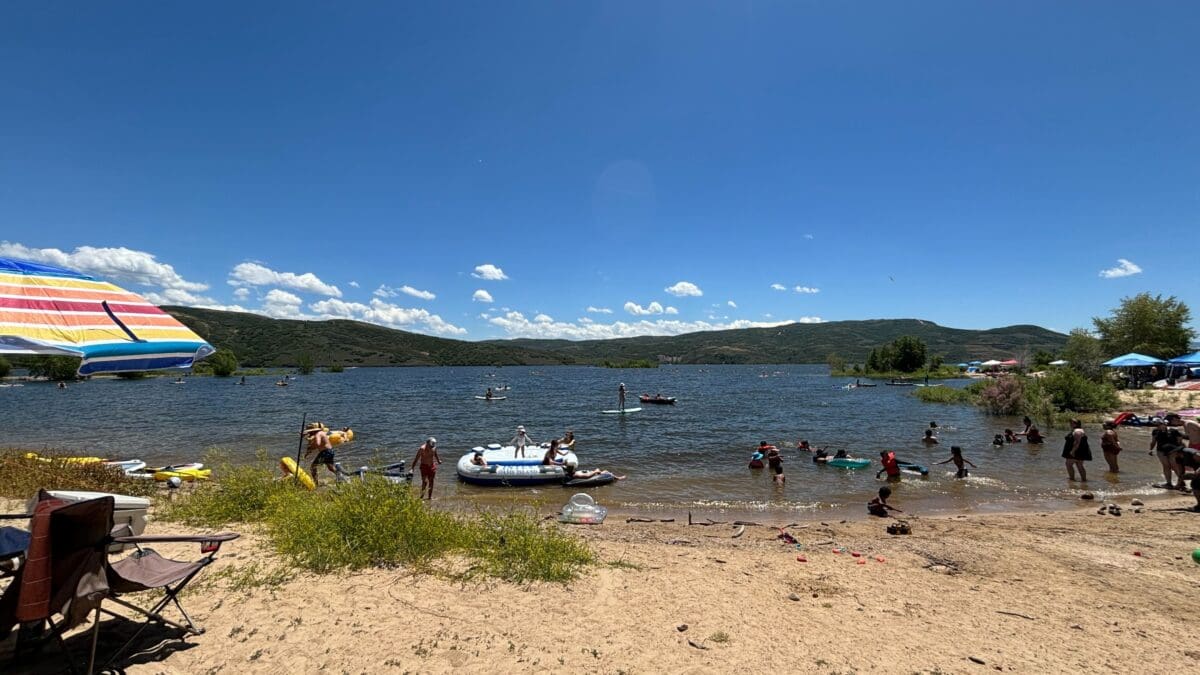
One of the clearest local indicators of the changing water picture is Jordanelle Reservoir.
As of June 1, Jordanelle is 77% full — down from 97% on the same date last year, a 20-point decline heading into peak summer demand.
The drop reflects both reduced snowpack runoff and broader statewide storage declines. Across Utah, reservoir storage sits at 68% of capacity, compared to 86% at this time last year.
For the Wasatch Back, lower reservoir levels can translate into reduced flexibility for irrigation, landscaping demand, and late-summer water supply management, particularly if hot and dry conditions persist.
Dry conditions persist despite wet valley spring
The outlook highlights a disconnect between valley precipitation and mountain water supply. While statewide valley precipitation is slightly above normal year-to-date, mountain conditions tell a different story.
Soil moisture peaked earlier than usual this year and has been declining since, reaching unusually low levels in April. Hydrologists note that dry soils can absorb more runoff before it reaches streams and reservoirs, limiting how efficiently precipitation translates into stored water.
Fire risk concerns rise alongside dry landscape conditions
Although the report focuses on water supply, the conditions described also carry implications for wildfire risk across the Wasatch Back.
Earlier snowmelt, declining soil moisture, and reduced mountain precipitation can contribute to longer and more intense fire seasons, particularly in wildland-urban interface areas such as Park City and surrounding Summit County neighborhoods.
Broader Colorado River Basin strain
Downstream conditions also remain tight. Lake Powell is currently at 24% capacity — among the lowest early-June levels since the reservoir was first filled in the 1960s. Meanwhile, forecasts for Upper Colorado River Basin streamflow suggest just 20% of average runoff this summer.
With Utah entering the core summer months, water managers are urging continued conservation as the region moves through a low-snowpack, low-buffer water year.
While some basins in northern Utah fared slightly better than others, officials say the overall system remains stressed heading into the hottest and driest part of the year.
For Wasatch Back communities, the combination of reduced snowpack, lower reservoir levels, and drying soils suggests a summer where water availability and wildfire preparedness remain closely linked.


2266 E Garfield Avenue
Salt Lake City, UT 84108