Who qualifies for a medical cannabis card in Utah? More people than you think

PARK CITY, Utah — Often called the Black Friday of cannabis, 4/20 is widely considered the best time of the year to shop. For many Utahns, the idea of getting a medical cannabis card can feel out of reach. Either they assume their condition is not serious enough to qualify, or they worry the process is too complicated and costly to be worth the effort. We tackled the process question in a previous piece. This one is about the first hurdle: figuring out whether you qualify, and what happens once you do.
The bar for qualifying, according to WholesomeCo co-founder Chris Jeffery, is lower than most people think.
“People think that chronic pain has to be like, ‘I’ve had five ACL surgeries,'” Jeffery said. “No, it doesn’t have to be that extreme.”
Jeffery himself uses a topical cannabis cream for chronic elbow tendonitis. His mother uses low-dose edibles to sleep without Ambien. Neither situation fits the image many people conjure when they hear “medical cannabis patient,” and that gap between perception and reality is exactly what keeps eligible Utahns from exploring the option.
Who qualifies, and how conditions connect
Utah law recognizes 16 qualifying conditions for a medical cannabis recommendation.
Two conditions worth highlighting for anyone who assumes their situation is not serious enough to qualify: acute pain lasting two weeks or longer following a procedure or acute condition, and persistent pain lasting longer than two weeks that is not adequately managed by conventional medications or physical interventions. Chronic pain, in other words, does not require a dramatic backstory.
What surprises many patients is how conditions that do not appear on that list, like trouble sleeping or anxiety, can still be addressed through the program. Sleep and anxiety are two of the most common reasons people turn to cannabis, but neither qualifies on its own in Utah. What they often are, though, is a symptom of something that does qualify.
“Here in Utah, we don’t treat anxiety or insomnia as standalone reasons for medical cannabis,” said Christine Sudekum, WholesomeCo Pharmacist. “What we’re really doing is looking deeper—those symptoms are often signals of an underlying condition like PTSD or chronic pain. The provider’s job is to trace those complaints back to a qualifying diagnosis, and then determine whether cannabis could help manage that condition. So it’s not about treating sleeplessness itself—it’s about treating the root cause that’s disrupting sleep in the first place.”
Understanding that connection, advocates say, could keep more Utah patients from making an unnecessary drive to Colorado. And for patients whose condition does not fit neatly into any of the 16 categories, Utah law does provide a path through the Compassionate Use Board, which reviews individual petitions on a monthly basis.
Real patient stories
No two patients arrive at medical cannabis the same way. For Ty, the decision came down to a simple calculation about long-term health.
A former college athlete, Ty watched teammates struggle with addiction to heavier painkillers and wanted no part of that path. His pain is mostly chronic, the kind that builds up from regular exercise and physical work like yard work, and without cannabis he said recovery could stretch two days or more.
“A lot of the painkillers out there are not great for you,” Ty said. “They do a lot of damage, especially to your liver and other parts of the body. Without cannabis, I would be very dependent on Advil and some other painkillers.”
Having seen addiction up close, Ty has become an advocate for the program. “I think it helps people relax and recover so they don’t need those hard pain pills that can really do damage and have addicting effects,” he said.
He also sees access as the next barrier to clear. A lot of people, he said, hesitate because of the upfront cost. “If we are able to limit how expensive it is and [increase] how many doctors are available to give access to this program, I think it will benefit everybody,” he said.\
That shift is already underway. Medical card appointment costs have dropped significantly since Utah’s program launched, and continue to come down. WholesomeCo has been part of that effort, hosting affordable qualified medical provider events to make the card process more accessible to more Utahns.
Finding the right product
Once a patient has a card, the next hurdle is often the menu. Utah’s program offers a broader range of products than many people expect, and the options can feel overwhelming at first.
WholesomeCo carries five main product categories, each suited to different needs, lifestyles and comfort levels.
Vape cartridges are among the most common choices for patients seeking immediate relief. Effects are felt right away and can last one to three hours, making them a popular option for people managing acute pain, nausea or PTSD. The format is also relatively discreet and easy to dose.
For patients who prefer not to inhale anything, edibles offer a longer-lasting alternative. Onset typically takes one and a half to two hours, but effects can last six to 10 hours. The tradeoff is that dosing requires more patience, particularly for new users, and WholesomeCo recommends starting with a low dose and waiting before taking more.
Tinctures, sublingual sprays and drops fall somewhere between the two. Effects arrive faster than with edibles but more slowly than with inhalation, and they are easy to add to food or drink. They are also discreet and portable, which makes them a practical everyday option.
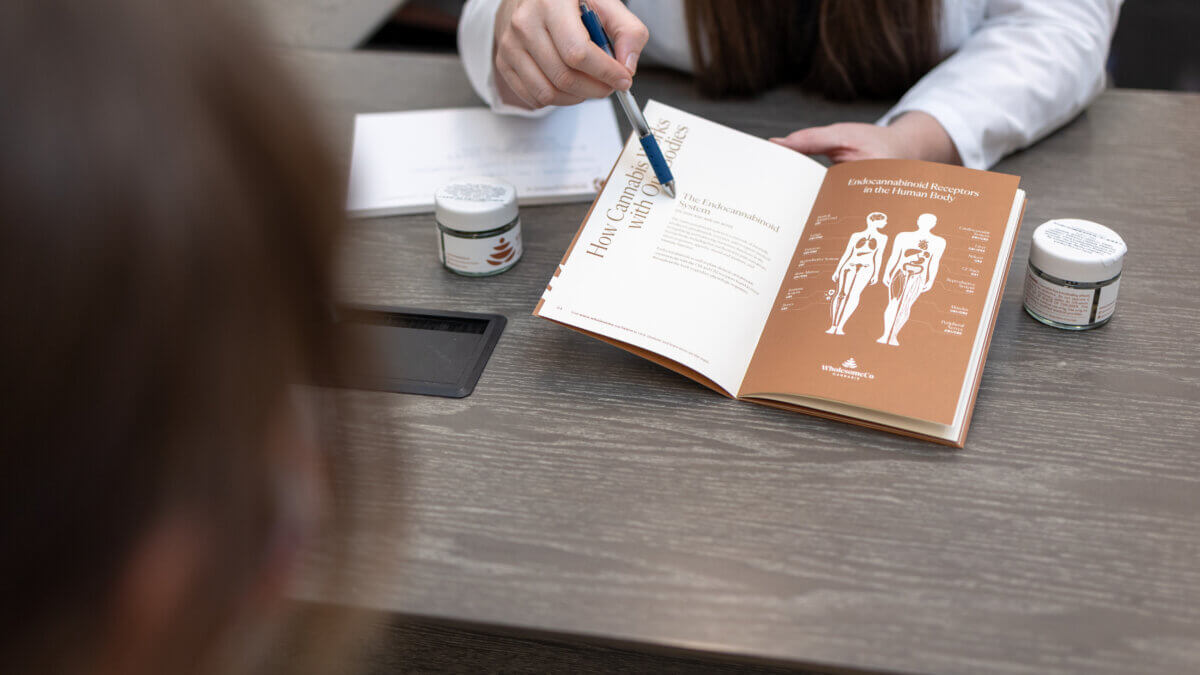
Topicals, like the cannabis cream Jeffery uses for his elbow, work differently from the rest. Applied directly to the affected area, they do not produce psychoactive effects, as the cannabinoids bind to receptors beneath the skin without reaching the bloodstream. They are often a first choice for patients managing localized pain who want relief without any intoxicating effect.
Flower, consumed through a dry herb vaporizer rather than combustion, delivers immediate relief and access to the full spectrum of cannabinoids and terpenes in the plant. It requires a bit more setup than other methods, but many patients find the control it offers worthwhile.
WholesomeCo’s pharmacists can help narrow down the options at any stage. New patients receive a required consultation before their first purchase, and follow-up appointments are available anytime through wholesome.co/consult.
April is a great time to get started
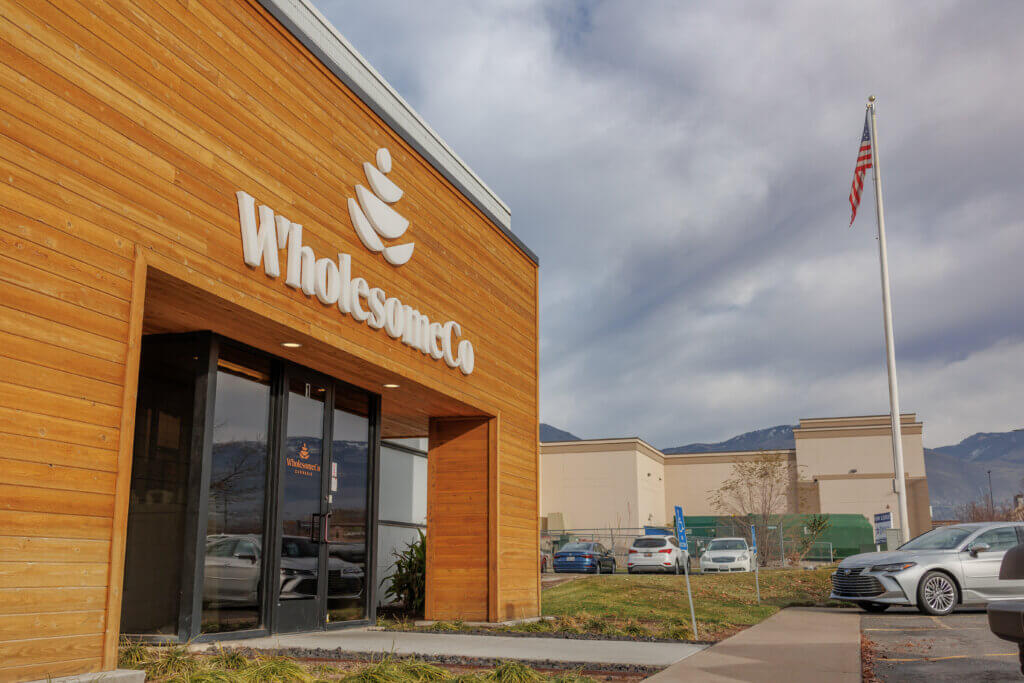
April is one of the best times of year to explore the program. Card providers are on-site nearly every day this month at WholesomeCo’s Bountiful pharmacy, 580 W 100 N, where patients can complete the entire card process in roughly 30 minutes. Upcoming dates include April 14 (Tuesday, 11 a.m. to 4 p.m.), April 16 (Thursday, 1 to 6 p.m.), April 17 (Friday, 11 a.m. to 6 p.m.), April 18 (Saturday, 11 a.m. to 6 p.m.), April 19 (Sunday, 11 a.m. to 4 p.m.) and April 20 (Monday, 11 a.m. to 6 p.m.), with additional dates running through the end of the month.
The full schedule is available at wholesome.co/events.


4251 E Lipizzan Jump
Moab, UT 84532