IOC to require genetic testing for women’s Olympic eligibility starting in 2028

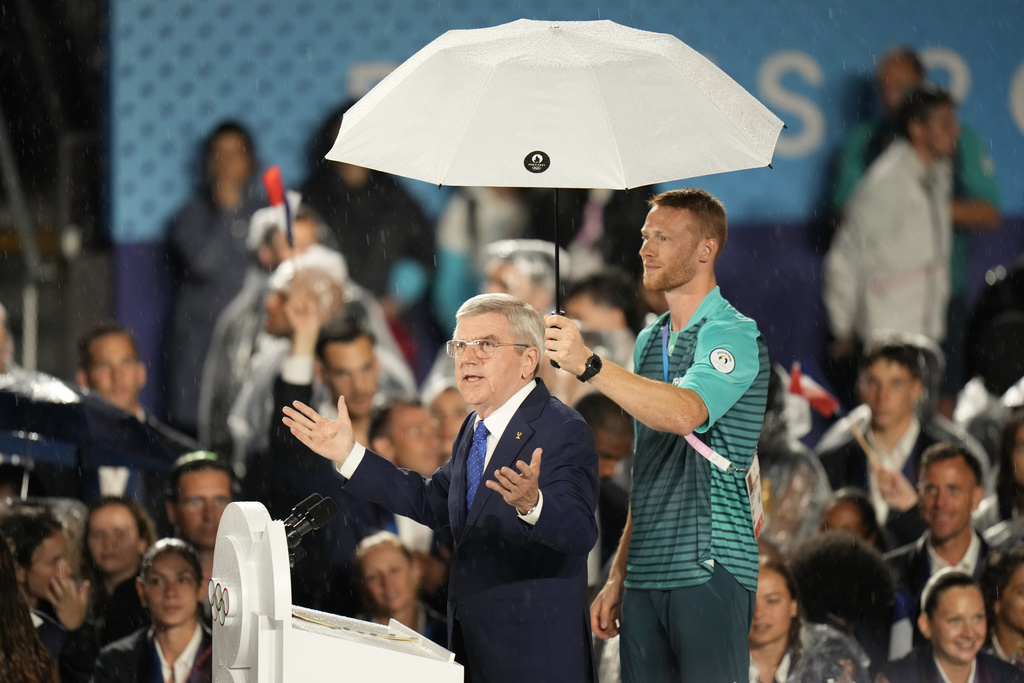
LAUSANNE, Switzerland — The International Olympic Committee announced a new policy on Thursday regarding the female category in Olympic sport and guiding considerations for international federations and sports governing bodies.
Under a new policy announced this week, the International Olympic Committee will restrict eligibility for women’s categories across all Olympic disciplines to biological females, effective with the 2028 Los Angeles Games.
Eligibility will be determined by a one-time screening for the SRY gene, a DNA marker associated with male sex development. The IOC has stated the gene’s presence is fixed from birth and represents a reliable indicator. Testing can be conducted using a saliva sample, a cheek swab, or a blood draw. Athletes who test negative permanently satisfy the policy’s eligibility requirements.
The IOC said a working group reviewed recent scientific literature and reached a consensus that male sex development confers a performance advantage in sports relying on strength, power, and endurance — and that sex-based eligibility criteria are needed to protect fairness and safety, particularly in contact sports. The policy was also informed by an athlete survey of more than 1,100 respondents, who the IOC said broadly agreed that the women’s category requires clear, science-based rules.
Scientific pushback
That consensus is not universally shared. Andrew Sinclair, the scientist who discovered the SRY gene in 1990, has publicly opposed using the test for this purpose. In a 2025 op-ed, Sinclair argued the presence of the gene alone does not reveal whether it is functioning, whether testosterone is being produced, or whether the body can respond to it. He noted that at the 1996 Atlanta Olympics, eight women tested positive for a Y chromosome, and seven were resistant to testosterone, meaning the test flagged athletes with no apparent performance advantage. Sinclair had previously persuaded the IOC to abandon similar testing ahead of the 2000 Sydney Games.
Jaime Schultz, a sports historian at Penn State, echoed those concerns, noting that a positive SRY result does not necessarily mean an athlete benefits from the hormones the gene is associated with. She also warned that the roughly $250 per-test cost — with no clarity on who pays — could burden athletes and federations from less-resourced countries.
Human rights and legal concerns
The UN Human Rights Council has stated that genetic sex testing as a sports eligibility requirement violates athletes’ rights to equality, bodily integrity, and privacy. In February, UN Special Rapporteurs raised additional concerns about informed consent and data protection when athletes are tested under the threat of ineligibility.
Prior to the announcement, more than 90 organizations — including the International Commission of Jurists and the Sport & Rights Alliance — urged the IOC to reject mandatory genetic testing, calling the approach a “catastrophic erosion of women’s rights and safety.”
France’s sports minister Marina Ferrari called the policy a “step backwards,” warning it specifically targets women, raises ethical and legal questions under French bioethics law, and fails to account for natural biological variation among intersex individuals.
Legal scholars have also warned that the policy may conflict with the Council of Europe’s Convention on Human Rights and Biomedicine, as well as with domestic laws in countries such as France and Norway that prohibit genetic testing without a medical purpose.
Impact on athletes
South African runner Caster Semenya, a two-time Olympic champion with a naturally occurring genetic trait that gives her elevated testosterone, called the return to genetic screening “exclusion with a new name.”
interACT, an intersex youth advocacy organization, argued that the policy forces all women to surrender private genetic information and that any framework targeting transgender athletes will also inevitably affect intersex women.
The IOC stressed the screening is not intended as a judgment on any athlete’s gender identity, and called for federations to provide mental health support, privacy protections, and safeguards for minors. The new policy replaces the IOC’s 2021 Framework on Fairness, Inclusion, and Non-Discrimination, which had stated there should be no presumption of advantage based on sex assigned at birth.
The policy applies only to IOC-sanctioned events and does not extend to grassroots or recreational programs. IOC President Kirsty Coventry acknowledged that the rules could be legally challenged.


4251 E Lipizzan Jump
Moab, UT 84532