Town & County
Summit County outlines 2026 legislative priorities, opposes bills it says weaken local control

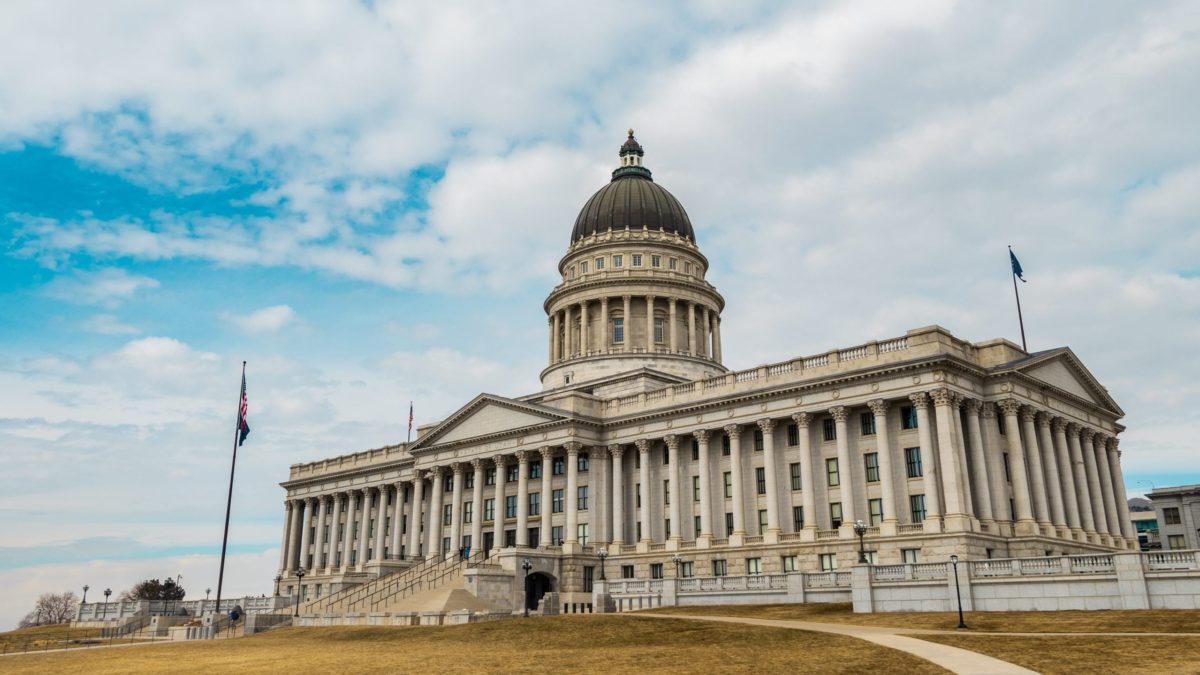
Photo: Chase Charaba
PARK CITY, Utah — Summit County officials say they are entering Utah’s 2026 legislative session focused on child care, land use authority, and tax policy, with an eye on bills they say could either bolster local initiatives — or override local decision-making.
Deputy County Manager Janna Young said Summit County’s priority areas this session include child care; land use, development, and housing; sustainability (water and energy); transportation and transit funding; elections; taxes; early intervention funding; and lands and natural resources, including wildfire mitigation.
“All of these areas either relate to initiatives the county has on its work plan this year or are areas in which we are interested in preserving our local control/authority and decision-making,” Young shared.
“Our hope is for state support for our projects and no legislation that usurps our local control,” she wrote.
Young framed the county’s position as rooted in local governance. “We strongly believe the government that governs best is the one closest to the people,” she shared, adding that local elected officials “understand first-hand the uniqueness of our community” — including “community needs, history, climate, and infrastructure” — which she said leads to “more appropriate decisions, particularly around land use and development.”
A child care bill the county is backing
Young said the county is most optimistic about HB190, the “Child Care Business Tax Credit,” which would modify income tax credits for employer-provided child care.
The bill’s chief sponsor is Rep. Jason E. Thompson.
Young said Summit County has been working on the concept with Thompson, Park City Municipal, the Park City Community Foundation’s Early Childhood Alliance, and the Policy Project, with the goal of incentivizing employer-sponsored child care benefits. She said the county and Park City have partnered to expand child care scholarships, and she described HB190 as a way to bring the state and employers into the effort through a tax credit she characterized as substantial.
Land use and elections bills raising concerns
Young said the county is most concerned about proposals she described as increasing state “preemption over county and city land use/development processes and decisions,” and she pointed specifically to HB184 and HB209, among others.
HB184, “Local Land Use Revisions,” is sponsored by Rep. Raymond P. Ward, with Sen. Lincoln Fillmore listed as Senate sponsor.
The bill text says it addresses “regulation of certain land uses in residential zones” and outlines a process for requests tied to a “preferred land use regulation,” including timelines that can convert a request into a permitted use if not denied within a set period.
Young said HB184 “usurps local land use processes, legislative decisions, and public hearings” and argued it would not produce “starter homes” in Summit County, given local housing prices and what she called impractical deadlines.
On elections, Young highlighted HB209, “Voting Amendments,” sponsored by Rep. A. Cory Maloy with Sen. Ronald M. Winterton listed as Senate sponsor.
The bill text describes a process for election officers to determine citizenship status and establishes a phased-in “bifurcated ballot system” under which voters who do not provide documentary proof of U.S. citizenship may be limited to voting in federal races.
Young said the measure “would result in two databases for elections” and raised concerns about “the potential for racial profiling at polling stations.”
Public assistance and tax relief bills the county opposes
Young also flagged HB88 as a major concern. HB88, “Public Assistance Amendments,” is sponsored by Rep. Steve Eliason, with Sen. Keith Grover listed as Senate sponsor.
Young said it would require the county to verify legal status before administering certain public assistance benefits, including behavioral health services. “Our charge is to deliver public services to anyone who comes to us needing assistance,” she wrote, adding that the county fears people who need help “will not come to us” if verification becomes a prerequisite.
On property tax relief, Young said the county opposes SB78 is titled, “Property Tax Relief Amendments”, which she described as eliminating the circuit breaker program — a tax relief program for low-income primary residents — and shifting it to a tax deferral model.
Bills the county is monitoring
Young listed several bills the county is monitoring, including measures involving county governance and water rights.
- HB60 is titled “Water Rights Amendments” and is sponsored by Rep. David Shallenberger, according to a fiscal note posted by the Legislature.
- SB15 is titled “County Forms of Government Amendments” and is sponsored by Sen. Ronald M. Winterton, according to the Legislature’s fiscal note.
- SB28, “County Classification Modifications,” is sponsored by Sen. Ronald M. Winterton, according to the bill text. Young said the bill’s classification changes could affect Summit County’s access to certain tax revenues and existing “carve-outs,” depending on how the county is categorized.
Young also said the county is monitoring HB161 and HJR7, proposals tied to the primary residential property tax exemption. A legislative fiscal note identifies HB161 as “Property Tax Modifications” and lists Rep. Jill Koford as sponsor.
Early intervention funding: county seeking state help after federal losses
Young said early intervention funding is also a priority — a request she said county health officers statewide are making.
Early intervention programs serve children ages 0–3 who have developmental delays or disabilities, she wrote. Young said federal funding for the programs has been lost, and counties are looking to the state “to help cover the gap.”
Young said Summit County will be watching closely as bills advance and change during the 45-day session, particularly proposals that could affect access to public services, property tax relief, election administration, and local land-use authority. The 2026 General Session runs Jan. 20 through March 6.
By: Rebecca Brenner


1271 Lowell Avenue, C202
Park City, UT 84060
1355 E Snow Canyon Parkway, Lot 27
Ivins, UT 84738
1104 West 10125 South
South Jordan, UT 84095
4028 E Outcrop Road
Park City, UT 84098
4155 S Parkview Drive
Salt Lake City, UT 84124
4170 Vista Antigua Road
Moab, UT 84532Talk of the Town


Park City Jobs

Tour Guide & Driver Park City, Heber Valley &, Midway PT, Park City Travel and Tours LLC
Today Contractor $20.00 - $25.00 hourly

Part-Time Baker, DeeLicious Park City
1 day ago Part time $20.00 - $25.00 hourly

Vehicle Maintenance Assistant, Utah Olympic Park
2 days ago Full time $22.00 hourly

Philanthropy Manager, Summit Land Conservancy
2 days ago Full time
Stewardship Technician, Summit Land Conservancy
2 days ago Seasonal