Politics
Bid to unmask, discourage access for immigration authorities in Utah gets put on ice

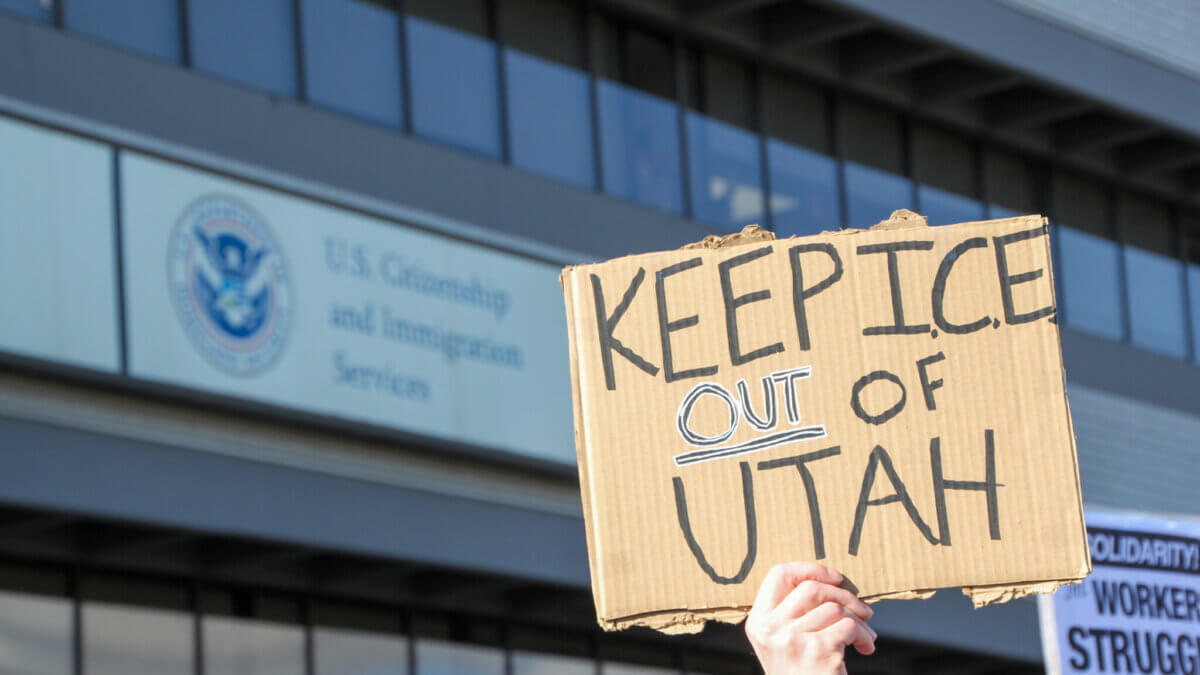
A protester holds a sign outside a U.S. Citizenship and Immigration Services field office in Salt Lake City on Monday, Dec. 8, 2025. (McKenzie Romero/Utah News Dispatch) Photo: McKenzie Romero/Utah News Dispatch
This article was written by McKenzie Romero for Utah News Dispatch.
A long-shot Utah bill looking to discourage immigration authorities from pursuing immigrants in “sensitive areas” like churches and certain health care facilities, and prohibiting them from wearing masks during their operations, hit an unsurprising dead end Thursday.
Sponsored by Democratic Sen. Nate Blouin, SB136 was held in the Senate Judiciary, Law Enforcement, and Criminal Justice Committee on a 6-3 vote after debate in front of a packed room of people on both sides of the issue. A two-thirds vote is required to revive the “ICE Out” bill, which it is unlikely to get from the Republican-majority committee.
Blouin, who is among the wide pack of Democrats running for Utah’s new, blue Congressional District 1, harkened to the state’s history welcoming people seeking a better life and preserving sovereignty from federal control as he addressed the committee.
He said he hoped putting some guardrails on immigrant apprehension efforts would help Utah avoid the chaos and violence playing out in Minnesota.
“This bill creates guidelines for state employees and facilities and requests that federal agents operating in our communities follow them to avoid creating confrontations like the one that recently happened in Minneapolis that ended with the murder of Renee Good,” Blouin said.
The bill would have prohibited state and local law enforcement from assisting federal authorities with immigration enforcement operations in “sensitive areas” including houses of worship, libraries, courthouses, or a government facility providing physical or mental health care, shelter, or legal services (but not including detention facilities).
It also would have barred immigration agents from wearing masks during operations.
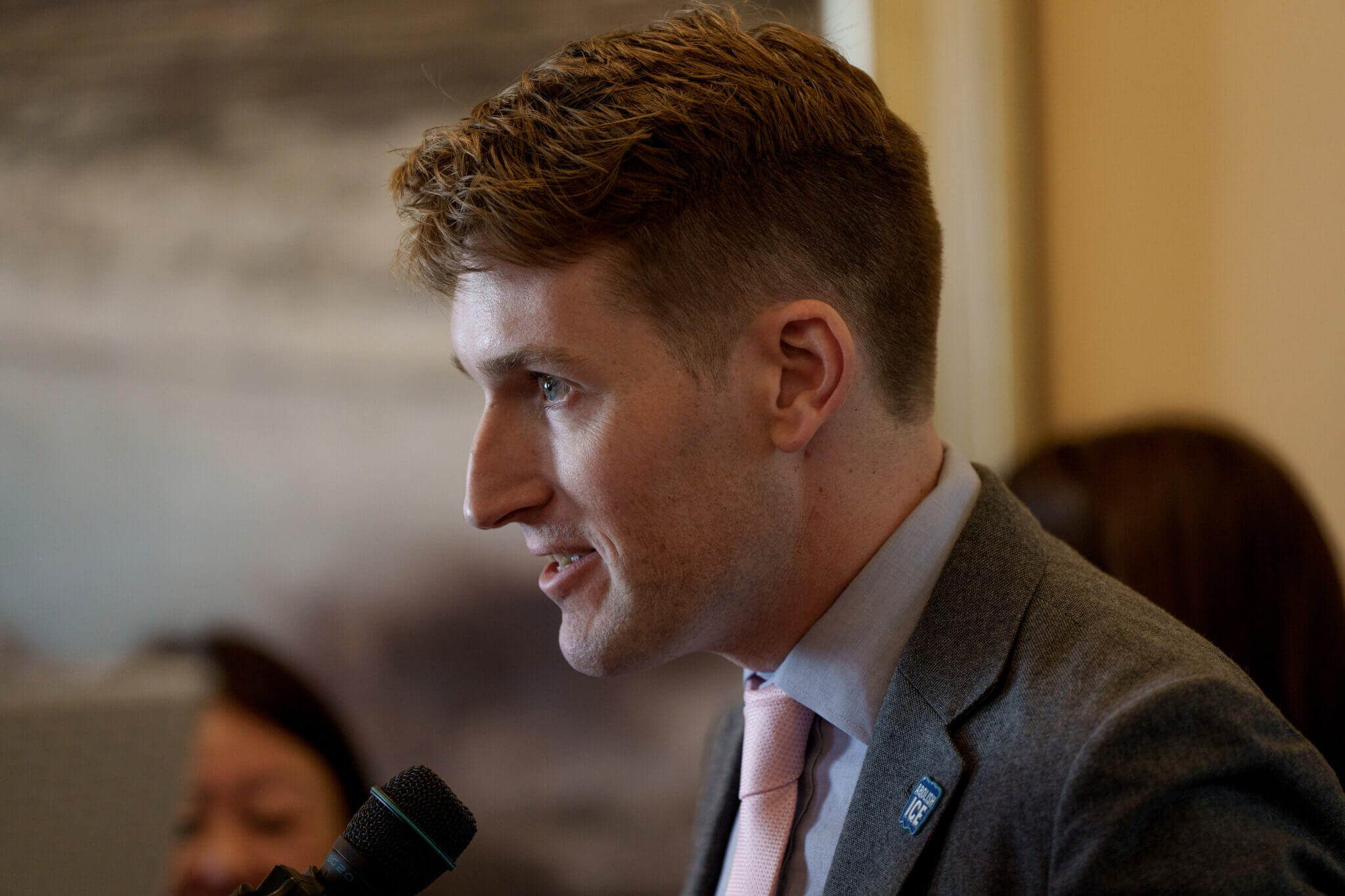
Blouin faced pushback from Republicans on the committee. Sen. Brady Brammer, R-Pleasant Grove, called masks essential to keeping federal authorities safe and preventing doxxing — drawing skeptical laughter from some in the audience and a stern reminder from the committee’s chair, Sen. Todd Weiler, R-Woods Cross, that interruptions would not be tolerated.
Supporters who spoke in favor of the bill said requiring immigration authorities to uncover their faces would encourage them to have calmer interactions with the public and use less aggressive tactics.
They also called for health care facilities and houses of worship to be safe spaces for all in Utah.
“As a deeply religious person and a member of the dominant religion here, I want everybody to be able to worship in our temples without fear,” said Magdeleine Bradford. “I want all of my friends who attend different language wards … those who go to Spanish-speaking wards or Portuguese-speaking wards should be able to worship without fear of deportation.”
Sheriffs in the crowd voiced their opposition to the masking restrictions in the bill and told the committee they want to be able to cooperate with federal authorities.
“We find that the better relationships we have, the more input we have in the way they act within our communities, and that’s beneficial,” said Kane County Sheriff Tracy Glover, who is also president of the Utah Sheriff’s Association.
Blouin closed by saying the measure would prevent state resources from contributing to enforcement efforts that are “creating fear, that are raising constitutional concerns, that are undermining community trust.”
“I’ve been in many different locations lately where folks have raised this concern of federal law enforcement running roughshod in our communities in all sorts of circumstances,” Blouin said. “So this protects sensitive and public spaces. It ties cooperation to due process and valid judicial authority. It doesn’t stop federal law enforcement, but it does limit our state’s role in it, which I think is something that we have generally tried to say that we agree with here in Utah.”
By: Utah News Dispatch


325 White Pine Canyon Road
Park City, UT 84060
80 West 300 North
Salt Lake City, UT 84103
3267 W Deer Hollow Road, Unit 2305
Park City, UT 84060
438 Castle Valley Drive
Castle Valley, UT 84532
2349 S Lava Vista Drive, Lot 32
Santa Clara, UT 84765Talk of the Town


Park City Jobs
Computer / Website Assistant, Summit Support
3 days ago Part time $20.00 - $30.00 hourly

Garden Steward and Educator, Summit Community Gardens and EATS
3 days ago Seasonal

PROGRAM AND EVENT COORDINATOR, PC READS
4 days ago Part time $25.00 hourly

Development Manager, Blue Sky Utah
4 days ago Part time $28.00 - $32.00 hourly

Executive Assistant / Property Manager Administrator, Model HOA
4 days ago Full time $30.00 hourly