Education
As Utah weighs SB 65, Park City schools watch for $500,000 impact

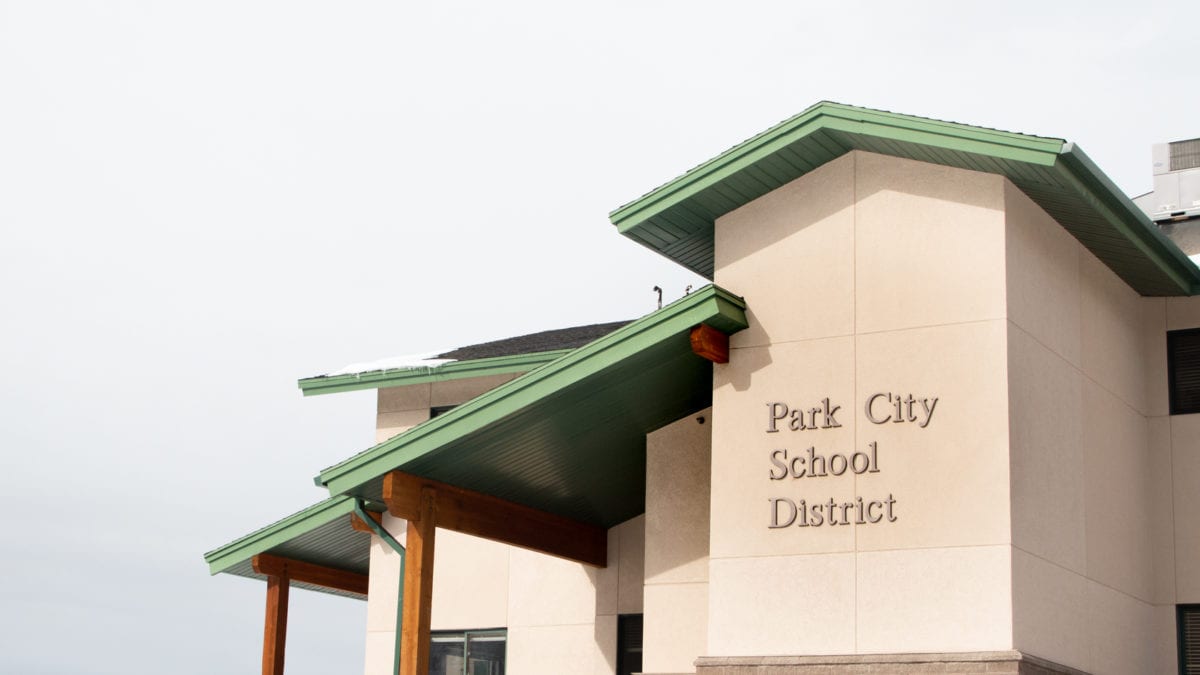
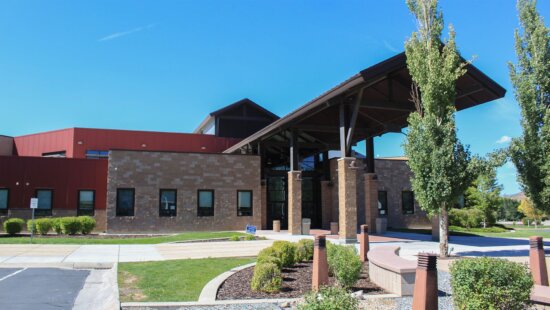
The Park City School District building in Park City, Utah. Photo: TownLift // Bailey Edelstein
PARK CITY, Utah — Park City School District Superintendent Lyndsay Huntsman said a bill moving a major slice of school property tax revenue through a state-controlled fund could cost the district about $500,000 if it passes.
“If Senate Bill 65 passes, 100% of the minimum basic levy revenue would be remitted directly to the state treasurer, deposited into a state-controlled fund, and then redistributed back to school districts on a delayed schedule,” Huntsman said Thursday, Jan. 22, on KPCW’s “Local News Hour.” “So we stand to lose about half a million dollars if Senate Bill 65 passes.”
Senate Bill 65, sponsored by Sen. Lincoln Fillmore, would change the cash flow for the “minimum basic tax” — the statewide property tax rate local school boards must impose to qualify for state funding of the basic school program.
Under the bill, county treasurers would collect the minimum basic tax revenue within each district and remit it to the state treasurer every month. The state treasurer would deposit those dollars into a new “Minimum Basic Tax Special Revenue Fund,” and the Utah State Board of Education would then distribute an equal amount back to the school district within 35 days of the deposit.
In other words, the state would temporarily hold money that is currently collected and managed locally before redistributing it to districts on a set schedule.
The bill also requires county treasurers to include a specific statement about the minimum basic tax on annual property tax notices: “The minimum basic tax generates an amount that the district remits to the state. The state remits an equivalent amount of state funds to the school district and any additional state funds to ensure the full cost of the district’s basic school program.”
Why Park City says it could lose money
A legislative fiscal note for SB 65 says most districts would not see “direct, measurable costs” if the monthly transfer and redistribution occur within 35 days, as the bill outlines.
But the fiscal note flags a specific hit for property-wealthy districts that generate more revenue from the basic property tax levy than the cost of their weighted pupil units — excess revenue “often called ‘recapture.’” Those districts “may see reduced interest earnings because [they] will no longer retain excess funds for the remaining months of the fiscal year,” the note says, offering an example: for $25 million in excess revenue, the estimated monthly loss of interest revenue is about $85,000.
Huntsman said that dynamic is what Park City is watching, estimating the district’s potential loss at about $500,000. She told KPCW the district does not have lobbyists but participates in weekly advocacy conversations with other superintendents, business administrators, and school board members.
A familiar fight from last year
Huntsman also linked SB 65 to a similar proposal from the 2025 session: Senate Bill 37, which Gov. Spencer Cox vetoed on March 24, 2025. In his veto message, Cox said SB 37 would change how Utah collects and distributes the state portion of property tax revenues for schools, and he raised concerns about public trust and the message sent to taxpayers about where school property tax dollars go.
SB 65 is framed differently than SB 37, but it again reroutes the path of minimum basic tax dollars — routing them through a state fund before they return to districts.
By: Rebecca Brenner


1271 Lowell Avenue, C202
Park City, UT 84060
4028 E Outcrop Road
Park City, UT 84098
4155 S Parkview Drive
Salt Lake City, UT 84124
1104 West 10125 South
South Jordan, UT 84095
1355 E Snow Canyon Parkway, Lot 27
Ivins, UT 84738
4170 Vista Antigua Road
Moab, UT 84532Talk of the Town


Park City Jobs

Logistics Specialist, PACIFICORP
Today Full time $28.71 hourly

Maintenance Tech, Utah Olympic Park
Today Full time $20.00 - $24.00 hourly

Maintenance Engineer, Black Rock Mountain Resort
Today Full time $25.00 - $28.00 hourly

Tour Guide & Driver Park City, Heber Valley &, Midway PT, Park City Travel and Tours LLC
1 day ago Contractor $20.00 - $25.00 hourly

Part-Time Baker, DeeLicious Park City
2 days ago Part time $20.00 - $25.00 hourly