Summit County considers mandatory traffic studies for new development

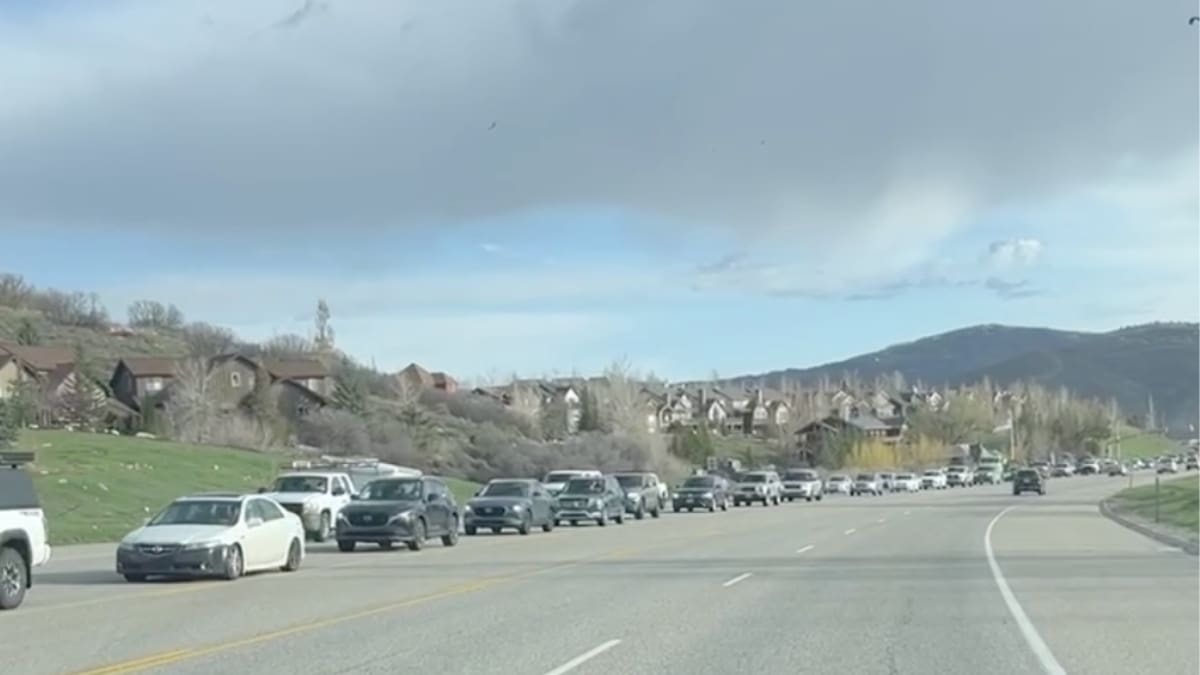
Planning commissioners recommended requiring studies for projects generating at least 25 peak-hour trips, with expanded travel periods reflecting local ski, school and commuter traffic
SUMMIT COUNTY, Utah — New development projected to generate 25 or more net new trips during a peak hour could be required to study and address its effects on Summit County roads under a proposed amendment to the Snyderville Basin Development Code.
The Snyderville Basin Planning Commission forwarded a positive recommendation to the Summit County Council on Aug. 25 for the amendment, which county staff said would formalize a practice the county generally follows but cannot currently enforce through the code.
The commission also recommended expanding the proposed peak travel periods to better reflect local traffic patterns. The original proposal defined the morning period as 7 to 9 a.m. and the afternoon period as 4 to 6 p.m. Commissioners recommended changing those windows to 7 to 10 a.m. and 3 to 6 p.m.
Commissioners cited school traffic, ski-area opening times, and afternoon congestion in support of the longer periods.
Principal Planner Ray Milliner said county staff already request traffic-impact studies for projects expected to produce significant traffic. However, the development code does not currently give the county explicit authority to compel an applicant to complete one.
“If a developer were to say, ‘I just don’t want to do it,’ we don’t have any teeth in our code to make them do it,” Milliner told commissioners.
Under the proposal, an engineer licensed in Utah would have to prepare the studies. The analysis could identify required improvements such as turn lanes, traffic signals, restriping, sidewalks, or trails. Applicants would generally be responsible for funding or constructing improvements needed to mitigate their projects’ effects.
Traffic-impact studies can cost approximately $20,000 to $40,000, Transportation Planning Deputy Director Eva De Laurentiis told commissioners.
The proposed language would allow the applicable land-use authority to approve a different arrangement for mitigation costs. Depending on the application, that authority could be the community development director, Planning Commission or County Council.
Commissioners spent much of the discussion examining whether the 25-trip threshold would be too rigid, particularly for nonprofits and projects serving a public purpose.
Staff said the effect on the transportation system remains the same whether the organization generating the traffic is a nonprofit or a commercial business. Commissioners discussed allowing flexibility over who pays for a study or resulting improvements rather than exempting nonprofit projects from examining their traffic effects.
De Laurentiis said 25 trips is a threshold used by other jurisdictions and would allow the county to evaluate developments likely to have meaningful effects without requiring costly studies for small projects.
The county uses trip-generation estimates from the Institute of Transportation Engineers to calculate the number of trips associated with different types of development, including housing, restaurants, stores, gas stations and storage facilities.
Studies could also be required to examine individual development phases and peak winter conditions rather than evaluating only the project’s eventual buildout.
County staff cited the new Maverik near Quinn’s Junction as an example of traffic mitigation tied to development review. Improvements included a traffic signal and turn lane coordinated with the Utah Department of Transportation. Staff also pointed to turn lanes, internal circulation changes, and a bus pullout associated with the Whole Foods development at Canyon Corners.
The proposed traffic-study requirement is separate from Summit County’s transportation-impact fees, which are assessed on new development to help pay for broader transportation system improvements.
De Laurentiis estimated that the county collects approximately $1 million in transportation-impact fees annually. She said the revenue has recently helped fund improvements on Old Highway 40 and Old Ranch Road and is expected to support other identified projects, including planned Silver Summit roundabouts.
The proposed requirement would not apply retroactively to complete applications already submitted under the existing code. Staff said it would affect future applications and noted that several prospective applicants had indicated they could submit projects soon.
If the County Council adopts the amendment, county staff also plan to publish a standardized checklist explaining what information traffic-impact studies must contain.


2266 E Garfield Avenue
Salt Lake City, UT 84108