Snow
Vail Resorts reports sharp drop in skier visits amid weak snowfall, warns earnings may miss projections

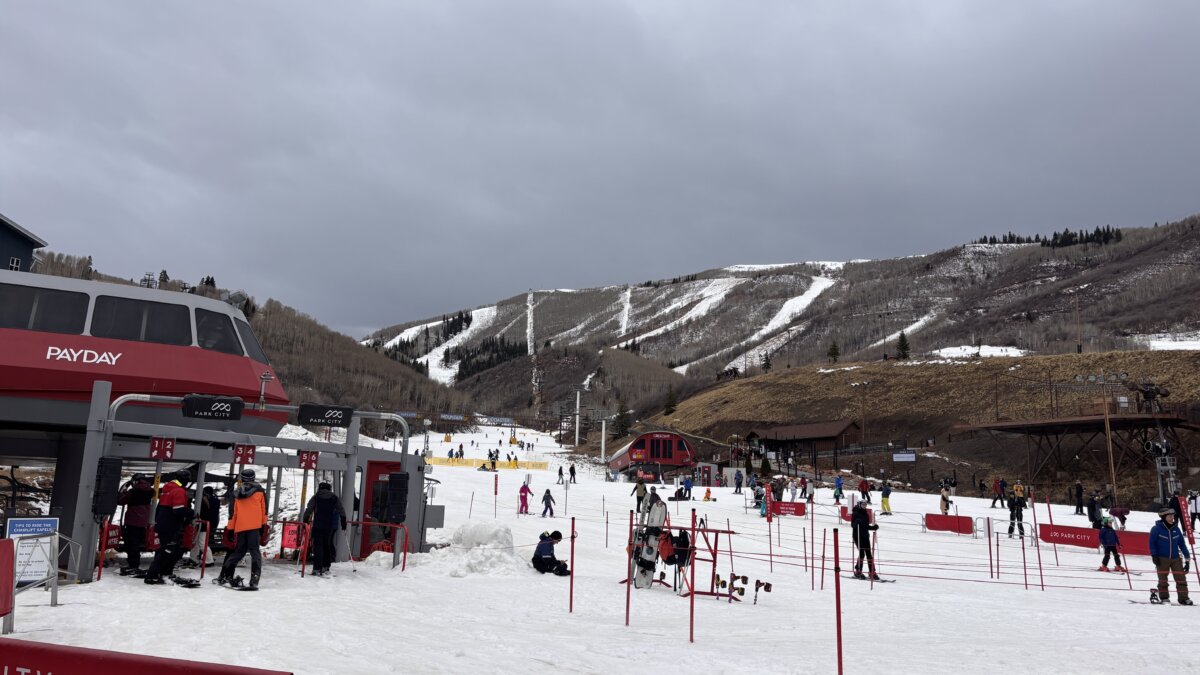
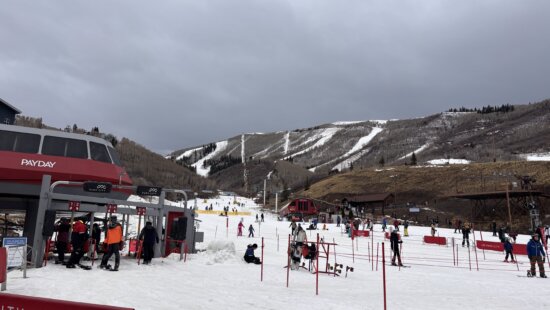
PayDay LIft with sparse snow coverage on the mountains, Park City Mountain Dec. 21, 2025 Photo: TownLift
BROOMFIELD, Colo. — Vail Resorts reported a steep decline in skier visits early in the 2025–26 ski season, citing historically poor snowfall across much of the western United States and warning that full-year earnings are now expected to fall below the low end of earlier projections.
The company said season-to-date skier visits were down 20% through Jan. 4 compared with the same period a year earlier. Despite the drop in visitation, total lift revenue fell just 1.8%, reflecting the growing share of revenue tied to advance season pass sales.
The figures cover Vail’s North American resorts and ski areas and exclude operations in Australia and Europe. The report stressed data is preliminary and subject to adjustment at the end of the fiscal quarter.
Chief Executive Officer Rob Katz said the season began with some of the weakest early snowfall in decades, severely limiting terrain openings and reducing ancillary spending on ski school, dining and retail.
“We experienced one of the worst early season snowfalls in the western U.S. in over 30 years,” Katz said. Snowfall across the western U.S. in November and December ran about 50% below the 30-year average, he said, with the Rockies seeing snowfall nearly 60% below average. As a result, only about 11% of terrain was open in the Rockies in December.
At Park City Mountain only 4% of its terrain was open as of Dec. 21, with 14 of 348 runs open and a 23″ base.
Katz said conditions in Tahoe and at Whistler Blackcomb were near historic lows through mid-December before improving over the holiday period. Eastern U.S. resorts saw stronger early-season conditions, partially offsetting western declines, he said.
Still, the poor start is expected to weigh on earnings. Katz said the company now expects full-year Resort Reported EBITDA to come in just below the low end of the guidance range issued in September, assuming conditions in the Rockies return to normal by Presidents Day weekend. EBITDA is measure of a company’s operating profitability that strips out interest, taxes and non-cash expenses to show how much cash the core business generates, though critics note it ignores real costs like asset wear and tear. Katz also warned that further downside is possible if weather conditions fail to improve.
Vail Resorts did not announce new expense reductions, but the earnings outlook raised questions among investors and analysts about whether additional cost controls could follow, such as reduced grooming, limited snowmaking, fewer lifts operating or restaurant closures — measures the company has used in past low-demand periods.
Season-to-date revenue outside lift tickets showed sharper declines. Ski school revenue fell 14.9%, dining revenue declined 15.9%, and retail and rental revenue dropped 6% compared with the prior year period.
While Vail highlighted weather as the primary driver of weaker results, the company did not provide context on how last year’s early-season visitation compared with earlier seasons. The prior-year period included disruptions at Park City Mountain during the 2024–25 season caused by a patrol labor dispute, which affected lift operations during peak holiday periods.
Some skiers and investors have also pointed to broader operational concerns. In comments responding to a recent Wall Street Journal article, one reader, identified as James Mod, wrote that declining visits may reflect more than just snow conditions.
“The mountain (Vail) itself is fantastic, but everything else is on a downward spiral,” the commenter wrote, citing crowded lift lines, staffing shortages, food quality, technology issues with the Epic Pass app, and rising prices. “Everything the Vail corporation touches it hollows out in the name of squeezing a bit more profit out of us skiers.”
At Park City Mountain over the holiday period, riders reported many lifts – Crescent being one of them – being closed for a day or more, along with other lift outages. One skier reported Silverlode being down for approximately 1.5 hours and during that time Miner’s Camp was open for shelter from the rain, but the lodge was not serving any food. PCMR distributed coupons for a free day of riding for those affected.
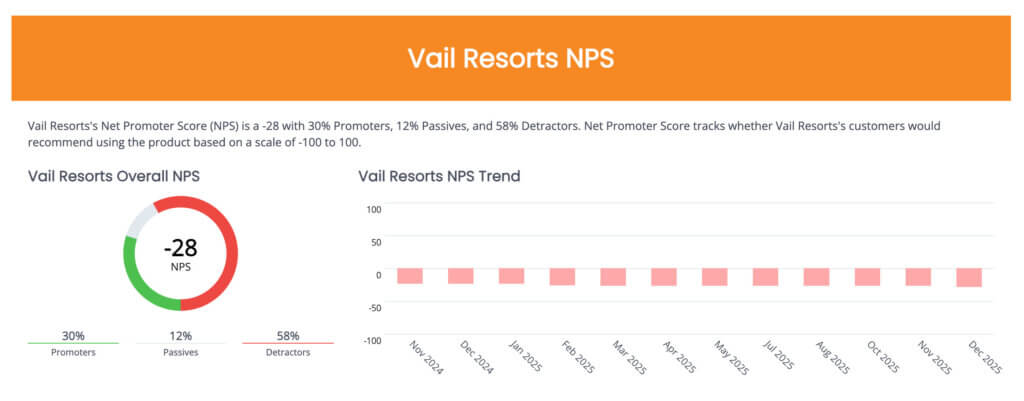
Vail Resorts said guest satisfaction scores remain strong despite weather challenges, but Vail Resort’s Net Promoter Score (NPS) has shown a negative trend dating back to November 2024, according to Comparably.com. A NPS is a customer loyalty metric based on asking how likely someone is to recommend a company, product, or service on a 0–10 scale, resulting in a single score from -100 to 100 that gauges satisfaction and predicts growth. Vail’s current NPS on Comparably.com is negative 27.
Katz reiterated the company’s commitment to its advance-commitment strategy, which relies heavily on season pass sales to stabilize revenue amid volatile snowfall.
Vail Resorts operates 41 mountain resorts worldwide, including Park City Mountain in Utah, the largest ski resort in the United States.
Editor’s note: This report has been updated for clarity.
By: Marina Knight


4170 Vista Antigua Road
Moab, UT 84532
4155 S Parkview Drive
Salt Lake City, UT 84124
1104 West 10125 South
South Jordan, UT 84095
1355 E Snow Canyon Parkway, Lot 27
Ivins, UT 84738
4028 E Outcrop Road
Park City, UT 84098Talk of the Town


Park City Jobs

Junior Interior Designer, Abigail Hill
6 days ago Contractor

Dental Assistant, Rise Dental Wellness
6 days ago Full time

Sales & Marketing Coordinator – B2B Publishing, Power Trade Media
8 days ago Full time $40,000 - $45,000 yearly

Garden Steward and Educator, Summit Community Gardens and EATS
13 days ago Seasonal

PROGRAM AND EVENT COORDINATOR, PC READS
14 days ago Part time $25.00 hourly