Environment
Utah’s lagging snowpack prompts calls for residential water conservation measures

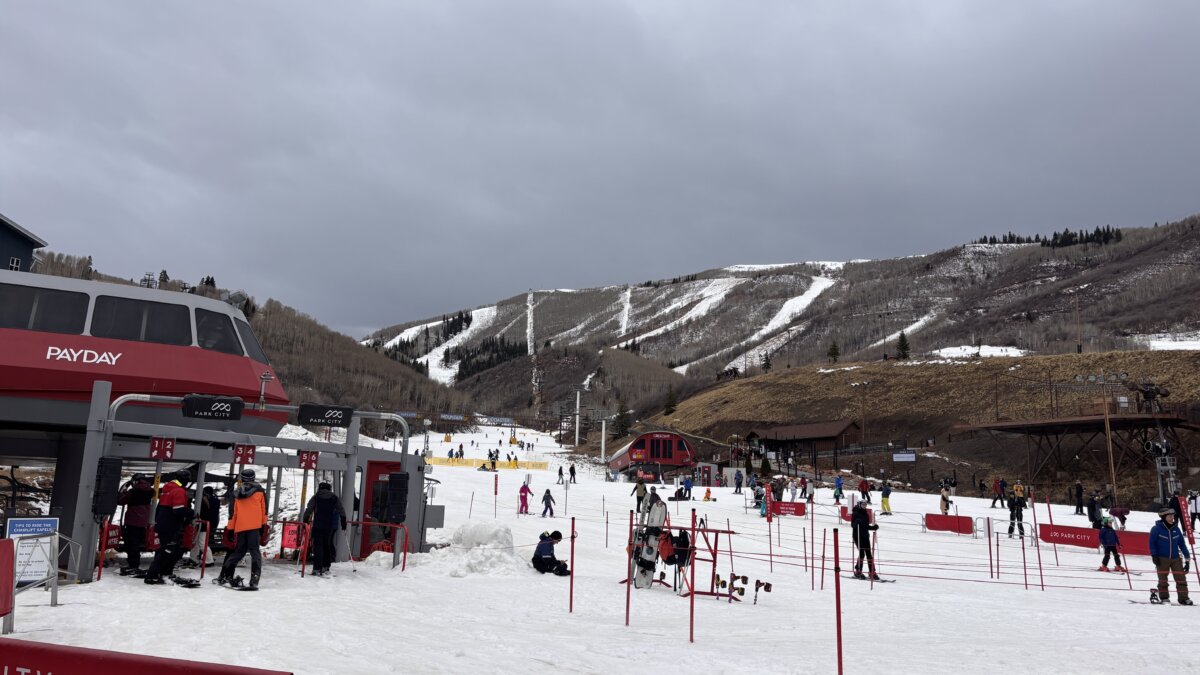
PayDay LIft with sparse snow coverage on the mountains, Park City Mountain Dec. 21, 2025 Photo: TownLift
UTAH — Utah’s underwhelming snow season is raising renewed concerns about the state’s long-term water outlook, with state water officials urging residents to conserve now to prepare for what could be another dry year ahead.
Roughly 95% of Utah’s water supply comes from snowpack, and this winter’s slow accumulation has made refilling reservoirs less certain. According to the National Weather Service, 2025 was the warmest year on record in Utah, a trend that continues to complicate water planning statewide.
While northern Utah has fared slightly better than other regions, snowpack levels remain below normal. Currently, 94% of the state is experiencing some level of drought, a sharp increase from this time last year when just 20% of Utah was classified as drought-affected.
“As the old saying goes, ‘In Utah, we are either in drought or preparing for the next one,’” said Joel Williams, interim director of the Utah Division of Water Resources. “We can all see that our water situation is not looking great.”
Williams encouraged residents to start preparing now by making small changes at home. “For those looking to prepare, water conservation tips and tricks can be found at SlowTheFlow.org,” he said.
Despite the concerning snowpack outlook, reservoir levels are currently above normal for this time of year, thanks in part to careful management over the past several seasons. Larger reservoirs in the Wasatch Back such as Strawberry, Jordanelle, and Deer Creek are storing multiple years’ worth of water, while others across the state only hold enough supply for about one year.
Still, officials caution that reservoir storage alone isn’t enough to offset prolonged dry conditions should the winter continue its prolonged dry stretch. The Natural Resources Conservation Service’s January 1 Water Supply Outlook Report notes that this winter’s atypical snowpack has made it especially difficult to accurately model spring runoff — a key factor in predicting summer water availability.
State agencies continue to emphasize conservation as a critical tool for building drought resilience. The Utah Department of Natural Resources promotes programs like the Agricultural Water Optimization Program for farmers and Slow the Flow for residents, both designed to educate and incentivize water-saving practices.
Many of the recommended changes for residential structures are simple, particularly indoors, where conservation efforts can make a measurable difference regardless of weather conditions. Fixing leaks, running full loads of laundry and dishes, installing efficient fixtures, and being mindful of daily water use all help stretch limited supplies.
With climate variability becoming the norm rather than the exception, water officials say these programs aim to educate and incentivize water-saving practices, ensuring Utahns become more drought-resilient and prepare for future conditions.
By: Heather Bergeson


325 White Pine Canyon Road
Park City, UT 84060
3267 W Deer Hollow Road, Unit 2305
Park City, UT 84060
2349 S Lava Vista Drive, Lot 32
Santa Clara, UT 84765
438 Castle Valley Drive
Castle Valley, UT 84532
80 West 300 North
Salt Lake City, UT 84103Talk of the Town


Park City Jobs

Computer / Website Assistant, Summit Support
1 day ago Part time $20.00 - $30.00 hourly

Garden Steward and Educator, Summit Community Gardens and EATS
1 day ago Seasonal

PROGRAM AND EVENT COORDINATOR, PC READS
2 days ago Part time $25.00 hourly

Development Manager, Blue Sky Utah
2 days ago Part time $28.00 - $32.00 hourly

Executive Assistant / Property Manager Administrator, Model HOA
2 days ago Full time $30.00 hourly