Environment
Utah officials cite progress stabilizing Great Salt Lake, but recovery remains at risk

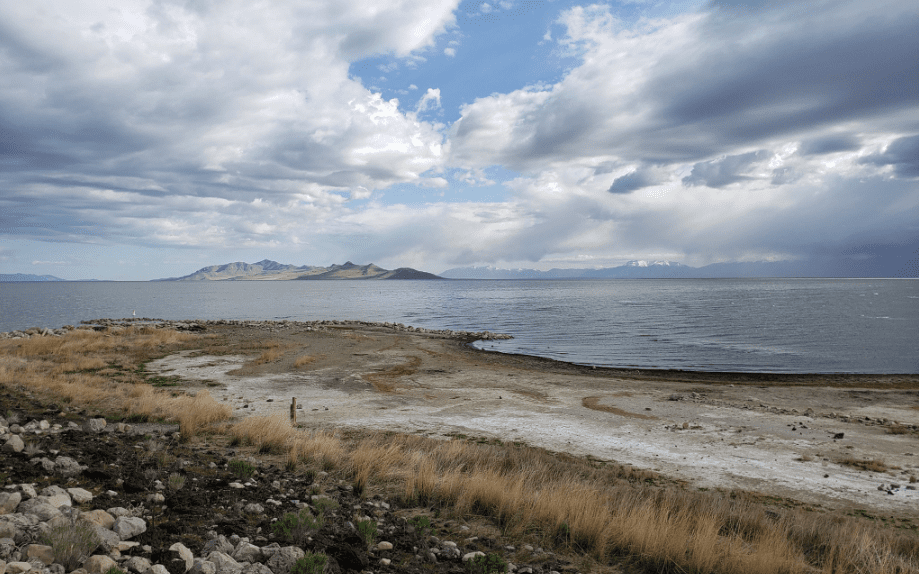
The Great Salt Lake typically drops a little over 2 feet each summer. Photo: TownLift // Marina Knight
SALT LAKE CITY — Utah has made measurable progress toward stabilizing the Great Salt Lake, though the ecosystem remains far below healthy levels and will require sustained, long-term action to recover, according to a new data summary released ahead of the 2026 General Legislative Session.
The report, authored by the Great Salt Lake Strike Team and released through the Kem C. Gardner Policy Institute, highlights gains made in 2025 through water conservation, leasing contracts, and habitat restoration efforts. However, researchers warn that the lake’s current condition still falls within a range considered to pose serious environmental and public health risks.
“The collective efforts across our state agencies, public research universities and private partners have yielded tangible progress in stabilizing Great Salt Lake,” said Great Salt Lake Commissioner Brian Steed. “While conditions have stabilized, this report clearly shows that the journey to recovery requires sustained commitment, innovative solutions and data-driven decisions.”
A fragile outlook
While nearly 400,000 acre-feet of water were delivered to the lake between 2021 and 2025, long-term projections show the lake would require a double that inflow each year to return to healthy levels by 2055.
Despite recent gains, the lake’s south arm ended the 2025 water year at 4,191.1 feet—its third-lowest elevation since recordkeeping began in 1903, placing it firmly within the “serious adverse effects” range. Though, adaptive management of the railroad causeway berm has also helped stabilize salinity levels in the lake’s south arm since 2022.
Thirty-year projections indicate the lake would need an additional 800,000 acre-feet of water annually to return to healthy levels by 2055. Climate models suggest rising temperatures and increased evaporation could further complicate recovery, potentially offsetting gains from higher precipitation.
In the meantime, efforts to address dust pollution from exposed lakebed continued in 2025 with the expansion of the Utah Dust Observation and Research Network (UDORN), which monitors dust sources and analyzes potential public health impacts. Preliminary findings suggest that temporarily impounding water in Farmington Bay could significantly reduce dust emissions by submerging more than half of identified dust “hotspots” if water levels rise to 4,199 feet.
New data reshapes conservation priorities
An updated water budget included in the report shows municipal and industrial water use now accounts for approximately 26% of human-caused depletions to the lake, higher than previously estimated. The finding underscores the need for conservation across all sectors, including urban, agricultural and industrial users.
“Our report provides critical understanding of how changes in climate and land use influence the hydrology of the Great Salt Lake watershed,” said Paul Brooks, a professor of geology and geophysics at the University of Utah. “These data and analyses underscore the urgency of implementing comprehensive strategies that account for both natural variability and long-term trends in water supply.”
State officials and researchers say the report’s findings highlight both the progress made and the scale of action still required to secure the future of one of Utah’s most critical ecosystems.
By: Heather Bergeson


325 White Pine Canyon Road
Park City, UT 84060
3267 W Deer Hollow Road, Unit 2305
Park City, UT 84060
1511 S Valley View Circle
Springville, UT 84663
2349 S Lava Vista Drive, Lot 32
Santa Clara, UT 84765
80 West 300 North
Salt Lake City, UT 84103
438 Castle Valley Drive
Castle Valley, UT 84532Talk of the Town


Park City Jobs

Hiring Barista Assistants and Baristas, Silver King Coffee
1 day ago Part time $17.00 - $30.00 hourly

General Maintenance Technician, Moose Management Vacation Rentals
5 days ago Full time

Office Coordinator, Park City Community Foundation
8 days ago Full time $50,000 - $55,000 yearly

Summit Land Conservancy Programs Specialist, Summit Land Conservancy
8 days ago Full time
Vice President of Finance, Park City Community Foundation
8 days ago Full time $115,000 - $130,000 yearly