Politics
Park City Council asserts authority under new law to resolve King Road home litigation

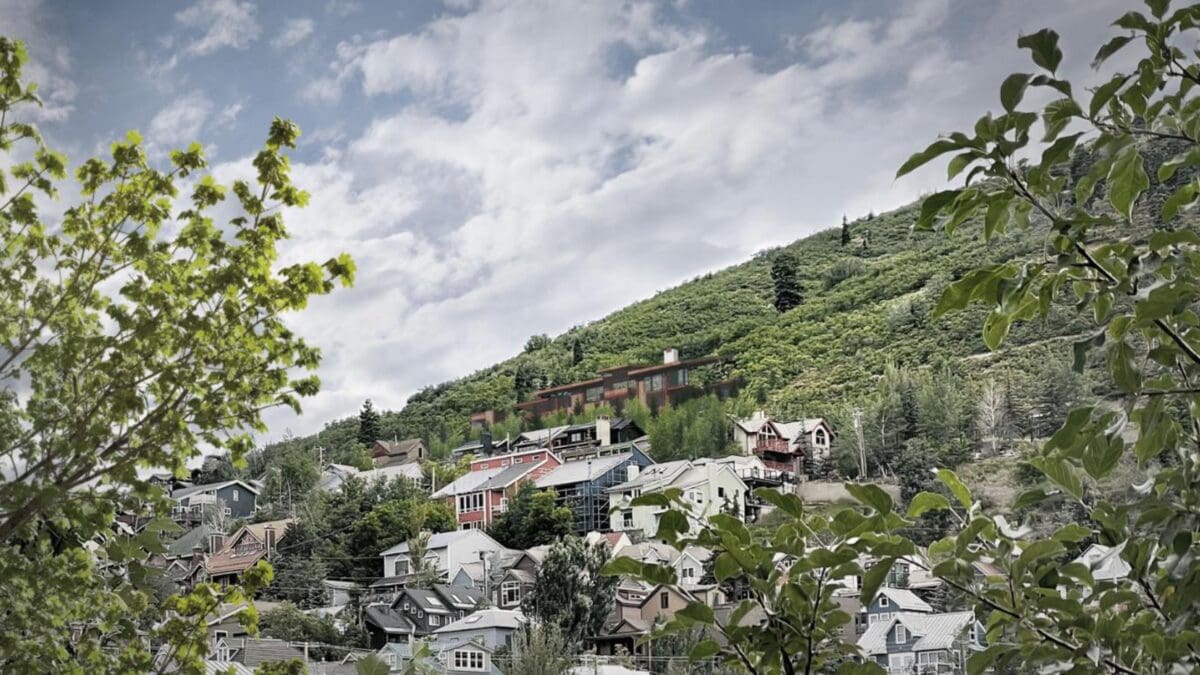
An artistic rendering of the cross valley view of the proposed home Matthew and Tatiana Prince seek to build on King Road in Park City. Photo: Park City Government
Park City Council voted to approve a consent agreement intended to resolve three pending lawsuits tied to the King Road home project. The decision marks a high-profile use of a 2025 state law that allows municipalities to settle land-use disputes while litigation is ongoing.
PARK CITY, Utah — After years of litigation, appeals and public controversy, the Park City Council voted 3-1 Thursday to approve a consent agreement with Pesky Porcupine LLC, clearing a path forward for the proposed single-family home at 220 King Road and aiming to resolve three pending court cases tied to the project.
The agreement seeks to resolve three pending lawsuits involving Park City Municipal and Pesky Porcupine LLC, an entity owned by tech executive and Utah billionaire Matthew Prince. The lawsuits also involve neighboring property owners Eric Hermann and Susan Fredston-Hermann, who oppose and were not involved in the conversations that lead to the agreement.
The agreement reinstates earlier Planning Commission and Planning Director approvals, adds mitigation measures, and requires the applicant to pay for future legal expenses for the city related to the project.
Critics of the consent agreement argued the vote should be delayed until after Jan. 29, when the Third District Court is scheduled to hear one of the appeals. City attorneys and a majority of council members said waiting would not resolve the broader dispute.
The consent agreement would replace the contested land-use decisions and could result in dismissal of the pending lawsuits, ending the litigation without a judicial ruling on whether the prior approvals complied with city code.
Council passes the consent agreement
Some council members acknowledged calls to wait for the Jan. 29 hearing, but said the litigation has already dragged on for years and would likely continue even after that ruling.
“This has been going on for three or four years, and it is ugly — and it’s going to get uglier if we can’t resolve it,” Councilmember Bill Ciraco said. “Where do we put an end to this? We need to bring the community together.”
City outside counsel Mitch Stevens told council members the upcoming court hearing would address only one of the three pending lawsuits and would not resolve the full scope of disputes covered by the consent agreement.
“If you wait, you’d get an answer to part of this but not all of what is in front of you,” Stevens said, noting that two of the three cases do not yet have hearing dates. He added that the agreement is intended to provide “a path that is not a litigation path,” and that a judge would evaluate the agreement if the parties move to dismiss the cases.
Councilmember Ed Parigian questioned why the agreement needed to be approved immediately, while other members emphasized the cost and uncertainty of continued litigation.
Terms of the agreement
According to city staff and legal counsel, the consent agreement largely reinstates prior approvals while adding conditions not previously required, including expanded landscaping and other mitigation measures.
Pesky Porcupine LLC also agreed to comply with the conditions imposed by Planning Director Rebecca Ward, including adjustments to roof overhangs, roof pitches, and window treatments intended to better align with historic district guidelines.
Wade Budge, counsel for Pesky Porcupine LLC, told the council the agreement reflects the applicant’s decision to abandon claims against the city and accept all imposed conditions.
“We are agreeing to the requirements, including each and every one of the conditions that Director Ward required,” Budge said. “We are trying to resolve the claims so that city staff and resources don’t have to continue to be devoted to this dispute.”
Budge added that the applicant would defend the city against any costs or claims arising from the agreement.
The vote also highlights the practical application of Senate Bill 262, passed by the Utah Legislature in 2025 to give municipalities an option to resolve land-use disputes while court cases are pending. Supporters say the law offers cities a way to reduce prolonged litigation and conflicting administrative decisions, while opponents worry its use could limit the role of courts in resolving land-use appeals.
Opposition and concerns raised
Neighbors Eric Hermann and Susan Fredston-Hermann, who live adjacent to the property, have argued the dispute should be resolved by impartial courts rather than through a council-approved settlement.
In a letter submitted ahead of the vote, attorneys for the Hermanns said approving the agreement before the Jan. 29 hearing would undermine procedural fairness and could expose the city to additional legal risk.
“The agreement will not bring finality — it would only multiply the litigation,” the letter stated, arguing that appeals filed by “adversely affected” third parties cannot be settled without their consent.
The Hermanns’ attorneys also highlighted a Board of Adjustment decision that reversed portions of the project’s Historic District Design Review approval, citing concerns about scale, topography, and compatibility with surrounding historic structures. They urged council members not to sidestep that decision without fully reviewing the record.
City legal counsel countered that the agreement is site-specific, does not establish precedent, and would reduce the likelihood of prolonged litigation.
Prince addressed the council briefly during the public comment period, emphasizing his desire to remain part of the Park City community.
“We have made significant investments in the community, giving to the causes that we think are important,” Prince said. “Supporting affordable housing, supporting the Park City Education Foundation, supporting the People’s Health Clinic, supporting the ski team, the Olympics, in significant ways. And I want to continue to do that, but I need to finally feel like we are welcome in this community.”
Several council members expressed frustration that the dispute had become increasingly divisive.
“The fight over this is just absolutely ridiculous,” Parigian said.
Ciraco urged all parties to move forward.
“Instead of investing in fighting each other, think about investing in the community and helping bring us together,” he said.
What happens next
With council approval, the city and Pesky Porcupine LLC will seek dismissal of the pending lawsuits based on the consent agreement.
The agreement clears the path for Pesky Porcupine to apply for the building permit with a house design adjusted to meet the conditions of approval that the Planning Commission set.
The Jan. 29 district court hearing remains scheduled unless the parties move to dismiss before that date.
Go Deeper
- Special deal or fair process? Council weighs settlement in Utah’s richest resident’s Park City mansion dispute
- Utah’s richest man sues Park City
- Second look at building code halts controversial mansion project
- Residents worry construction of the Prince mansion would put other Old Town homes in danger of a landslide
- Neighbors opposing Matthew Prince’s Mansion face second lawsuit in two weeks
- Will Utah’s richest man get his castle on King Road?
- Park City billionaire Matthew Prince and wife Tatiana purchase Park Record Newspaper
By: Heather Bergeson


325 White Pine Canyon Road
Park City, UT 84060
3267 W Deer Hollow Road, Unit 2305
Park City, UT 84060
2349 S Lava Vista Drive, Lot 32
Santa Clara, UT 84765
438 Castle Valley Drive
Castle Valley, UT 84532
1511 S Valley View Circle
Springville, UT 84663
80 West 300 North
Salt Lake City, UT 84103Talk of the Town


Park City Jobs

Hiring Barista Assistants and Baristas, Silver King Coffee
3 days ago Part time $17.00 - $30.00 hourly

General Maintenance Technician, Moose Management Vacation Rentals
7 days ago Full time

Office Coordinator, Park City Community Foundation
10 days ago Full time $50,000 - $55,000 yearly

Summit Land Conservancy Programs Specialist, Summit Land Conservancy
10 days ago Full time
Vice President of Finance, Park City Community Foundation
10 days ago Full time $115,000 - $130,000 yearly