Environment
Documents show PCSD contractor discharged contaminated water without permits while school district told public otherwise

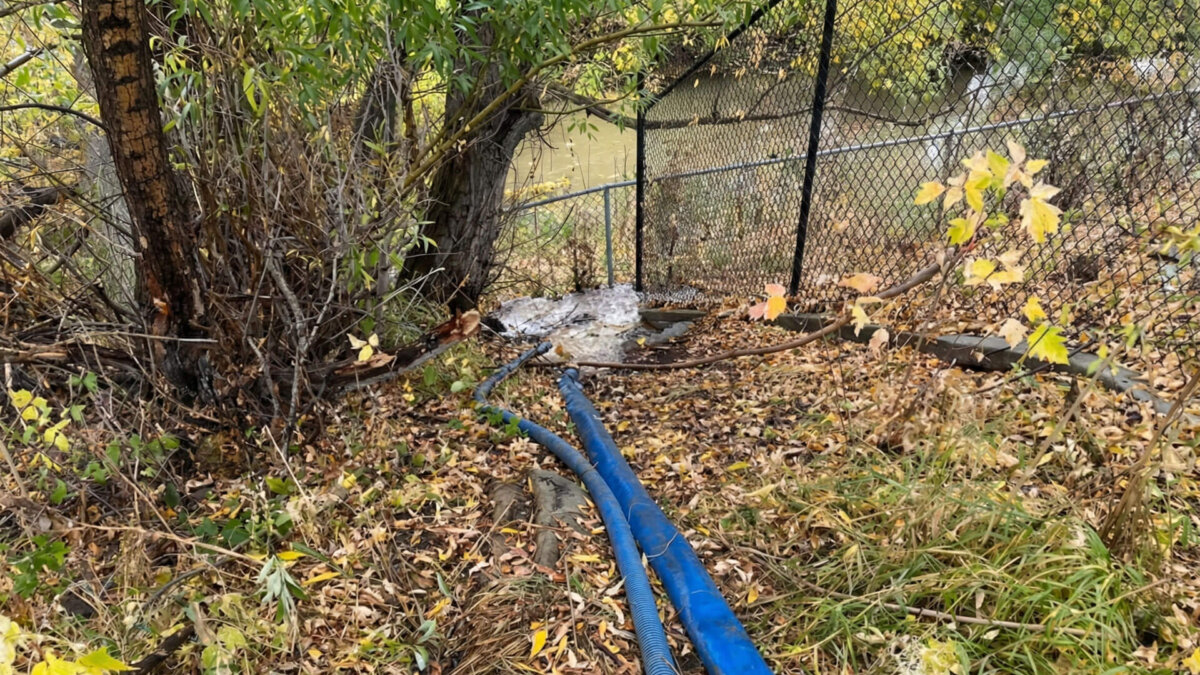
Hoses discharging groundwater directly into Silver Creek at the Treasure Mountain construction site from the Oct. 10, 2025 R&R Environmental email. Photo: R&R Environmental
“Best to spin this our way”: R&R Environmental urged district to prepare press response after October contaminated water discharge was discovered
PARK CITY, Utah — According to the Utah Division of Water Quality, groundwater encountered during construction at the former Treasure Mountain Junior High School contained elevated levels of lead and arsenic and required state permits before it could be discharged, a finding that contradicts how the Park City School District described the incident to the public.
“The Utah Division of Water Quality (DWQ) has determined that the ground water on this site contains lead and arsenic at levels higher than what the DWQ considers acceptable for discharge back into the ground or nearby creeks,” Hogan & Associates Construction wrote in a statement released on Jan. 20 summarizing the state’s position.
The determination stands in contrast to a Dec. 9 community statement from the district, which described the groundwater as “non-hazardous,” discharged appropriately through a private storm conveyance line with consultant approval, and not requiring additional permitting.
Project records and city stormwater documents show that the site’s approved Stormwater Pollution Prevention Plan did not anticipate dewatering and required groundwater to remain on site. Despite those restrictions, district contractors pumped more than 500,000 gallons of contaminated groundwater off site in a manner later documented by environmental experts as not allowable and unpermitted and routed it into a drainage system that flows to Silver Creek, a public waterway classified as a potential drinking-water source.
The discharge was formally documented on Oct. 10, 2025, when the district’s environmental consultant notified school officials, contractors, and regulators that groundwater had been released in a manner that was “not allowable” and constituted a spill into state waters, according to emails obtained through public records requests.
District officials have said they did not have all the information at the time the community statement was issued and relied on assurances from their contractor when communicating with the public. Emails obtained by TownLift, however, show district officials were copied on written determinations from their own environmental consultant stating the discharge was not allowed and had been occurring for weeks before the district statement to the community was issued.
Consultant told school district that discharge was “not allowable”
PCSD contractor Hogan Construction called the Utah Department of Environmental Quality (DEQ) spills hotline on Oct. 10 to report a spill at the demolition site. Records obtained by TownLift show that on the morning of Oct. 10, district officials, its contractor and project managers received written notice from the district’s environmental consultant documenting noncompliant conditions stating that groundwater pumping and discharge from the Treasure Mountain site was not allowed, had been occurring for weeks and constituted a spill into state waters.
“As stated in writing at the beginning of this project, this type of discharge is not allowable,” the consultant wrote in the Oct. 10 email.
Despite the written notice of noncompliance, two months later the district told the community the water was non-hazardous, properly handled and did not require permits.
The email also said follow-up investigation showed the pumping had been occurring “since almost the start of the project,” with pumps operating most weekdays at roughly 40 gallons per minute. The consultant also emphasized that groundwater was required to remain on site.
“All groundwater must be captured, held onsite, and properly characterized prior to discharge,” the email said. “Simply put, nothing leaves the site unless you brought it on there and it did not touch the tailings.”
Because the discharge reached a state waterway, the consultant classified it as a spill or illegal discharge and directed Hogan to notify the Utah Department of Environmental Quality’s spill hotline, which the contractor did later that day.
The consultant also advised the school district, Hogan Construction, and the owner’s representative to prepare a media response. “I recommend you prepare a statement for the press to release next week,” the consultant wrote. “Best to spin this our way vs waiting for KPCW and other locals to spin it themselves.”
The district did not issue a public statement until two months later, after whistleblower reporting by TownLift.
Despite receiving a written notice of non-compliance, the district continued to describe the discharge publicly as appropriate and approved
The district issued a community statement on December 9th, two months after the written notice of non-compliance, describing the groundwater as non-hazardous, saying it was discharged appropriately through a private storm conveyance line, approved by consultants and not subject to additional permitting.
“Activities were performed under environmental oversight and in communication with agencies throughout the demolition of the facility,” the email said.
In a separate email to TownLift on Nov. 22 requesting a correction, the district claimed the contaminated water was handled properly.
“All other pumping events routed water into an existing municipal storm drain structure, located approximately 15 feet from the creek, consistent with permitted drainage pathways already in place,” the email said.
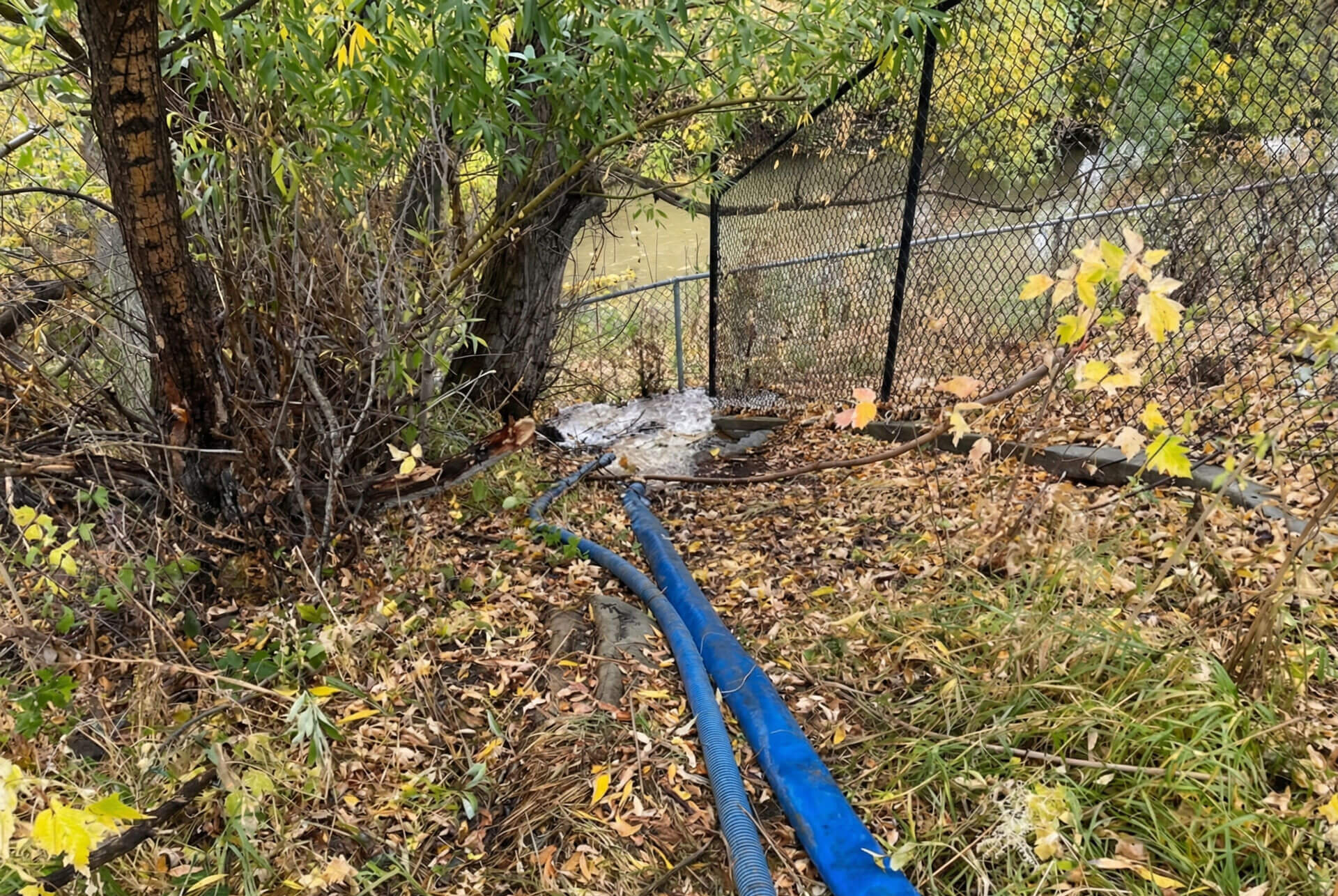
In the correction request the district also said the use of a photo suggesting multiple hoses directly connected to the creek is an inaccurate representation of the site conditions and implies extended unregulated discharge, which did not occur.
The written notice from R&R Environmental when the spill was identified includes an image showing multiple hoses directly connected to the creek, documenting site conditions at the time the discharge was discovered.
The public statement, which the District said was circulated to “provide a factual, transparent summary of environmental conditions that occurred during the demolition of Treasure Mountain Junior High School,” directly conflicts with what district officials had already been told in writing: that the discharge was not allowable, had been occurring for weeks, and required regulatory notification.
August guidance did not authorize discharge
The Oct. 10 written notice of noncompliance followed earlier written guidance from the same consultant in August, after groundwater was first encountered during excavation.
In that email, R&R Environmental outlined four possible options for managing groundwater. Each option required sampling and additional regulatory approvals or off-site disposal depending on test results. None allowed groundwater to be discharged into a storm drain or creek without permits.
The consultant also warned regulators were unlikely to approve groundwater discharge under the project’s existing Stormwater Pollution Prevention Plan, which governs stormwater runoff but does not cover groundwater from dewatering operations.
Water samples collected Aug. 15 showed elevated levels of lead and arsenic exceeding Utah’s thresholds for drinking-water sources. While the consultant later classified the water as “not hazardous” — meaning it did not meet hazardous-waste criteria — that determination did not authorize discharge or eliminate permitting requirements, according to the state.
Contractor now says permits are required
Water testing conducted on Aug. 15, before the pumping and discharge occurred, showed the groundwater contained lead and arsenic at levels that would later be cited by the Utah DWQ as too high for discharge back into the ground or nearby creeks.
In its Jan. 20 statement, Hogan said the state has now identified two permitting pathways, a Treated Groundwater Surface Water permit or a groundwater discharge permit, and that the contractor is now pursuing the treated groundwater permit.
The statement said dewatering may occur before a permit is issued only if water is captured in tanks, tested by an independent consultant and not discharged until state approval is granted — a process Hogan said is now underway.
Hogan said no permit was obtained before the October discharge because the prior consultant classified the water as “not hazardous,” which Hogan said it interpreted to mean a permit was unnecessary.
Records show that same consultant had already stated in writing that discharge was not allowed without approval, regardless of whether the water met the hazardous-waste definition.
Consultant later removed from project
Later in October, the district ended its contract with R&R Environmental and hired a new environmental consulting firm. District officials have said the change resulted from a routine contract review and was not related to the groundwater discharge.
The Utah Department of Environmental Quality has said it is investigating whether the October discharge complied with state law. The agency has said it is not aware of any immediate public health risk but is continuing to review the incident.
Go Deeper:
By: Marina Knight


325 White Pine Canyon Road
Park City, UT 84060
2349 S Lava Vista Drive, Lot 32
Santa Clara, UT 84765
1511 S Valley View Circle
Springville, UT 84663
3267 W Deer Hollow Road, Unit 2305
Park City, UT 84060
438 Castle Valley Drive
Castle Valley, UT 84532
80 West 300 North
Salt Lake City, UT 84103Talk of the Town


Park City Jobs

Hiring Barista Assistants and Baristas, Silver King Coffee
7 days ago Part time $17.00 - $30.00 hourly

General Maintenance Technician, Moose Management Vacation Rentals
11 days ago Full time

Office Coordinator, Park City Community Foundation
14 days ago Full time $50,000 - $55,000 yearly

Summit Land Conservancy Programs Specialist, Summit Land Conservancy
14 days ago Full time
Vice President of Finance, Park City Community Foundation
14 days ago Full time $115,000 - $130,000 yearly