Growth
Dedicated bus lanes on SR-248 could join new lanes on SR-224

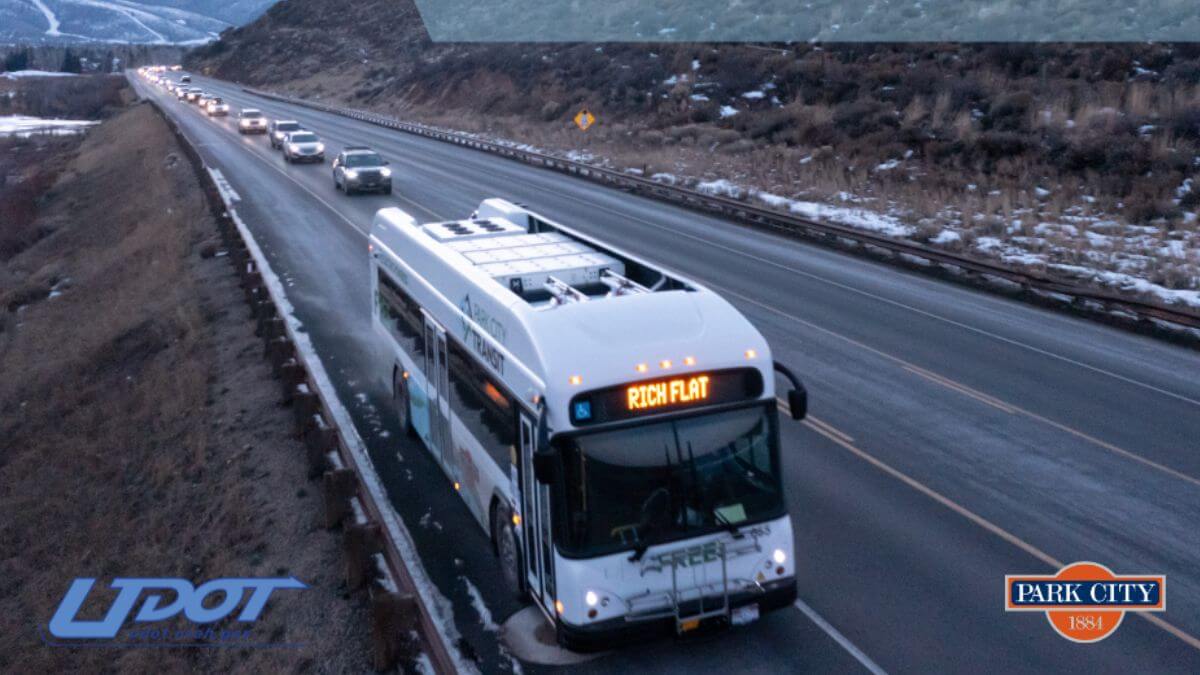
Council approved side-running bus lanes to be the Locally Preferred Alternative for Re-create 248. Photo: Park City Municipal
PARK CITY, Utah — Park City Council voted Tuesday to adopt dedicated, side-running bus lanes as the Locally Preferred Alternative (LPA) for State Route 248, marking a step forward in the city’s long-running Re-Create 248 transit study.
The decision concludes more than a year of analysis conducted in partnership with the Utah Department of Transportation (UDOT) to identify high-capacity transit solutions along the SR-248 corridor. City staff recommended exclusive bus lanes after evaluating multiple alternatives for transit performance, cost, environmental impact, and feasibility.
“Tonight, we moved our efforts to re-create SR-248 from study to action,” Mayor Ryan Dickey said of the decision. “Council picked a clear path forward so we can start delivering real traffic and transit improvements for our residents, employees, and visitors alike.”
What the vote means — and what it doesn’t
Under Federal Transit Administration guidance, selecting an LPA is a key milestone that allows a project to advance into environmental review and preliminary engineering — both prerequisites for state and federal funding. City staff emphasized that the vote does not approve a final design, lock in property impacts, or end public input.
“This isn’t a final design, this isn’t some legally binding adoption,” staff told council. “It really is just a step to move forward for further analysis.”
Adopting an LPA also allows project costs incurred from this point forward to become eligible for future federal reimbursement if grant funding is secured — a point staff cited repeatedly in urging council action.
Why side-running bus lanes?
The recommended alternative calls for side-running, dedicated lanes reserved exclusively for buses, largely separated from general traffic.
Unlike the Bus Rapid Transit system on SR-224, the SR-248 concept would use more traditional bus stops rather than level boarding platforms, allowing the lanes to serve both Park City Transit and High Valley Transit routes.
The side-running bus lanes could also create a more seamless connection to the upcoming Bus Rapid Transit system on State Route 224, a point city staff highlighted during the discussion. This would allow multiple routes, including regional High Valley Transit services and resort express buses, to use the dedicated lanes where available, improving travel times through key choke points and strengthening north–south connectivity between Bonanza Park, Kimball Junction, and the rest of the regional transit network.
Staff said the approach offers operational flexibility, minimizes corridor impacts compared to rail options, and integrates with the existing transit fleet while still improving speed and reliability by removing buses from mixed traffic.
Bonanza concerns take center stage
Much of the council discussion focused on Bonanza Park, where the city has greater design flexibility because the roadway is locally owned. Councilmembers raised concerns about potential impacts to commercial properties, alignment with future redevelopment plans at the city-owned five-acre parcel, and the pace of decision-making.
City staff said refinements to reduce impacts will occur during the next phase, including narrowing shoulders, adjusting medians and shifting alignments where possible. Staff also committed to continued coordination with business owners, property associations and major stakeholders throughout the corridor.
A representative from the Prospector Square Property Owners Association reiterated concerns during public comment, calling for stronger language around business mitigation and urging the city not to delay broader decisions about Bonanza Park’s future.
What’s next
With the LPA adopted in a 4-1 council vote, the city will begin environmental review under the National Environmental Policy Act (NEPA) and advance additional engineering analysis. Staff expects to return to council in late February or early March with recommendations for the corridor’s eastern terminus and a potential park-and-ride strategy.
Construction, if approved in future phases, would still be several years away. For now, council members largely agreed the vote keeps the project moving forward while preserving local control.
More information on the Re-Create 248 Transit Study is available through Park City Municipal.
By: Heather Bergeson


325 White Pine Canyon Road
Park City, UT 84060
438 Castle Valley Drive
Castle Valley, UT 84532
3267 W Deer Hollow Road, Unit 2305
Park City, UT 84060
80 West 300 North
Salt Lake City, UT 84103
1511 S Valley View Circle
Springville, UT 84663
2349 S Lava Vista Drive, Lot 32
Santa Clara, UT 84765Talk of the Town


Park City Jobs

PROGRAM AND EVENT COORDINATOR, PC READS
1 day ago Part time $25.00 hourly

Development Manager, Blue Sky Utah
1 day ago Part time $28.00 - $32.00 hourly

Executive Assistant / Property Manager Administrator, Model HOA
1 day ago Full time $30.00 hourly

Facilities Maintenance Tech - Full-time, VR Inc
1 day ago Full time $28.00 - $31.00 hourly

Hiring Barista Assistants and Baristas, Silver King Coffee
9 days ago Part time $17.00 - $30.00 hourly