Environment
January Skies Over Summit County Feature Supermoon, Meteor Shower

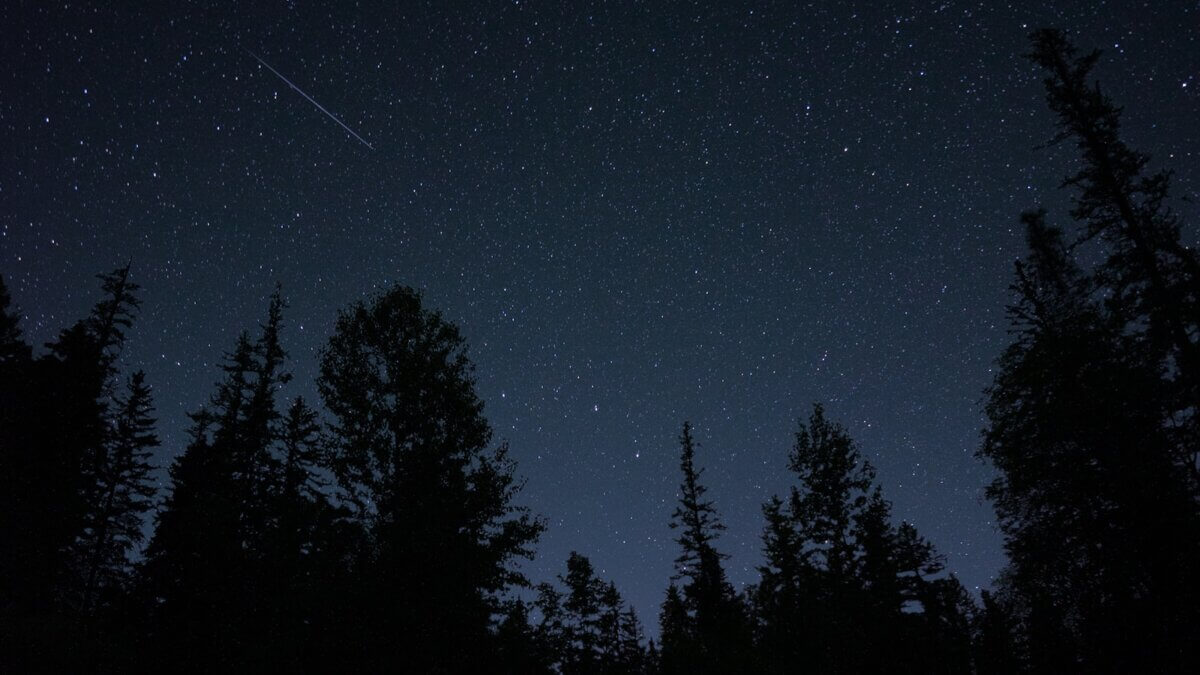
Photo: Photo by Wenxiao Guo
PARK CITY, Utah — Summit County residents can look forward to a month of exceptional stargazing as January 2026 brings a rare supermoon, a meteor shower and some of the brightest constellations of the year, according to the Old Farmer’s Almanac.
The month opens with the Wolf Moon reaching peak illumination at 5:03 a.m. EST on Jan. 3, the Old Farmer’s Almanac reports. Because this full moon occurs when the moon is at perigee, its closest point to Earth, it will appear noticeably larger and brighter than a typical full moon, creating what astronomers call a supermoon. The moon will rise from the eastern horizon around sunset that evening.
That same day, Earth reaches perihelion, the point in the planet’s orbit when it is closest to the sun, according to the Old Farmer’s Almanac. At perihelion, Earth will be 91,403,637 miles from the sun.
The Quadrantids meteor shower peaks the night of Jan. 4 into the morning of Jan. 5, producing up to 25 meteors per hour at their peak, the almanac reports. For the best chance at spotting them, viewers should venture out between midnight and dawn.
Jupiter reaches opposition on Jan. 10, meaning Earth will pass between Jupiter and the sun, according to the Old Farmer’s Almanac. This positioning makes Jupiter appear at its biggest and brightest and will remain visible all night. The planet won’t be back in opposition again until February 2027.
January’s combination of crisp, clear winter nights and a southeastern sky filled with celestial wonders makes it the brightest month of the year for stargazing, the Old Farmer’s Almanac notes. The Almanac recommends looking for Orion the Hunter, the brightest constellation in the night sky, which features two of the sky’s top 10 brightest stars: ruddy Betelgeuse at the hunter’s right shoulder and blue-white Rigel at his left knee.
Sirius, the brightest star in the night sky, appears in the constellation Canis Major below Orion, according to the almanac. Sirius shines almost twice as bright as any other star because it is both extremely luminous and relatively nearby.
Other prominent constellations include Taurus the Bull with its reddish star Aldebaran, the Pleiades star cluster known as the Seven Sisters, Gemini the Twins with stars Castor and Pollux, and Auriga the Charioteer, the Old Farmer’s Almanac reports.
All viewing recommendations from the Old Farmer’s Almanac assume clear weather conditions and minimal light pollution, both of which Summit County typically offers during winter months.
By: Rebecca Brenner


325 White Pine Canyon Road
Park City, UT 84060
3267 W Deer Hollow Road, Unit 2305
Park City, UT 84060
438 Castle Valley Drive
Castle Valley, UT 84532
2349 S Lava Vista Drive, Lot 32
Santa Clara, UT 84765
1511 S Valley View Circle
Springville, UT 84663
80 West 300 North
Salt Lake City, UT 84103Talk of the Town


Park City Jobs

Computer / Website Assistant, Summit Support
Today Part time $20.00 - $30.00 hourly


PROGRAM AND EVENT COORDINATOR, PC READS
1 day ago Part time $25.00 hourly

Development Manager, Blue Sky Utah
1 day ago Part time $28.00 - $32.00 hourly

Executive Assistant / Property Manager Administrator, Model HOA
1 day ago Full time $30.00 hourly