Trailblazers
TRAILBLAZERS: Olympic rower Kate Johnson on girls in sport, leadership, and life after cancer

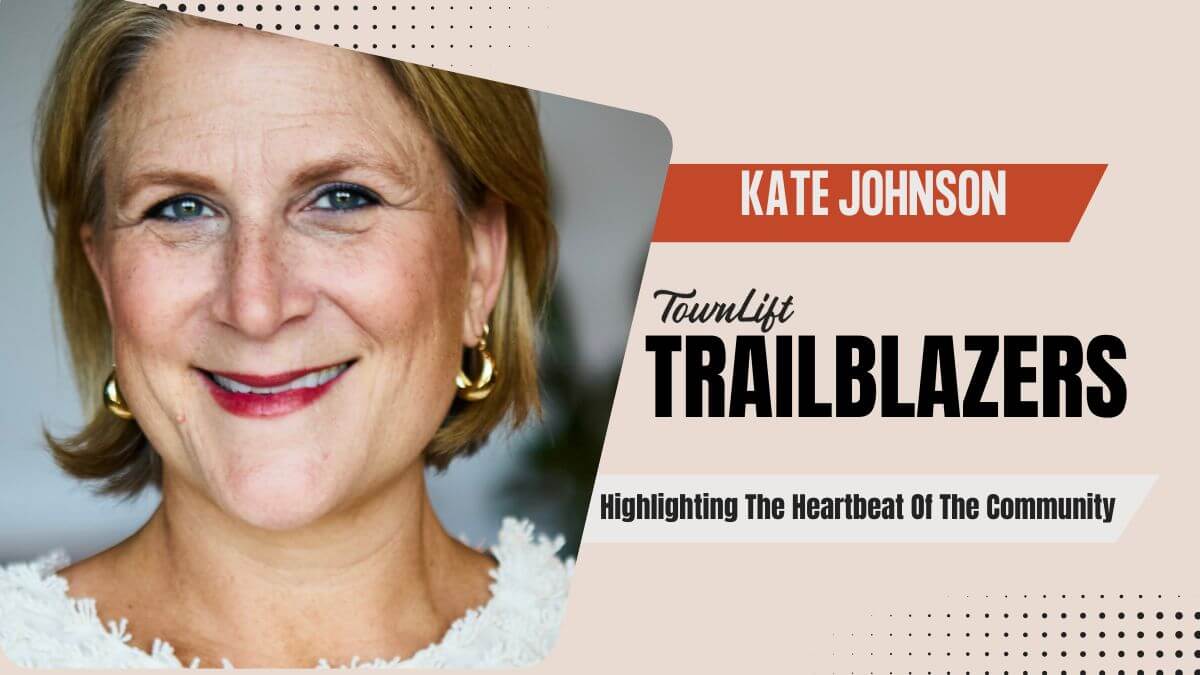
Olympian, cancer survivor, and women’s sports advocate Kate Johnson is helping reimagine what’s possible for girls in sport — and why Park City is the place her family chose to call home. Photo: Kate Johnson
PARK CITY, Utah — When Olympic silver medalist and tech executive Kate Johnson finished treatment for stage 3 breast cancer, she and her husband made a decision that didn’t look safe on paper.
They left his 20-plus-year medical practice in California, bet on the possibility of remote work, and moved their two boys to Park City — a place they mostly knew through ski trips, trail time, and a tight circle of friends.
“We took the gamble, and it has been incredible,” Johnson said. “People always come to decisions with limiting beliefs. It takes courage to step outside the normal way of doing things, but if you can pay attention to the inner voice, it absolutely pays off.”
The consistent theme in Johnson’s journey, from her athletic career to boardrooms and advocacy, is listening to her inner voice and remaining true to herself. “I very much show up as my authentic self,” she said. “The stuff that feels very real and authentic to me is where I light up and where I usually see my successes.”

From “If You Let Me Play” to the Olympic podium
Johnson grew up in Portland, Oregon, Nike’s backyard, watching the company’s “If You Let Me Play” campaign land like a direct message to girls. “I felt like they were talking to me,” she said. “They were basically saying, ‘If you keep playing sports, you’re going to be more successful.’ I was like, I am in.”
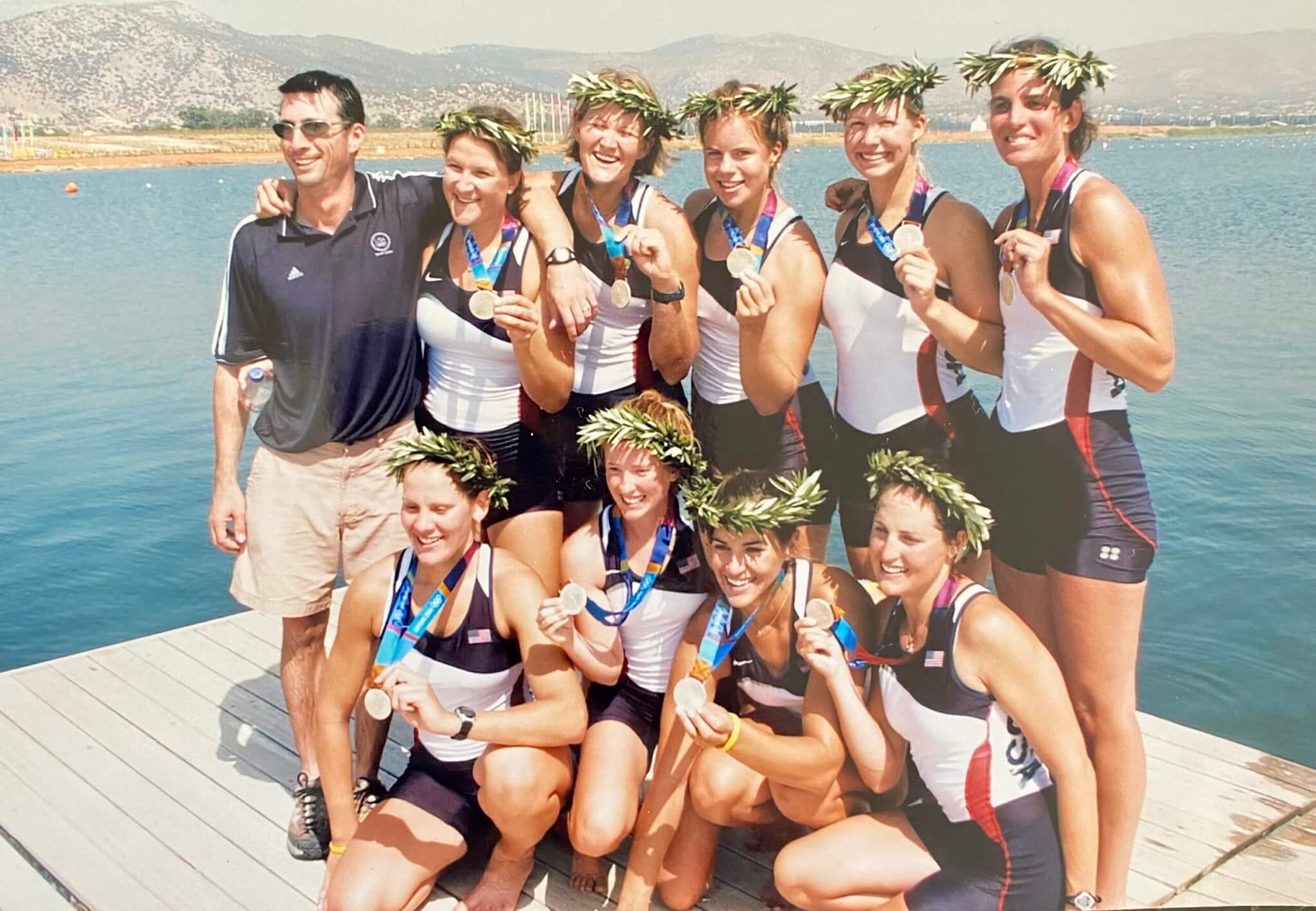
She became a three-time first-team All-American rower at the University of Michigan. She was also a world champion and world record holder. Johnson competed on the U.S. women’s eight that won silver at the 2004 Athens Olympics—the first U.S. medal in that event in 20 years.
Only later did she fully grasp what that experience meant beyond the medal stand. “I remember using it as I would go into job interviews,” she said. “Like, this is something that 1% of the population can do. I have a right to put my shoulders back in this room.”
As her career shifted from elite athlete to global sports marketer, Johnson landed in leadership roles at IMG, Visa, and, now, Google, often as one of the few women in the room. Living and working in the United Kingdom, she said, was a turning point — a place where she had to decide whether to stay quiet in a male-dominated field or speak up. In meeting after meeting, she found herself pushing for ideas and investments others didn’t always see or value, especially around women’s sports. Learning to hold her ground there, she said, cemented her commitment to “being radically authentic” and trusting her own voice, even when it went against the room.

Who gets seen in the “digital library”
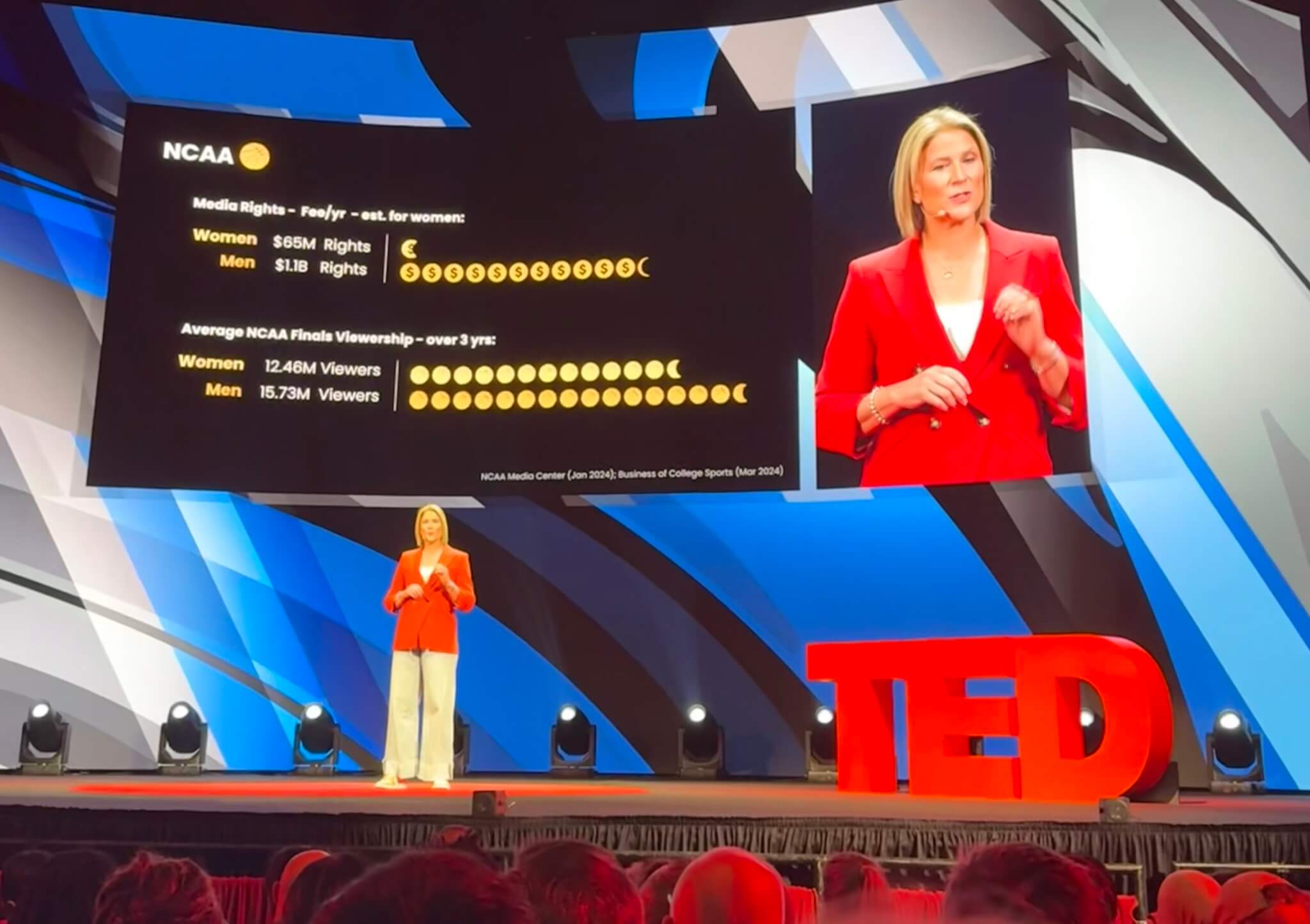
In a recent TED Talk, Johnson compared technology platforms to “digital libraries,” with algorithms acting as the librarians who decide which stories are most visible. For decades, those shelves have been dominated by men’s sports. “For many years, it’s been 19 stories about men’s sports for every one about women’s sports,” she said. “As a result, girls rarely stumble upon women’s sports highlights in their feeds, which makes it harder for them to see sports as a pathway for themselves.”
She believes communities like Park City have the power to counter this trend, starting with access and equity at the local level. “I would start with communities holding schools accountable,” Johnson said. “Are sports opportunities for girls equal to those for boys? The age of 14 is critical—it’s where we lose so many girls.”
Johnson is also concerned about the “all or nothing” nature of youth sports today — where participation often means committing to competitive, elite-level teams, with few options for kids who want to keep playing but aren’t on that track. She sees this most clearly in high school, as recreational opportunities fall away. “If you’re not doing competitive sport, there’s no avenue for young people to continue playing,” she said. “The recreational ability to do team sports falls away, and that’s a problem. Team sports are crucial for leadership, confidence, and staying out of trouble.” That’s part of why she serves on the board of the Youth Sports Alliance, which works to make sports more accessible for all kids in Park City and Summit County.
Even something as simple as storytelling, she added, plays a significant role in keeping girls engaged in sports. “Profiling young female athletes in all the mediums we have is so important,” she said. “It helps to keep them in the game.”
When asked what advice she’d give a 13-year-old girl in Summit County who is considering quitting a team, Johnson went straight to the long-term perspective. “Don’t think short-term. Think long-term,” she said. “Staying in sport will only continue to pay itself forward.”
Resilience as a muscle
If sport and corporate life taught Johnson how to push, cancer forced her to learn how to pivot. “When I was diagnosed, I just felt betrayed,” she said. “I was like, are you kidding me? I’ve done everything right. I’ve eaten right. I’ve exercised my whole life. I’ve treated my body like a temple. How could this be happening to me?”
The turning point came when she shifted the central question. “With any hardship, the human instinct is, Why is this happening to me?” Johnson said. “Everything changed when I started to ask, How is this happening for me?”
She reconnected with teammates from college and the Olympics. Friends from across the country rallied around her and her family. Park City friends joined her for weekly Peloton rides before treatments, sometimes in costumes or funny glasses. “My cancer year was one of the most magical years of my life,” she said. “For me, the resilience piece is flipping the model on its head — from ‘why is this happening to me?’ to ‘how is this happening for me?’”
Why Park City
Today, Johnson serves on an International Olympic Committee commission for digital engagement and marketing communications and sits on the boards of organizations including the Women’s Sports Foundation and the Youth Sports Alliance. She splits her time between the Bay Area and Park City with her husband, Jason, and their two sons, Alex and Brennan.
Park City, she said, has turned out to be exactly the kind of place they hoped it would be when they took that post-treatment leap. “The Park City community is unlike anything I’ve been a part of,” she said. “We’re close to an international airport, which brings people who are at the peak of their careers. People here do interesting things while being intentional about where and why they live.”
“That magic,” she added, “is something we really have to protect.”
TRAILBLAZERS is a new TownLift column spotlighting the individuals who help shape Park City and Summit County. Through their work, dedication, and impact, these community members contribute to what makes this area such a special place to live, work and play. Each feature highlights the stories of locals making a difference in the place we’re lucky enough to call home.
Know someone who should be recognized? Nominate them at tips@townlift.com.
By: Rebecca Brenner


438 Castle Valley Drive
Castle Valley, UT 84532
80 West 300 North
Salt Lake City, UT 84103
2349 S Lava Vista Drive, Lot 32
Santa Clara, UT 84765
3267 W Deer Hollow Road, Unit 2305
Park City, UT 84060Talk of the Town


Park City Jobs

Junior Interior Designer, Abigail Hill
2 days ago Contractor

Dental Assistant, Rise Dental Wellness
2 days ago Full time

Sales & Marketing Coordinator – B2B Publishing, Power Trade Media
4 days ago Full time $40,000 - $45,000 yearly

Computer / Website Assistant, Summit Support
9 days ago Part time $20.00 - $30.00 hourly

Garden Steward and Educator, Summit Community Gardens and EATS
9 days ago Seasonal