Trailblazers
TRAILBLAZERS: Inside Wendy Fisher’s 35 years of conservation with Utah Open Lands


Trailblazer Wendy Fisher, executive director of Utah Open Lands, has spent 35 years safeguarding the open spaces that define Summit County. Photo: Austin Diamond
PARK CITY, Utah – For thirty-five years, Wendy Fisher has been a steadfast force behind some of Summit County’s most significant land preservation victories. As the founder and driving force of Utah Open Lands, she has helped protect the landscapes that define Utah—from Bonanza Flat to the Galena–Soónkahni Preserve to Toll Canyon. However, her story doesn’t begin with conservation easements or fundraising campaigns; it starts on horseback, exploring orchards and river bottoms, witnessing a beloved landscape disappear before her eyes.
Fisher grew up in nature, spending her early years in Maine before her family moved to Utah when she was twelve. To help her adjust, her parents bought her a horse—a decision that would not only shape her childhood but also her life’s work. “I used to venture through orchards and river bottoms,” she recalls, describing rides with friends that sometimes took them to the top of Timpanogos and back home via Provo Canyon Road. “I watched all of the orchards and everything that I absolutely loved disappear, actually, before my horse passed away.”
Those early losses planted a profound seed within her. When Fisher graduated from college, Summit County had only one planner in Coalville for the entire region. Development pressure was mounting, and few tools were available to help communities preserve what made them special. In 1990, she helped found what was then called the Summit Land Conservation Association—an organization established amidst a political climate that wasn’t naturally receptive to conservation.
“We had to help people understand that saving something was a very conservative notion,” Fisher explains. The strategy was pragmatic rather than idealistic. Instead of highlighting endangered species or ecological systems, Utah Open Lands focused on the economic case: residential development doesn’t pay its own way, but open space does. “As I used to say, cows don’t go to school. You’re not calling the police on a gaggle of ducks.”
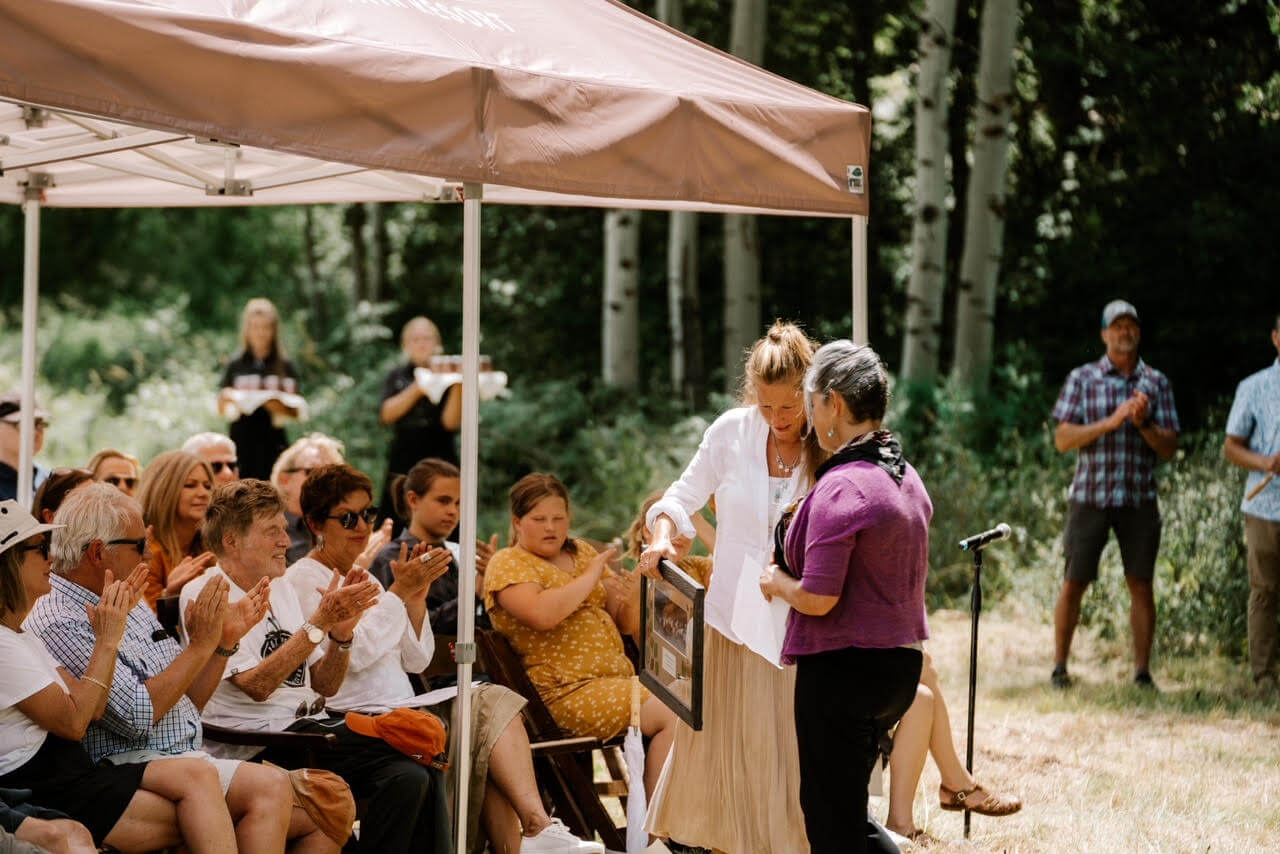
This message resonated with the community. As Utah consistently ranked among the fastest-growing states in the nation, people began to realize that places they thought would always be open, or assumed were public land, were being developed. Fisher and her team emphasized that while plenty of resources existed to help landowners develop their property, only Utah Open Lands and The Nature Conservancy could help them exercise their right to preserve it.
“We very much think that preserving land gives landowners the ability to exercise their private property right to preserve their land,” she says. This reframing proved powerful in a state where property rights are sacred.
The organization’s work expanded beyond Summit County as other communities searched for conservation solutions. What began as the Summit Land Conservation Association evolved into Utah Open Lands, with a broader mission to educate communities across the state that a choice existed and that balance was possible. For years, their primary tool was tax incentives afforded through conservation easements—the first statewide funding for open space didn’t arrive until 1999.
Fisher’s leadership has been tested repeatedly over the decades. The Galena–Soónkahni Preserve taught her about courage and standing up when powerful forces seek something else. However, when asked which project tested her the most, she points to Bonanza Flat—not due to the difficulty of the fight, but because of what it revealed about community.
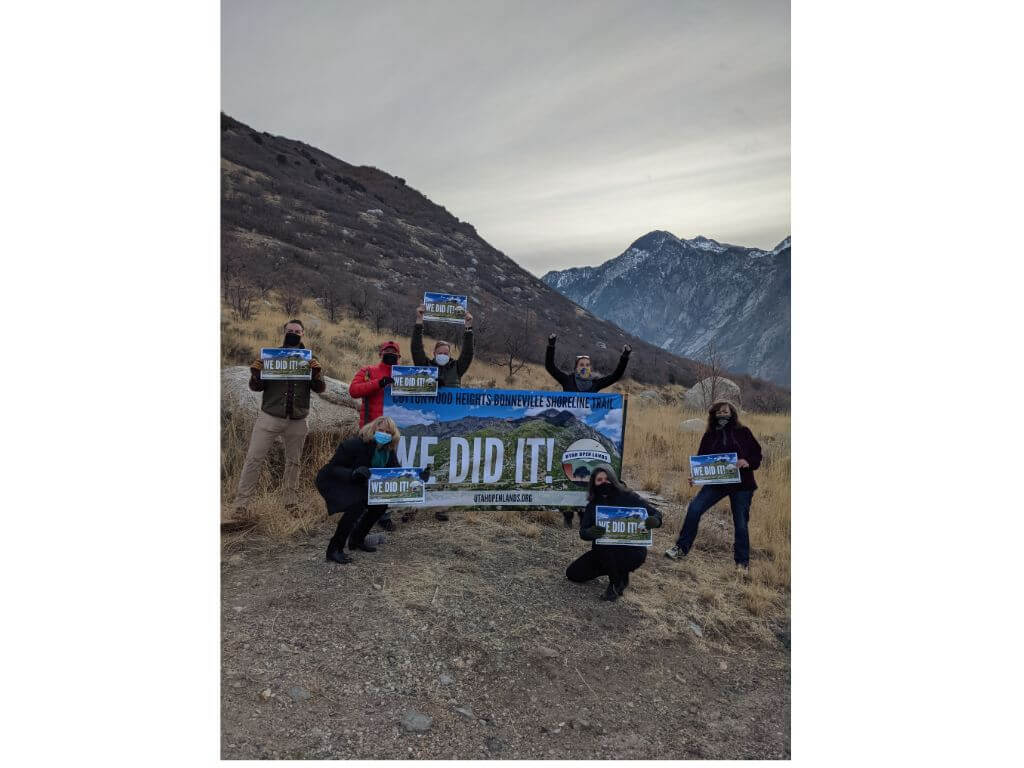
When Park City voters approved a bond for Bonanza Flat, it marked the first bond for a specific project rather than for general open space, and it was for property already in foreclosure with a developer lined up. Even after the bond passed, there was a thirteen-million-dollar gap to close. Fisher helped spearhead what became the largest fundraising campaign for open space in Utah at that time—three counties, three cities, and eleven nonprofits working together.
“One of my greatest joys is hearing an organization that we brought into that coalition say, ‘Oh, we saved Bonanza Flat,'” Fisher shares. “It’s wonderful to see people feel so invested in it that they’re claiming, ‘Hey, look what we did as an organization.'” For her, that shared ownership is just as significant a mark of success as the conservation easement itself.
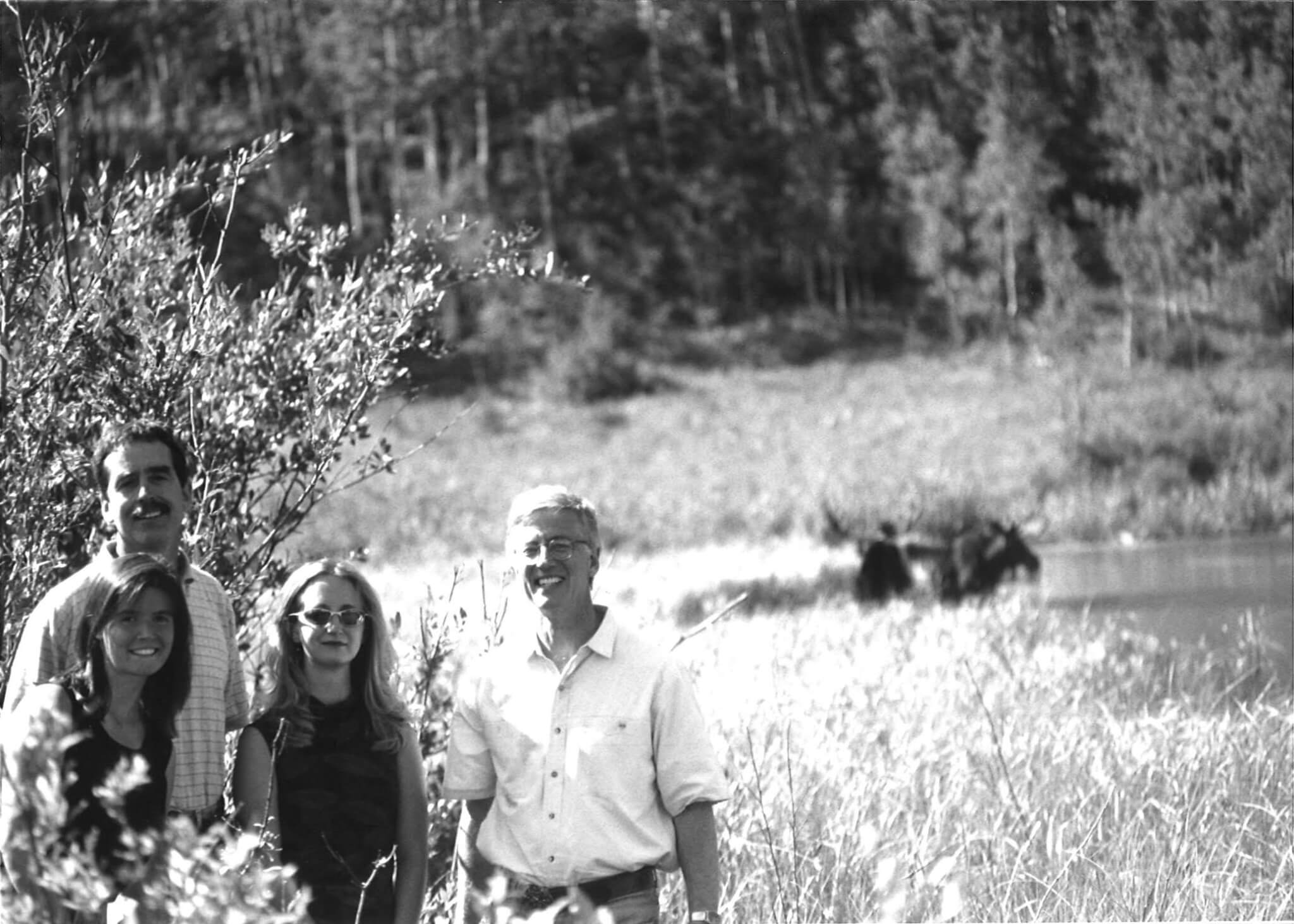
Fisher’s work is filled with moments that seem to transcend strategy and persistence. She recalls a morning hike with a Park Record reporter to Toll Canyon, where they were desperately trying to raise $250,000 in five weeks after decades of negotiations. It was a clear morning after fresh snow, and as they stepped out of the car, a bull moose walked fifteen feet in front of them—the reporter’s first time seeing a moose in the wild. Then there was the drive to Moab to negotiate for Castleton Tower when a mountain lion jumped onto the road and stood looking at her, eye to eye. “I honestly thought, ‘Okay, we’re going to convince Utah’s School and Institutional Trust Lands Administrator (SITLA).'”
“I can’t help but feel that there is something greater than all of us when you are working to protect something,” she reflects. “Whether you know it or not, it feels as if there is a larger purpose at play.”
Today, as Park City grapples with growth pressures and polarizing debates about development and access, Fisher remains clear-eyed about the challenges. “It’s hard not to feel like we are in a crisis of our own making,” she admits. She’s frustrated by conversations that pit preservation against housing, that frame growth as the solution to problems created by growth. “We become really polarized in our viewpoints,” she says, when what’s needed is stewardship—of community, resources, land, trails, and even the development we already have.
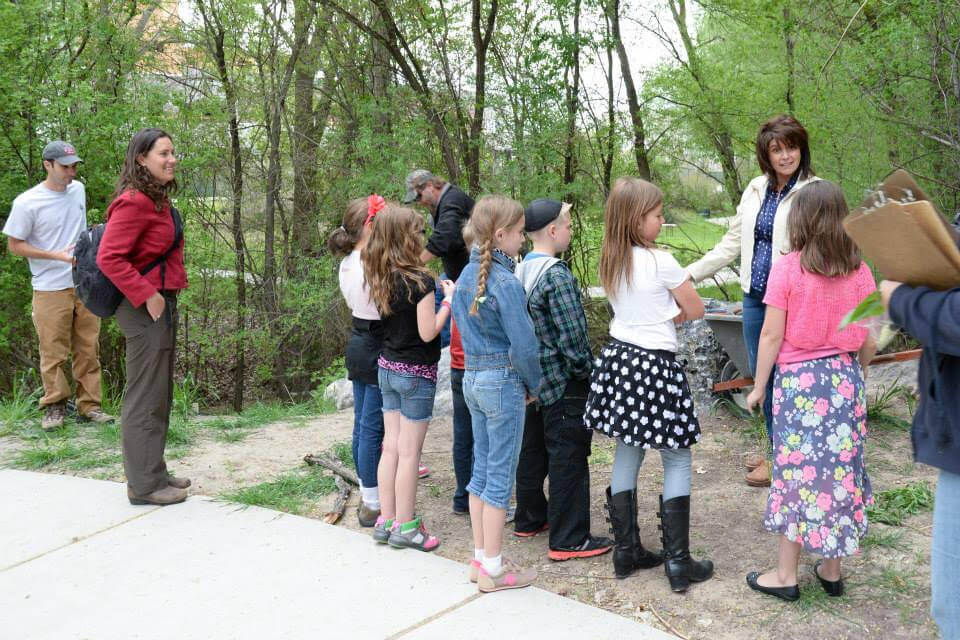
When asked what she wants the next generation to understand about land preservation, Fisher’s answer is simple: reverence. She wants kids to get out in nature, away from screens, to have authentic experiences. “I want them to have that moment where you realize there’s a big world out there, and it’s bigger than you, and it’s fascinating, and it’s amazing, and it’s joyful, and it’s beautiful.” That reverence, she believes, extends beyond landscapes to “our fellow man, for our fellow woman, for our fellow species, our fellow moose and elk and bear and butterflies.”
After thirty-five years, Fisher remains deeply grateful—for every board member and volunteer, for the early partners who believed when it was scary, for the community that embraced her work. “I learned so much from everybody that I encountered, especially in those early years,” she says. “And I am grateful I get to do what I do, and I am grateful that there are people who believe and just don’t give up.”
Her advice for those wanting to get involved? Start with passion. “Having your whole heart in something is a good place to start. And yeah, that’s actually scary, right? Because that makes you vulnerable. What if you fail? But that passion is contagious in a good way, and you can’t ever be made to be wrong for following your heart and following your passion.”
It’s advice that Fisher has clearly lived by, transforming childhood heartbreak over lost orchards into a legacy of preserved landscapes that will endure for generations. The places we love in Summit County—from Bonanza Flat to Swaner Nature Preserve—exist because someone chose to fight for them, chose reverence over resignation. For thirty-five years, that someone has been Wendy Fisher.
TRAILBLAZERS is a new TownLift column spotlighting the individuals who help shape Park City and Summit County. Through their work, dedication, and impact, these community members contribute to what makes this area such a special place to live, work and play. Each feature highlights the stories of locals making a difference in the place we’re lucky enough to call home.
Know someone who should be recognized? Nominate them at tips@townlift.com.
By: Rebecca Brenner


325 White Pine Canyon Road
Park City, UT 84060
2349 S Lava Vista Drive, Lot 32
Santa Clara, UT 84765
438 Castle Valley Drive
Castle Valley, UT 84532
3267 W Deer Hollow Road, Unit 2305
Park City, UT 84060
80 West 300 North
Salt Lake City, UT 84103
1511 S Valley View Circle
Springville, UT 84663Talk of the Town


Park City Jobs

Hiring Barista Assistants and Baristas, Silver King Coffee
3 days ago Part time $17.00 - $30.00 hourly

General Maintenance Technician, Moose Management Vacation Rentals
6 days ago Full time

Office Coordinator, Park City Community Foundation
9 days ago Full time $50,000 - $55,000 yearly

Summit Land Conservancy Programs Specialist, Summit Land Conservancy
9 days ago Full time
Vice President of Finance, Park City Community Foundation
9 days ago Full time $115,000 - $130,000 yearly