Environment
Lee backs off amendment to strike parks, trails protections from spending bill

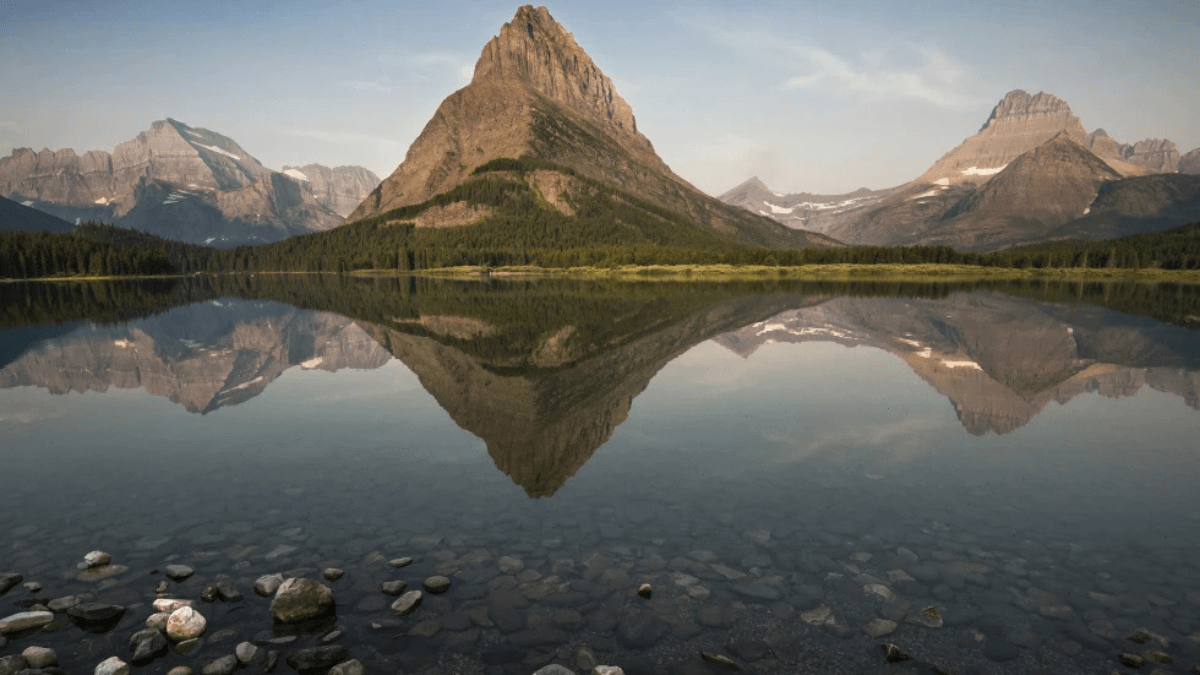
Grinnell Peak, flanked by Mount Gould to the left and Mount Wilbur to the right, is reflected on the surface of Swiftcurrent Lake at Glacier National Park near West Glacier, Montana, May 28, 2014. Photo: Tim Rains // NPS Photo
WASHINGTON — Sen. Mike Lee, R-Utah, filed an amendment Dec. 15 that would have stripped four provisions from a federal spending bill, including language that conservation groups argued helped keep national park sites and related corridors in federal hands. He withdrew the proposal late Thursday after it drew objections and confusion on Capitol Hill, Deseret News reported.
The amendment targeted Section 130 of the Interior-Environment appropriations bill, which requires the Interior Department to maintain lands designated as national park units, national scenic or historic trails, and wild and scenic rivers as federal property. The section also directed Interior to continue operating those areas as National Park Service sites, including for staffing and fee collection.
Lee’s amendment would also have eliminated three other sections: one addressing cost-sharing waivers for conservation projects, another requiring 45 days’ notice before agency reorganizations, and a third restricting how funds can be shifted between accounts to pay federal salaries and benefits.
After two days of blowback, Lee pulled the amendment “so that the bill had more time to be considered and colleagues’ concerns could be addressed,” Deseret News reported. Lee’s office told the outlet that Section 130’s sweeping language could interfere with routine land exchanges and boundary adjustments that Congress often considers. Deseret also reported that the National Park Service sent the Senate a request to remove Section 130, citing ambiguity and noting that more than 20 completed or proposed exchanges could be affected.
Conservation groups had framed Section 130 as a safeguard against efforts to reduce the federal footprint of parks through management or budget decisions. Western Priorities, a conservation advocacy group, said removing the provision would eliminate a written requirement to keep park units in federal ownership. The National Parks Conservation Association said it opposed the amendment, calling the deletion a threat to protections that keep national parks as federal lands.
The dispute has unfolded as Congress works to finish remaining fiscal 2026 spending bills ahead of a Jan. 30, 2026, deadline under the current continuing-resolution timeline.
By: Rebecca Brenner


4028 E Outcrop Road
Park City, UT 84098
1104 West 10125 South
South Jordan, UT 84095
4170 Vista Antigua Road
Moab, UT 84532
1355 E Snow Canyon Parkway, Lot 27
Ivins, UT 84738
4155 S Parkview Drive
Salt Lake City, UT 84124Talk of the Town


Park City Jobs

Junior Interior Designer, Abigail Hill
6 days ago Contractor

Dental Assistant, Rise Dental Wellness
6 days ago Full time

Sales & Marketing Coordinator – B2B Publishing, Power Trade Media
8 days ago Full time $40,000 - $45,000 yearly

Garden Steward and Educator, Summit Community Gardens and EATS
13 days ago Seasonal

PROGRAM AND EVENT COORDINATOR, PC READS
14 days ago Part time $25.00 hourly