Environment
Silicon Ridge mine puts Utah at center of race for AI-critical minerals and domestic chip production

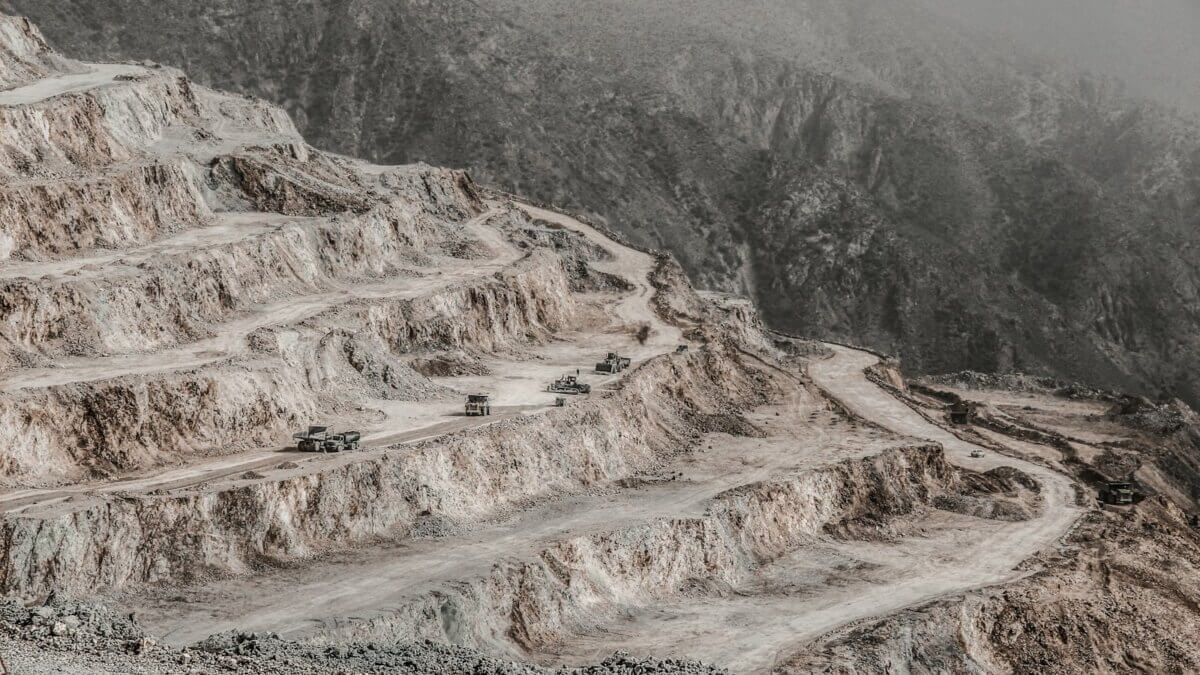
Photo: Photo by omid roshan
PROVO, Utah — A Provo-based mining and materials company has confirmed a large deposit of critical and rare earth minerals in Utah County that could help the U.S. reduce reliance on foreign supply chains, with China dominating global production and processing, The Salt Lake Tribune reported in collaboration with Grist.
Ionic Mineral Technologies, also known as Ionic MT, said the newly confirmed deposit is at its Silicon Ridge mine near Utah Lake, less than 20 miles south of the Silicon Slopes tech corridor, the Tribune reported.
The company says the minerals are suspended in clay rather than in hard rock, making extraction easier. It asserts it can operate with “virtually zero waste” while using no explosives or chemicals on site, according to the Tribune’s reporting and comments from CEO Andre Zeitoun.
Zeitoun said the clay holds 16 critical minerals, including gallium and germanium, which are used in electronics, fiber-optic cables, and lasers. China produces the bulk of those minerals and other rare earths, and the Tribune reported that China recently imposed an export ban on them, prompting U.S. companies to seek new sources.
The Silicon Ridge mine sits on the southern end of the Lake Mountains west of Utah Lake on parcels leased from the State Trust Lands Administration. The company also holds a permit with the Utah Division of Oil, Gas and Mining, with state officials confirming the permit terms remain confidential.
Utah Division of Oil, Gas and Mining Director Mick Thomas said in a statement that the agency is “excited” about the project’s progress and “the potential it represents,” the Tribune reported.
Ionic MT launched in 2020 mining halloysite from clay deposits in Juab County near Eureka, and Zeitoun said electric-vehicle manufacturers are tapping halloysite to help batteries charge faster and last longer, the Tribune reported. The company processes the mineral through a patented procedure at a 74,000-square-foot plant in Provo, and the Tribune reported it began exploring Silicon Ridge for more halloysite before discovering a broader suite of metals.
Zeitoun told the Tribune that early testing returned a consistent distribution of metals across samples and that third-party testing later confirmed an abundance of elements including gallium, germanium, rubidium, cesium, scandium, lithium, vanadium, tungsten and niobium. He also said the deposit traces back to the same type of ancient volcanic formation that created rich deposits in China, and the Tribune reported China produces about 60% of global rare earth supplies and controls about 90% of processing.
Katie Potter, a professional geologist and professor of practice at Utah State University, told the Tribune that the discovery could spur additional rare-earth finds in Utah and “may kick off a halloysite gold rush.” She said Utah’s halloysite formed from volcanic activity roughly 30 million years ago and that the clay’s tube-like structures can capture rare earth elements and other critical metals, including lithium.
Potter also said the site’s proximity to roads, power lines, and a workforce makes it favorable for development, while noting that stronger environmental regulations in the U.S. can influence where mining impacts occur, according to the Tribune.
The Tribune reported that Ionic MT initially leased 4,053 acres from the Trust Lands Administration in 2023 and later sought an additional 3,700 acres after more than 100 boreholes and trenches showed mineral concentrations in the clay. Trust land documents cited by the Tribune show the state would receive $13 per acre per year and $1.60 per ton — or 10% of the gross value of mined clay, whichever is greater — with revenue going to Utah schools.
With permits and the Provo processing facility already in place, Zeitoun told the Tribune the company is positioned to move “rapidly” and said the mine could create “hundreds” of local jobs. He also said the federal government has expressed interest in supporting the project, but declined to share details.
State leaders touted the discovery as an economic and strategic opportunity, according to the Tribune. Senate President Stuart Adams said in a news release that Utah is “uniquely positioned” to lead the transition to cleaner energy through next-generation resources. Gov. Spencer Cox called the mine “a huge win for Utah and the nation” in a LinkedIn post, citing his “Operation Gigawatt” initiative to more than double the state’s energy production over the next decade.
By: Rebecca Brenner


325 White Pine Canyon Road
Park City, UT 84060
3267 W Deer Hollow Road, Unit 2305
Park City, UT 84060
2349 S Lava Vista Drive, Lot 32
Santa Clara, UT 84765
80 West 300 North
Salt Lake City, UT 84103
1511 S Valley View Circle
Springville, UT 84663
438 Castle Valley Drive
Castle Valley, UT 84532Talk of the Town


Park City Jobs

Hiring Barista Assistants and Baristas, Silver King Coffee
Today Part time $17.00 - $30.00 hourly

General Maintenance Technician, Moose Management Vacation Rentals
4 days ago Full time

Office Coordinator, Park City Community Foundation
7 days ago Full time $50,000 - $55,000 yearly

Summit Land Conservancy Programs Specialist, Summit Land Conservancy
7 days ago Full time
Vice President of Finance, Park City Community Foundation
7 days ago Full time $115,000 - $130,000 yearly